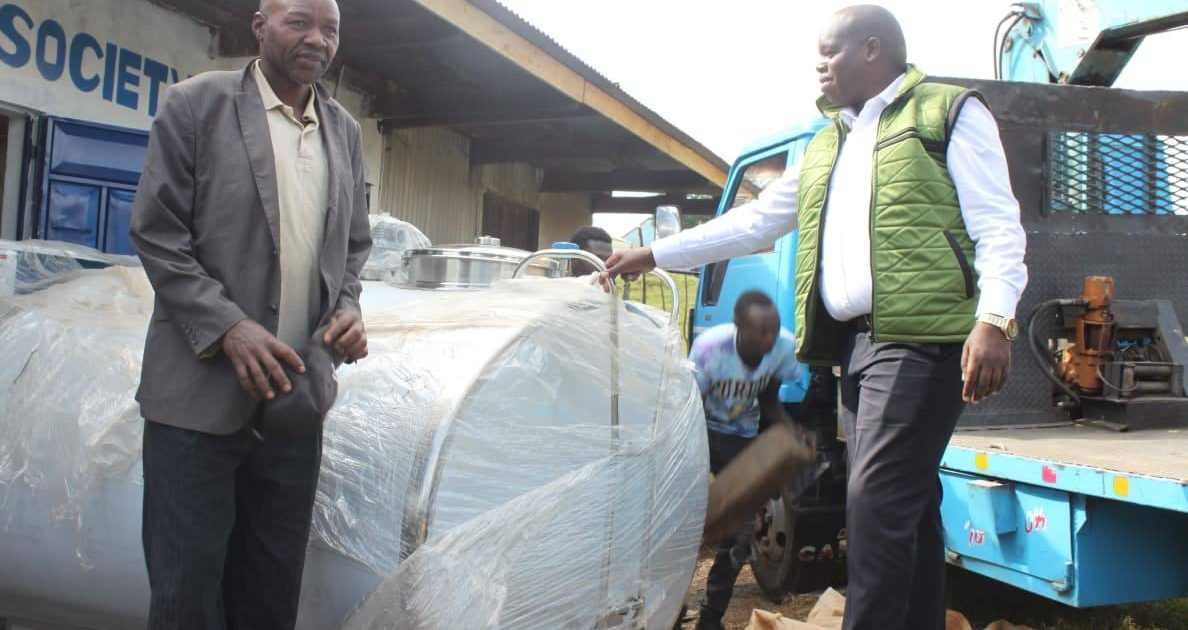
For many years, dairy farmers in Kuresoi North subcounty in Nakuru county have battled with huge losses resulting from milk spoilage, low prices and exploitation from brokers due to lack of proper storage facility, a situation that led to a decreased dairy farming in the area.
But a new chapter is unfolding for the farmers after the intervention by the Nakuru county government to install milk coolers.
This is a major boost to the dairy farming in the area, with the Kabteta and Soitaran Cooperative Farmers Societies being the biggest beneficiaries of Governor Susan Kihika’s agenda of ensuring farmers transform their available resources to become wealthy and healthy.
This investment is set to reduce post-harvest milk losses, ensure a fresh, higher-quality milk supply, and empower farmers to secure better market prices through planned bulk sales and stronger negotiation with processors, marking a major step forward in strengthening the local dairy value chain.
Speaking during the handing-over ceremony, County Executive for Agriculture Leonard Bor reaffirmed the county government’s commitment to empowering dairy farmers, emphasizing that such investments were part of a broader strategy to enhance productivity, food security, and economic growth in Nakuru County.
“This is a timely intervention to cushion our farmers who had to incur losses for lack of storage facilities. We also want to save our farmers from brokers who exploit them for lack of a better market for their produce,” said Bor.
According to cooperative officials from Kabteta cooperative, previously, few private individuals who owned milk coolers overcharged farmers, which left them vulnerable to poverty, prompting the middlemen to take advantage and buy milk at throwaway prices.
“We have been exploited for many years for lack of coolers. Other brokers downgrade our milk and some even take our milk promising to pay only to end up changing the route leaving farmers counting loses,” said Korir, a milk farmer from Soitaram cooperative society.
With hygiene being paramount in the milk value chain which goes through four crucial stages ranging from milking, transportation to cooperatives, processing and retailing, coolers are fundamental in ensuring safety and cutting losses.
Kenya is a major milk producer in Sub-Saharan Africa, with an annual output of approximately 5.7 billion litres, primarily from smallholder farmers. The production comes from cattle (79 percent), camels (16 percent), and goats (4 percent). The dairy industry is a significant part of Kenya’s economy, contributing to income, employment, and food security.
Additionally, over 3 billion people across the world consume milk and its products which communicate the necessity of investing in the industry.
By Absalom Namwalo