The Directorate of Children Services is set to receive enhanced funding of Sh 850 million following a decision by the Budget and Appropriations Committee to incorporate the views of children in the 2025/2026 budget-making process.
Nyeri County Director of Child Services, Joseph Mburu, revealed that part of the views given by children from 11 counties during the May 16 public participation on the 2025/2026 Finance Bill has played a part in convincing the parliamentary committee to allocate additional funds to address children’s welfare concerns.
“The views from Nyeri were collected from 187 learners with a representation from learners from Primary School, Junior Secondary School and Secondary Schools. When the data from children from all the 11 participating counties was presented before Parliament, the Directorate of Children Services and Child Welfare Society got an additional funding of Sh 850 million,” noted Mburu.
According to Mburu, some Sh 300 million will go towards taking care of children in charitable institutions, while the Child Welfare Society will receive Sh 350 million to take care of children in emergencies. Mburu said that Sh 50 million will fund the removal of asbestos in children remand homes and rehabilitation schools throughout the country.
He further noted that the most urgent concern, according to the children, was the need for the government to set aside funds to support school feeding programmes in schools. The children also want the government to provide employment opportunities for their parents.
“A total of 127 out of the 187 children who participated in Nyeri County said that they require food. Nationally, 75 per cent of the children who gave their views during the public participation said food was their biggest concern,” he said.
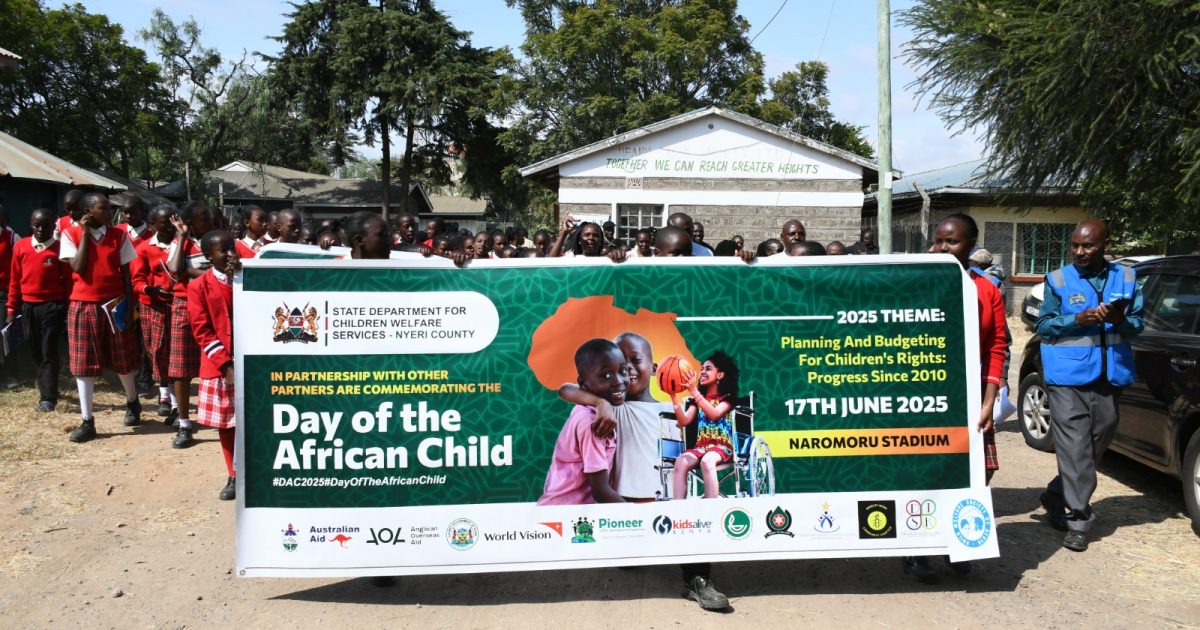
The county director spoke in Naru Moru Stadium, Nyeri County, during celebrations of the International Day of the African Child. The day is commemorated every year on June 16 in remembrance of the 1976 Soweto Uprising in South Africa, where thousands of Black schoolchildren protested against oppressive education policies.
The day also serves as a reminder to governments and stakeholders in child protection to address challenges affecting children. This year, the day was marked under the theme ‘Planning and Budgeting for Children’, with stakeholders calling on the government to take urgent measures and address challenges facing children including gender-based violence.
Speaking at the celebrations, Sarah Manyeki a programs coordinator at the Anglican Church of Kenya’s Imarisha Maisha program emphasized the urgent need to prioritize the well-being of children. MS Manyeki urged the government to enhance budgetary allocation for education and healthcare for all learners. To address the rising cases of child abuse, she also called on the government to set aside enough money to facilitate access to the justice system for victims of child abuse.
“We urge the government to set aside enough money for education and health. Previously, we had a health program that was covering our children but it was scrapped. It is high time that our children are covered by the Social Health Fund (SHA) or any other health program,” she said.
Kieni East Deputy County Commissioner Gitonga Mauki highlighted the importance of protecting children from abuse and neglect. He said that stakeholders and parents must start working together to create a conducive environment for children, both boys and girls, to enjoy their rights, including the right to learn, to play, to grow and to be children.
Mauki also underscored the need to involve children in the decision-making process, adding that going forward, children should be encouraged to take part in public participation exercises, especially in projects that directly impact their welfare.
“This year’s theme demonstrates the need for mentorship of our children to take up leadership roles from an early age. It also demonstrates the importance of involving children in the decision-making process so from here on, we must engage our children and get their views before we undertake projects,” said Mauki.
By Wangari Mwangi and Brian Mwangi