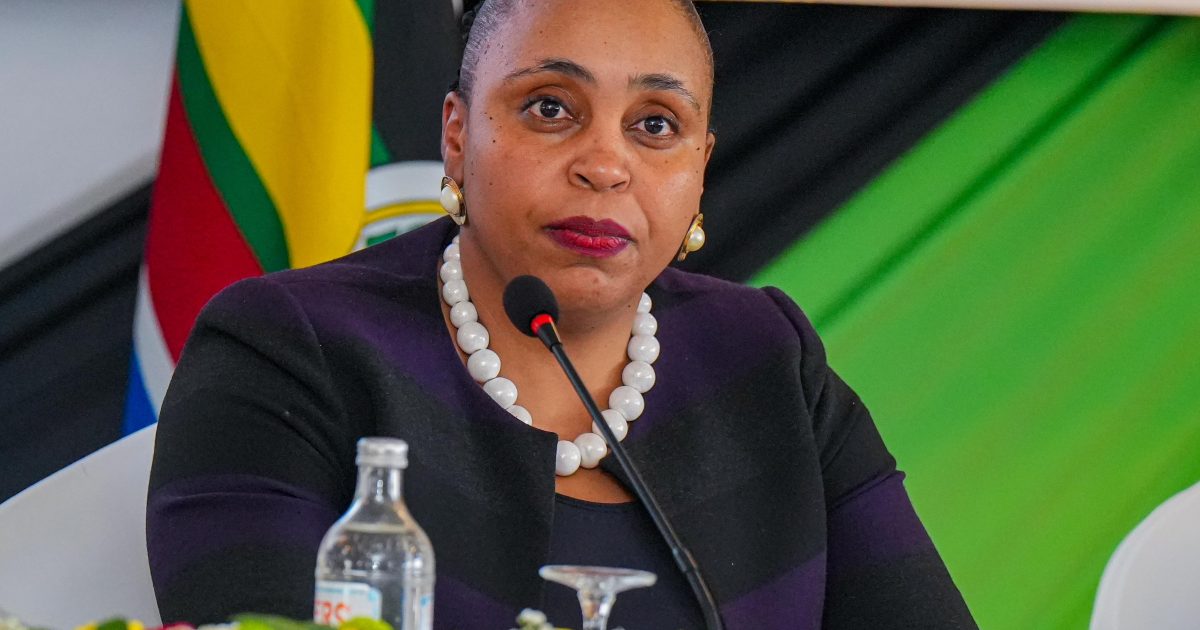
State Department for East African Community (EAC) Affairs Principal Secretary (PS) Dr. Caroline Karugu has called for deeper partnerships among EAC partner states to scale up conservation efforts for Lake Victoria.
Dr. Karugu said the lake was under threat from pollution, climate change, and increased human activity calling for joint conservation efforts to protect it for the benefit of millions of people who depend on it.
Speaking during the 23rd Ordinary Meeting for the Sectoral Council of Ministers for the Lake Victoria Basin (SECOM-LVB) held in Kisumu, Dr. Karugu urged partner states to urgently implement joint strategies to ensure uniformity in the conservation efforts.
Citing the rapid population growth and effects of climate change, Dr. Karugu stressed the need for a robust policy framework to address emerging threats, emphasizing that the goal was to create a socio-economic and ecological basin capable of sustaining millions of livelihoods.
“We have made commendable progress in our joint efforts as a community on infrastructure development and sanitation. There is a need to redouble the efforts on conservation to protect Lake Victoria, which is a key resource for the region,” she said.
Lake Victoria Basin Commission (LVBC) Executive Secretary (ES) Dr. Masinde Bwire said pollution, unsustainable agriculture, land degradation, invasive weeds, and illegal fishing have drastically affected the lake’s health and the well-being of those who depend on it.
Untreated wastewater and raw sewer, he said, flow freely from informal settlements in Kisumu (Kenya), Kampala (Uganda), and Mwanza (Tanzania), leading to the spread of waterborne diseases and contaminating the lake with heavy metals.
He added that wastewater treatment plants around the lake lack proper disinfection systems, while the proliferation of plastic waste especially in urban areas like Kisumu, Siaya, Busia, Entebbe, Jinja, Mwanza, and Bukoba, further degrading aquatic habitats and wetlands.
To address the challenge, Dr. Bwire said the Commission had secured funding from the Federal Republic of Germany through KfW Development Bank to support High Priority Investments in Kampala, Kisumu, and Mwanza, focusing on reducing untreated effluent into the lake.
EAC Deputy Secretary General Andrea Ariik lauded LVBC for the various interventions and projects in the conservation of the lake, adding that the EAC secretariat will continue to develop policy frameworks to strengthen the joint conservation efforts.
Limited financial and technical resources, he added, were a major impediment in the conservation drive, slowing down various projects and initiatives.
“One of the most pressing challenges we continue to face is the issue of limited financial and technical resources. The ambitions of the Lake Victoria Basin agenda are commendable, but the availability of funding has not always kept pace with the scale or urgency of our development priorities,” he said.
He called for innovative financing strategies beyond donor support, including public-private partnerships, climate financing mechanisms, and regional development banks to address the challenge.
“We must also strengthen internal efficiencies, improve project readiness, and ensure that the Commission continues to meet the standards required by our financing partners,” Ariik added.
The high-level meeting was also attended by PS EAC Affairs Edith Mwanje (Uganda), PS EAC Affairs Amb. Stephen Mbundi (Tanzania), Christina Mndeme, Deputy Permanent Secretary, Vice President’s Office-Tanzania, Peter Mahal, Under Secretary, Ministry of Irrigation and Water Resources, Republic of South Sudan, Gideon Beny, Undersecretary, Ministry of East African Community Affairs, Republic of South Sudan, and Amb. Dr. Bernard Yohana Kibesse, High Commissioner and Head of Mission, Tanzania.
The Sectoral Council of Ministers on Lake Victoria Basin (SECOM-LVB) is the governing body for LVBC which which is an EAC institution responsible for coordinating sustainable development of the Lake Victoria Basin.
By Chris Mahandara