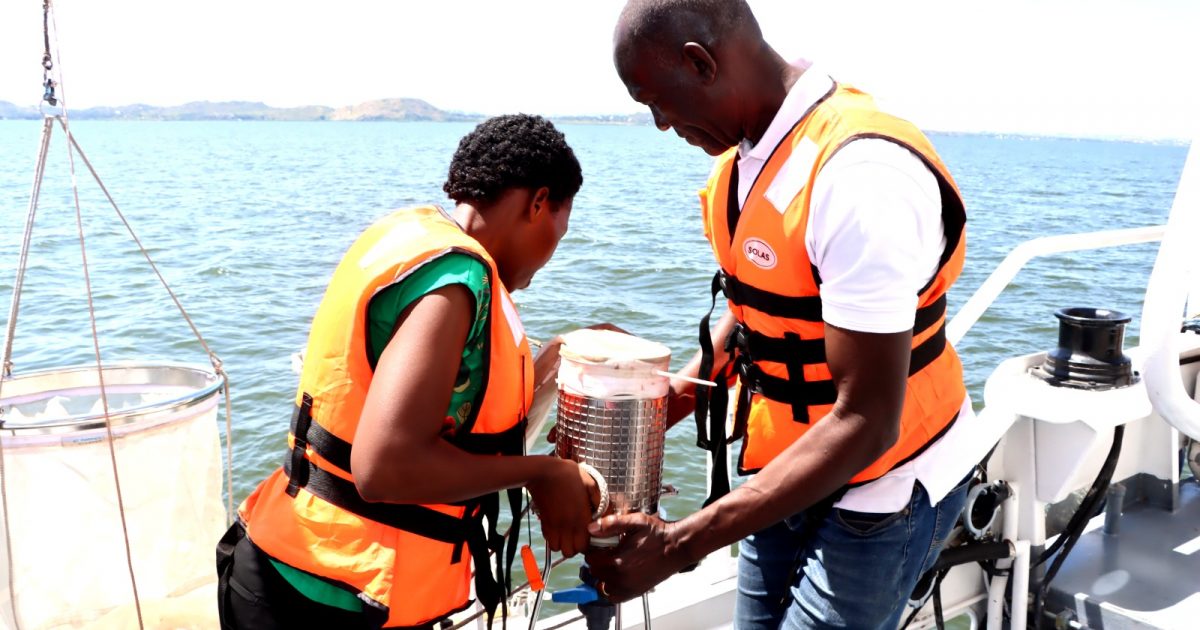
A cross-border water sampling exercise aimed at assessing pollution levels and the spread of invasive species in Lake Victoria has officially kicked-off in Mwanza, United Republic of Tanzania.
The initiative, bringing together scientists and environmental experts from Kenya, Uganda, and Tanzania, is spearheaded by the Lake Victoria Basin Commission (LVBC) with technical and financial support from the German Development Agency (GIZ) under the “EAC for Nature” project.
The Regional effort seeks to generate reliable, science-based data to guide conservation strategies and environmental policy decisions within the Lake Victoria Basin, which supports the livelihoods of more than 40 million people in the East African Community (EAC).
According to LVBC Executive Secretary Dr. Masinde Bwire, the joint exercise will play a crucial role in assessing the health of the lake, identifying pollution hotspots, and evaluating the presence and impact of invasive aquatic plants, such as the water hyacinth.
“The study’s findings will be vital in guiding the conservation of Lake Victoria’s biodiversity and ecological balance,” said Dr. Bwire.
In an interview with KNA, Dr. Bwire said beyond monitoring water quality, the
initiative targets to equip the region with actionable data to drive effective interventions.
Water samples, he said, were being collected from 46 pre-identified sites across the three partner states.
The extensive monitoring programme, he added, will examine physical, chemical, and biological parameters, including key nutrients—such as nitrogen and phosphorus compounds—silica, alkalinity, and total suspended solids.
On-site measurements, including pH levels, water temperature, turbidity, dissolved oxygen, and light penetration (PAR) will also be taken.
Geographic coordinates and depth profiles will also be recorded at each sampling point to enhance spatial analysis.
Additionally, the team is analyzing major ions such as calcium, magnesium, and chloride, along with Chemical Oxygen Demand (COD), a key indicator of organic pollution.
At selected sites, samples will be screened for toxic heavy metals, including arsenic, mercury, and lead, taken from both surface and bottom layers of the lake.
Biological indicators, such as phytoplankton species composition and abundance, are also being studied to assess algal activity and the risk of harmful algal blooms—often a sign of nutrient pollution.
Dr. Bwire noted that the data collected will provide a comprehensive snapshot of the lake’s health, offering insights that are not only scientifically grounded but also essential for sustainable environmental governance across the region.
The joint water quality assessment, he said, underscores the shared responsibility of EAC member states in protecting Lake Victoria, Africa’s largest freshwater lake, which faces increasing threats from pollution, climate change, and unsustainable land-use practices.
Findings of the survey are expected to inform future policy development, regional environmental projects, and community-level conservation initiatives.
By Chris Mahandara