The Myoot Kipsigis Council of Elders has urged the integration of modern managerial practices with traditional cultural values to enhance integrity in governance.
According to the Chairperson of the Council, Richard Ngeno, the elders deemed it vital to uphold the long-standing Kipsigis tradition of culturally guiding and grounding those entrusted with leadership.
He noted that in the eyes of the community, no leader should be allowed to carry public responsibility without first passing through the cultural pathways that affirm identity, continuity, and collective responsibility.
Ngeno was speaking during an induction ceremony for Kericho Members of the County Assembly (MCAs) who missed a previous cultural gathering at Tulwap Kipsigis in Kipkelion East.
The Council Chair emphasised that the obligation was not merely symbolic but a sacred duty, ensuring that every leader remains anchored in the values, wisdom, and ancestral order that have long defined the Kipsigis people.
“We organised this meeting for MCAs who were unable to attend the earlier session at Tulwap Kipsigis because each leader must understand the cultural roots that guide our people.
Culture has always been the shield that shaped responsible leadership, and we are reviving these values so leadership remains anchored in unity, respect, and integrity,” he said.
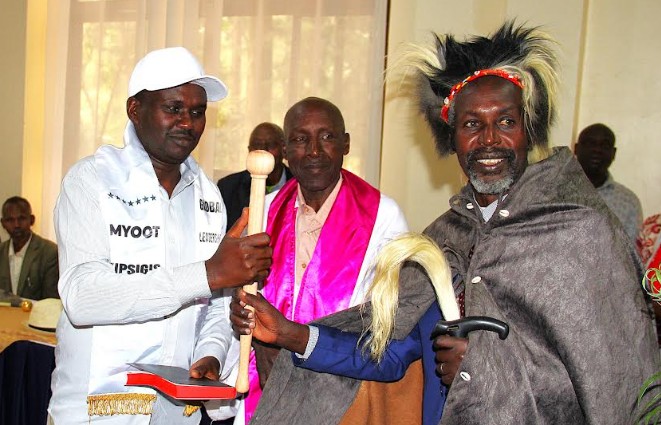
In a ceremony held at the ACK Grace Conference Hall, more than 15 MCAs were entrusted with traditional instruments of leadership—among them a Bible, a rungu, a cap, a scarf, and a tree seedling.
Each item is carefully chosen for its symbolic weight, with the Bible representing moral grounding, the rungu signifying authority and protection, the cap and scarf marking dignity and cultural identity, and the tree seedling embodying continuity, growth, and the responsibility to nurture the community they serve.
“We have issued the Bible as a reminder of moral truth, the rungu as a symbol of authority, the cap and scarf to represent the dignity and identity of leaders, and the seedling to symbolise life, growth, and the fertility of the land.
These are not mere decorations; they represent the weight and expectations of leadership,” he said.
In an interview with the Kenya News Agency (KNA), Ngeno explained that as part of the elders’ broader cultural mission to reinforce unity and strengthen traditional value systems among the Kipsigis.
Similar induction ceremonies would be extended to Nakuru, Bomet, and Narok counties to ensure that leaders who were unable to attend the earlier gathering are also formally integrated into the cultural framework.
“We are committed to ensuring that leaders across all counties linked to the Kipsigis community are rooted in the values that define us. Cultural unity is the strength that holds leadership together,” he said.
In a firm stance against harmful practices, Ngeno reiterated the Council’s commitment to protecting community welfare.
“We stand strongly against female genital mutilation and gender-based violence because these acts are outdated, demeaning, and a violation of human rights.
We urge leaders to remain vigilant in ending these vices, and we remind our people that embracing education is key to securing our children’s future,” he said.
He further announced that the elders would hold end-of-year prayers on December 18 in Kericho, noting that the community must remain united during the festive season.
“We extend Christmas greetings to the President and all leaders as we continue praying for unity and prosperity for our people,” he said.
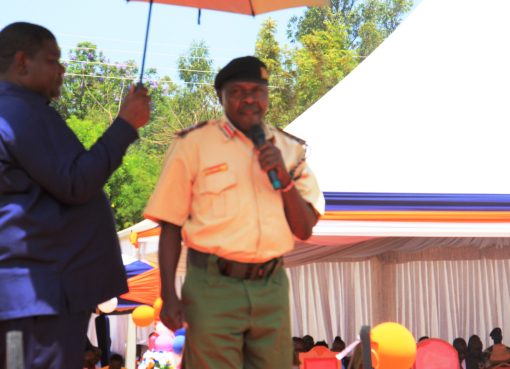
Meanwhile, Kipkelion Ward MCA and Chairperson of Culture in the Kericho County Assembly Antony Ruto said the engagement with elders offered valuable direction for leaders.
“Today’s meeting has allowed us to reflect on the future of our community and agree on working together to preserve our culture while advancing development in our county.
We want our children to grow into hard-working, respectful citizens who understand the dos and don’ts of our culture,” he said.
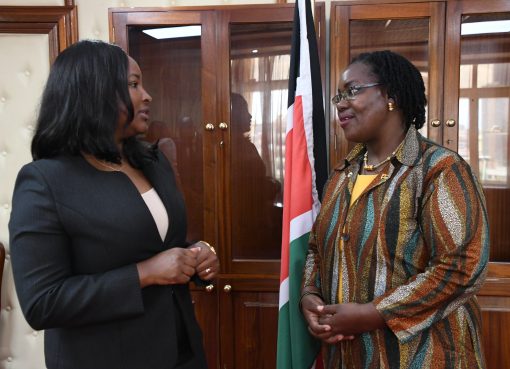
In a similar tone, Chemosot Ward MCA Anita Byegon expressed gratitude for the elders’ guidance, describing the session as both instructive and unifying.
“We have gained immense wisdom from the elders, and I am grateful for receiving the instruments of leadership. I am happy that we have agreed to work collectively for the development of this county, and I urge our youth to seek guidance from elders because the wisdom they carry cannot be found on social media,” she said.
She called for strengthened mentorship structures for the youth, citing rising cultural misinformation online.
“I encourage the elders to organise youth camps to teach the correct cultural values that are being eroded by misinformation.
I also urge my fellow MCAs to support the establishment of a Myoot Council of Elders office in Kericho to enhance leadership guidance, conflict resolution, and cultural preservation,” she said.
As the ceremony drew to a close, it was clear that the integration of cultural practices into leadership is not merely ceremonial but foundational for effective grassroots governance.
Embedding values of respect, unity, and accountability into county leadership ensures that every decision and policy reflects the wisdom of Kipsigis heritage.
When leaders are culturally grounded, development becomes inclusive, ethical, and sustainable, bridging modern governance with ancestral knowledge to nurture communities that are both prosperous and morally anchored.
By Gilbert Mutai