As Kenya’s political landscape heats up and urban influences stretch deeper into rural areas, older residents in Kiambu are raising the alarm over a troubling trend where the youth are abandoning agriculture for a cocktail of drug abuse, political protests, and idleness.
Once buzzing with the laughter of youth and the rhythm of hoes hitting fertile soil, many farms in Kiambu now lie quiet, tilled only by the slow, tired hands of the elderly.
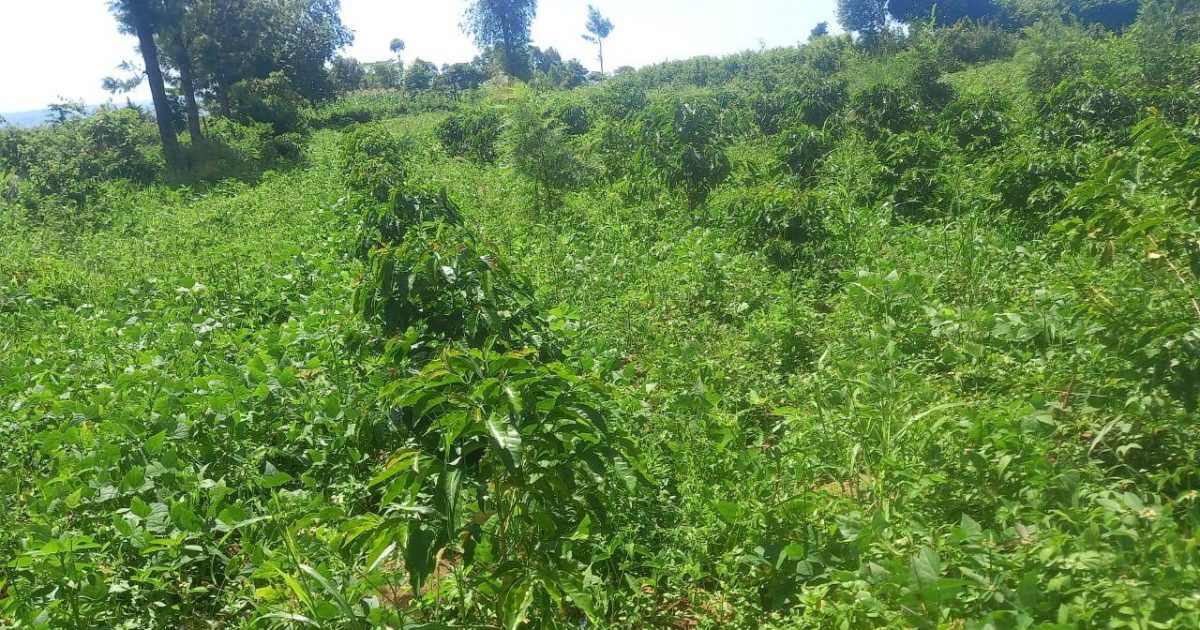
“I’m 72 and still waking up at 5 a.m. to dig. My son, who is 28, spends his days either asleep, on his phone, or out with his friends. He says farming is for failures,” says Mama Wanjiku Thuku, a small-scale farmer in Githunguri. Her shamba, once bursting with cabbage and carrots tended by a full household, now bears half the yield due to labor shortages, not because of external calamities, but internal decay.
Elderly farmers across Kiambu speak of a generation that has drifted, not into jobs or education, but into drugs, idleness, and now adding ‘maandamano’ in the list
In places like Githunguri and Ruiru, once-teeming homesteads are eerily quiet. The elderly tend to their crops alone or with hired labor, while the youth either remain indoors or have migrated to towns.
“I offered my son a section of land to farm vegetables and even helped him build a greenhouse,” says Mary Wambui from Ruiru. “He abandoned it after two months and said farming is for villagers. Now, he’s just hanging around, chewing miraa and waiting for the next protest,” she added.
“We have become strangers in our own land,” says 78 years old Steven Kamau of Lari, adding, “When we were young, we were proud to work the land. Now these children say farming is slavery. They want fast money and quick thrills.”
According to local community leaders, the rise in drug abuse, especially the use of bhang, alcohol, and miraa, has taken a toll on productivity. Combine that with political agitation, and many youths have become more visible in the streets than in the fields.
“We are not saying young people shouldn’t fight for justice or have political opinions,” says Grace Njambi, a church elder, adding, “But when maandamano becomes the only thing they show up for, and the farm stays unattended, we have a problem.”
The decline in youth participation in agriculture isn’t just cultural; it’s economic. “We can’t produce as much as we used to. The older we get, the less we can do. Food prices rise, and we depend on imports or supermarkets for what we used to grow here,” laments Peter Mwangi, a retired agricultural officer.
In regions like Kikuyu and Ruiru, once green and thriving farmland is being sold off in parcels not for modern mechanized farming, but for housing estates and rentals. With no successors willing to take on the soil, families are giving up.
The rise in protests, or ‘maandamano’ has become another focal point of the elders’ concern. While some acknowledge that youth have valid grievances about corruption, lack of jobs, and inequality, they question whether these protests offer any real solutions.
“Instead of organizing cooperatives and farming groups like we used to do, they’re organizing WhatsApp groups to block roads,” added Mwangi. “They don’t want to wait for maize to grow; they want quick change, quick money, and quick fame,” he added.
“If we don’t wake up as a community, soon there will be no one to till this land. We will even import cabbages while our sons and daughters march on the streets,” cited Mwangi.
By Grace Naishoo