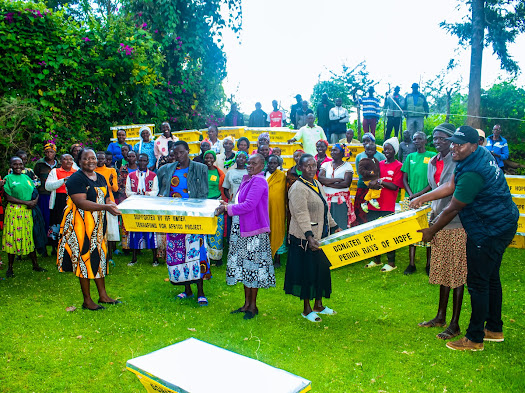
Women in Kapenguria Constituency, West Pokot County, near the Kapkanyar Forest ecosystem, have received 100 environmentally friendly beehives, thanks to a joint initiative by Perur Rays of Hope and the International Tree Foundation (ITF).
The donation is part of a broader effort to promote sustainable livelihoods for rural women while supporting forest conservation, with women from the Sinenden and Katlal groups receiving the beehives free of charge.
Mildred Ichingwa of Ibees Limited, who trained the women courtesy of Perur Rays of Hope and ITF, said that West Pokot has ideal conditions for beekeeping due to its favourable climate and rich biodiversity.
She highlighted the economic potential of beekeeping, noting that a single hive could yield 15 to 24 kilogrammes of honey per season, with honey fetching between Sh700 and Sh1,000 per kilogram.
“Beekeeping is a low-cost, manageable activity that can be easily adopted by the community,” she said, adding that the practice also supports forest conservation as bees rely on nectar from trees and flowers.
Ichingwa encouraged the women to view beekeeping as a sustainable source of income and a valuable tradition to pass on to future generations.
Caroline Menach, HSC, the Director of Perur Rays of Hope and Principal of St. Elizabeth Girls Secondary School in Morpus, Pokot South Constituency emphasized the organization’s commitment to empowering women and conserving the environment.
She revealed that the organization has so far donated 100 beehives as part of a wider initiative to promote eco-friendly practices and enhance livelihoods.
“This project not only provides income through honey production but also contributes to forest conservation by encouraging communities to protect the natural habitats bees depend on,” said Menach.
She added that the organization is also promoting agroforestry by distributing avocado trees to highland farmers and mango trees to those in lowland areas, in a bid to reduce deforestation and improve livelihoods.
In support of national targets to plant 15 billion trees, Perur Rays of Hope plans to plant 50,000 tree seedlings this season, including 20,000 during the Madaraka Day celebrations in schools within Morpus, Batei Division and areas such as Kapkanyar Forest and the Kapenguria environs.
Menach stressed the importance of preserving forests, not only for biodiversity, including declining species such as colobus monkeys and sitatunga antelopes, but also for protecting water sources like the Nzoia River and preventing soil erosion and landslides on hillside areas such as Mtelo and Kalapata.
She emphasized that empowering women economically helps reduce Gender-Based violence and improves household food security and well-being.
“Empowered women are better able to support their families and contribute to community development,” she said.
Menach called on communities to stop cutting down trees indiscriminately and urged stakeholders and well-wishers to support forest restoration efforts.
“Environmental protection is a collective responsibility that benefits future generations,” she added.
Her dedication to community development and environmental stewardship has earned her the Head of State Commendation (HSC).
Joshua Mutambuki, the Project Officer for Western Kenya at ITF, expressed satisfaction with the impact of the partnership between ITF and Perur Rays of Hope.
He said the collaboration falls under the Terrafund for AFR100 project, which focuses on sustainable development and ecological restoration.
Last year, the project facilitated rehabilitation of 20 hectares by planting 50,000 tree seedlings, with 20,000 in Kapkanyar Forest and 30,000 for agroforestry in schools and farmers. In addition, 150 farmers each received 100 seedlings for agroforestry, with a high survival rate observed.Mutambuki described the beehive donation as a step toward supporting climate-resilient, nature-based enterprises.
He also said that of over 100 energy-saving eco-stoves were installed, which provide a smoke-free cooking alternative, reducing firewood use and benefiting both health and the environment.
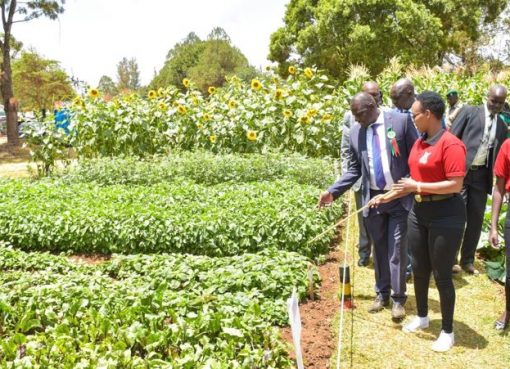
The initiative includes training in sustainable land management, crop diversification, and soil conservation. “We are also promoting kitchen gardens using local materials and vertical gardening bags to enhance household nutrition and generate income,” he added.
Mutambuki noted that avocado tree distributions are already yielding positive outcomes, with increased production expected in the next two years. Women have also been trained in grafting seedlings, enhancing local capacity for tree cultivation.
“We expect to see even more success stories and long-term positive impacts on both conservation and community livelihoods in the coming years,” he said.
Viola Rotino, a beneficiary of the programme, expressed her gratitude for the donation of the 100 beehives, saying they would significantly boost women’s incomes.
“Even in the absence of our husbands, we will be able to support our families through honey production,” she said.
Rotino added that the income would help women buy household items, pay school fees, and improve living standards. She noted that the programme has enhanced women’s confidence and resilience.
She suggested that the women could form a cooperative to collectively export honey to international markets, enabling them to acquire land, build better homes, and sustain their families.
Rotino encouraged continued support from donors, noting that such programmes were helping women shift away from outdated practices that have limited development.
Another beneficiary, Thomas Pkemoi, a farmer from Sinenden village thanked the organization for the beehives and tree seedlings, which he has planted on his farm.
He said honey production would help cover school fees and improve health. “Honey boosts immunity and is especially beneficial for bone recovery and strengthening,” he added.
By Anthony Melly