The call for coordinated, data-driven and agroecology-informed approaches comes as Africa seeks to balance economic growth with environmental sustainability.
With the right policies and partnerships, countries can unlock opportunities in green jobs, nature-based solutions and sustainable land-use practices that deliver long-term benefits for both people and the planet.
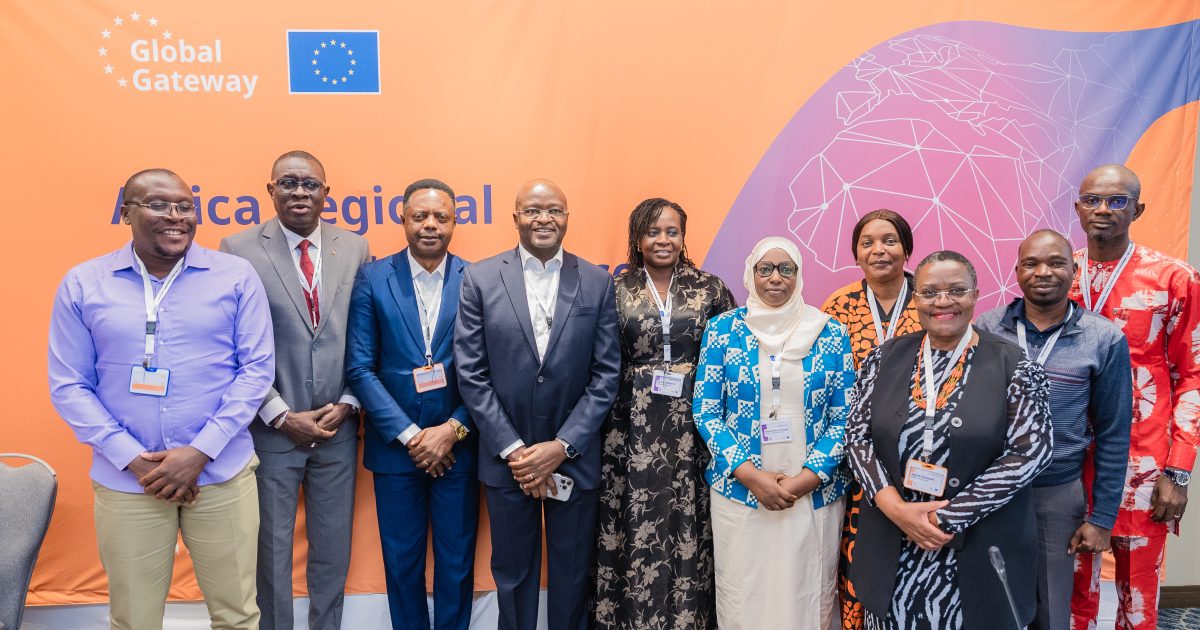
Policymakers, researchers, donors, regional institutions, civil society and private sector representatives from Africa and Europe are gathered in Nairobi this week (September 15-18) for the annual Africa Regional Centres of Excellence (ArcX).
The forum is advocating for evidence-based policymaking, research collaboration and knowledge sharing to strengthen the sustainable management of Africa’s forests, biodiversity and ecosystems.
Organised under the EU–Africa partnership, the forum is exploring how science, technology and innovation can accelerate Africa’s green transition and sustainable development.
It is also emphasizing the need for African governments, research institutions and development partners to adopt a more integrated and coordinated approach to managing the continent’s biodiversity and ecosystems spanning forests, water bodies, vegetation and wildlife.
Deputy Head of the European Union Delegation in Kenya Mr. Ondrej Simek while speaking during the event in a Nairobi hotel on Monday said that through science, technology and innovation, we can address the most pressing challenges of our time.
“We can build stronger connections, foster deeper collaboration and create lasting impact,” he said adding that the call for coordinated, data-driven and agroecology-informed approaches comes as Africa seeks to balance economic growth with environmental sustainability
Director of Science at CIFOR-ICRAF Dr. Robert Nasi said that Africa is losing its forests at an alarming rate and this has severe economic consequences threatening not only forests but also agriculture, which employs a huge proportion of Africa’s population.
“The result is rising unemployment, desertification, the loss of habitats for countless species, declining biodiversity and damage to the tourism sector, a major contributor to our economies,” said Nasi.
He said that we must move from simply observing to truly acting because the economic cost of inaction is staggering. He noted that we have satellites, observatories, and advanced monitoring tools, yet action still lags behind.
Science & Technology Specialist at the African Union Commission Dr. Mahaman Bachir Saley said that we must harness science, technology and innovation to address challenges like climate change, biodiversity loss, food security, energy access, as well as ocean and coastal management.
“Translating scientific research into political action is critical. Too much of our research remains within universities and fails to reach policymakers” said Saley, adding that it is time to bridge this gap between knowledge and governance, ensuring that scientific evidence informs decisions for Africa’s future.
He said that without accurate information on species populations, forest cover, land use and water quality, governments cannot design effective policies or track progress towards commitments such as the Kunming-Montreal Global Biodiversity Framework and the African Union’s Agenda 2063.
He said that the continent’s natural resources are undergoing pressure from land degradation, deforestation, pollution, rapid urbanisation, unsustainable agricultural expansion and climate change.
“Science and technology are no longer luxuries; they are essential,” he said, adding that Africa is rich in potential and natural resources and yet potential alone is not enough.
On his part, Africa Director for CIFOR- ICRAF Dr. Peter Minang observed that Africa’s ecosystems are deeply interconnected and when one part of this system is weakened, the entire network of life is affected.
“Our economies do not depend on a single resource; they rely on all of them working together. If our forests disappear and water resources are lost, then food security, development, and economic growth will all be undermined,” he said
He said that the continent is already experiencing the impacts of climate change, including prolonged droughts and erratic rainfall, which are affecting livelihoods and disrupting our economies.
“The only way to address these challenges is through the sustainable management of our forests, ecosystems, biodiversity, and water resources collectively,” stated Dr. Minang, emphasizing that credible data, accurate knowledge and effective monitoring systems are essential for evidence-based policymaking.
Participants also stressed that farming systems must work in harmony with nature. Agroecology, which applies ecological principles to agriculture, was highlighted as a critical pathway. In Africa, where farming is the dominantly land use, agroecology has the potential to transform agriculture into a driver of both ecosystem health and rural prosperity.
By improving soil health, enhancing water retention and reducing dependence on chemical inputs, practices such as intercropping, agroforestry and the use of native species can restore biodiversity while boosting food production and resilience to climate shocks.
Launched in 2023 and funded by the European Union, the Africa Regional Centres of Excellence (ArcX) programme supports regional collaboration across Africa in five priority areas: Agroecology, Biodiversity & Forests, Water, Ocean and Climate.
By Anita Omwenga