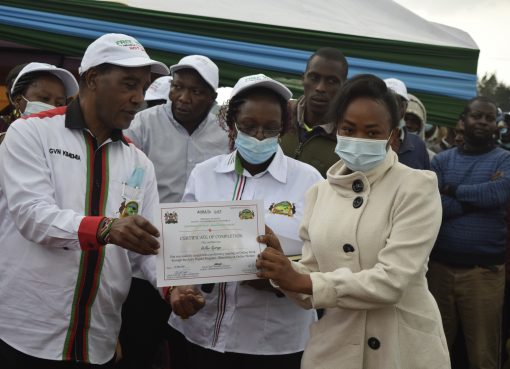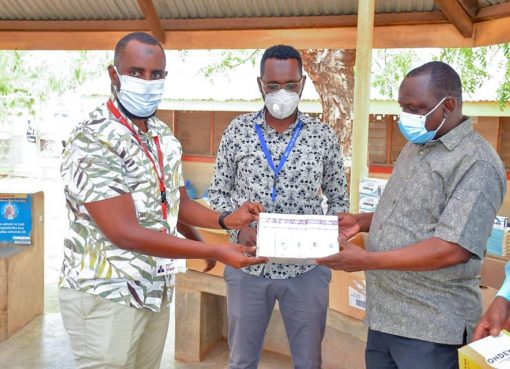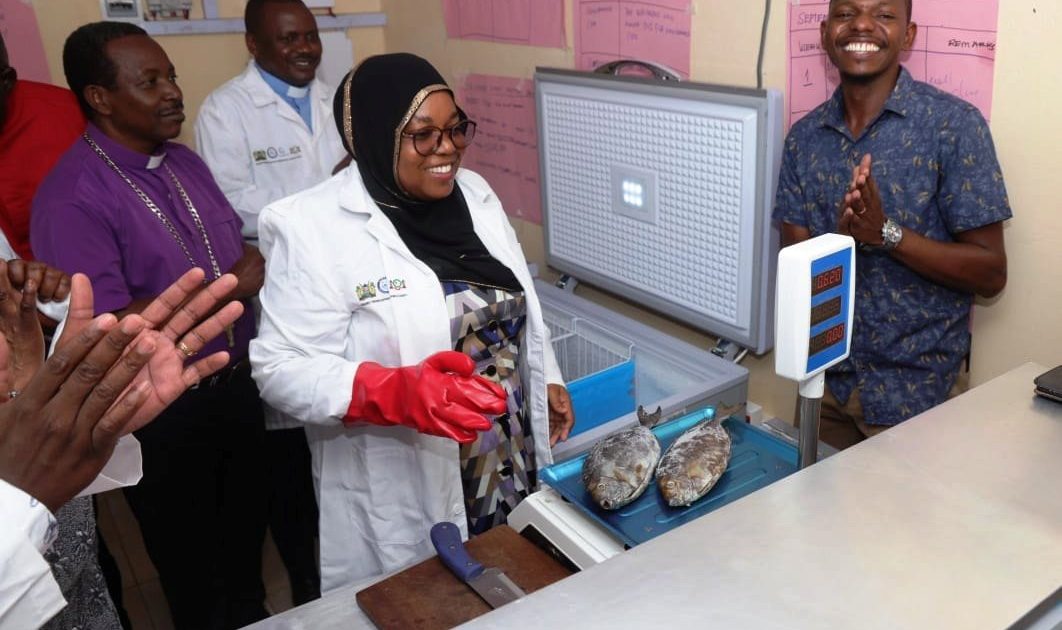
Kwale County government is distributing equipment for the processing and storage of fish to local small-scale fish farmers to increase production of marine food and household incomes.
The equipment includes freezers, chillers, cooler boxes, energy-saving cooking jikos, frying pans, display boxes, solar-powered systems, lamps, and umbrellas, aiming to reduce post-harvest losses, increase incomes for fishermen, and improve access to markets.
The latest group to receive the value addition support is the Diani Pastors’ Fellowship Self-Help Group in Ukunda ward, Msambweni Sub-County.
Kwale’s fisheries sector is plagued by several challenges, such as overfishing, illegal fishing, limited funding, and inadequate data collection, which Kwale, with the help of development partners, seeks to address.
Governor Fatuma Achani said the equipment would enhance fish storage and hygienic standards, adding that the initiative is aimed at scaling fish farming in Kwale.
Governor Achani said the support is part of a project by the County Government through the Kenya Marine Fisheries Socio-economic Development (KEMFSED) Project, funded by the World Bank.
The coastal county in partnership with the KEMFSED project, is actively scaling up fish farming through initiatives like aquaculture, providing grants to crop and fish farmers to overcome financial constraints and boost local production.
This effort aims to promote the county’s food and nutrition security and economic empowerment, especially for small-scale farmers.
The Governor was accompanied by County Executive Committee Members (CECM) Saumu Beja (Environment and Natural Resources), Michale Mutua (Trade and Tourism) and Francisca Kilonzo (Social Services and Sports).
“This distribution marks an important step in empowering coastal communities and strengthening the local economy,” she said while advising beneficiaries to make good use of the equipment.
The KEMFSED project is implemented by the State Department for Blue Economy and Fisheries with support from the World Bank and the project duration being 2020-2025 worth Sh.10 billion.
The KEMFSED project is being implemented in the coastal counties of Mombasa, Kwale, Kilifi and Lamu to improve livelihood activities in coastal communities.
The donor funded programme aims at expanding access to livelihood support, food security services, and grants for poor and vulnerable households and businesses, contributing to the overall socio-economic development of the coastal counties.
Kwale in collaboration with KEMFSED project has been empowering fisherfolks by distributing fish fingerlings and other inputs such as fish tanks to support the aquaculture sub sector and improve food and nutrition security and livelihoods.
The partnership programme has been distributing to small-scale fisherfolks items that include multifilament fishing nets, fiberglass fishing boats with outboard engines, cold storage facilities, flares, bond liners, GPS gadgets, life rafts and life jacket floats to small scale fishermen in order to turn fishing into a profitable venture.
The Governor said the partnership with the KEMFSED project is also aimed at promoting and empowering local fish farming and providing residents with access to affordable seafood.
She added that the new partnership initiative has a dual purpose of ensuring food and nutrition security and supporting and empowering local fish farmers to realize profitability.
“Under the KEMFSED project, we have already distributed 50 modern fishing boats, eight ecotourism boats, and six seaweed farming boats to support the local blue economy sector,” said Achani.
She added, ‘these efforts aim to improve fish availability, create jobs, and empower fisherfolk by providing modern equipment and resources to enhance the entire fish value chain’.
The blue economy encompasses a range of marine-related sectors that contribute to economic growth, improved livelihoods, and job creation while ensuring the health of marine ecosystems.
“Through the KEMFSED partnership, we are seeing how targeted support can help unlock fish farming’s full potential as a source of food security, rural livelihoods, and economic resilience,” she said.
The county boss said each boat comes fully equipped with fishing gear, safety tools, GPS, and fish finders to help fishermen work more safely and effectively in deep-sea expeditions.
Deep-sea fishing is undertaken beyond the limit of territorial waters, which is seven nautical miles from the shore, and within the Exclusive Economic Zone (EEZ) of 200 nautical miles from the shore.
Kenya’s EEZ is a 200 nautical mile (370 km) area extending outwards from its coastline, granting the country sovereign rights over its resources such as fisheries, oil and gas and other seabed minerals within that zone.
“We have also built nine modern fish landing sites in Shimoni, Vanga, Gasi, Chale, and Tsunza equipped with cold storage and proper handling facilities to keep fish fresh and reduce losses after harvesting,” said Achani.
Achani stated that the empowerment program is focused on offering solutions to post-harvest problems, usually limiting fishermen from having real value on their investments.
The coastal county boss advised Kwale fishermen to boost domestic production and improve their fish product quality in line with global safety standards.
She said the devolved government has set up 60 freshwater ponds and distributed 70,000 Nile tilapia and catfish fingerlings to small-scale fish farmers in Msambweni, Matuga, Lunga Lunga and Kinango sub counties.
Achani said her administration is focused on scaling up aquaculture to enhance fish stocks, improve the local economy and create jobs.
“These fingerlings are being distributed to establish and expand freshwater fish farming in the county, which helps diversify livelihoods and reduce over-reliance on marine resources,” she said, adding that its helping fishermen reduce input costs and adopt environmentally friendly practices.
Chairman, Diani Pastors Association, Danny Nganyi, thanked the county government for the timely support, stating that the fish project will enable them to enhance their livelihood.
He welcomed the efforts by the county and the KEMFSED project for their commitment to the expansion of the fishing and aquaculture sectors.
“This support means a lot to us. With proper storage and processing equipment, we can now sell our fish at better prices and reduce the wastage we used to experience,” said Nganyi.
He underscored that the distribution of the fish value addition equipment not only secures the future of local fish farmers but also helps them in gaining control over the industry, their destiny as well as building strong communities.
By Hussein Abdullahi and Rachael Nzioki