The government is degazetting 45 facilities suspected of fraudulent activities and will initiate investigations soon after.
The Health Ministry suspended 40 health facilities by SHA two weeks ago following forensic audits, following a Gazette Notice announcement.
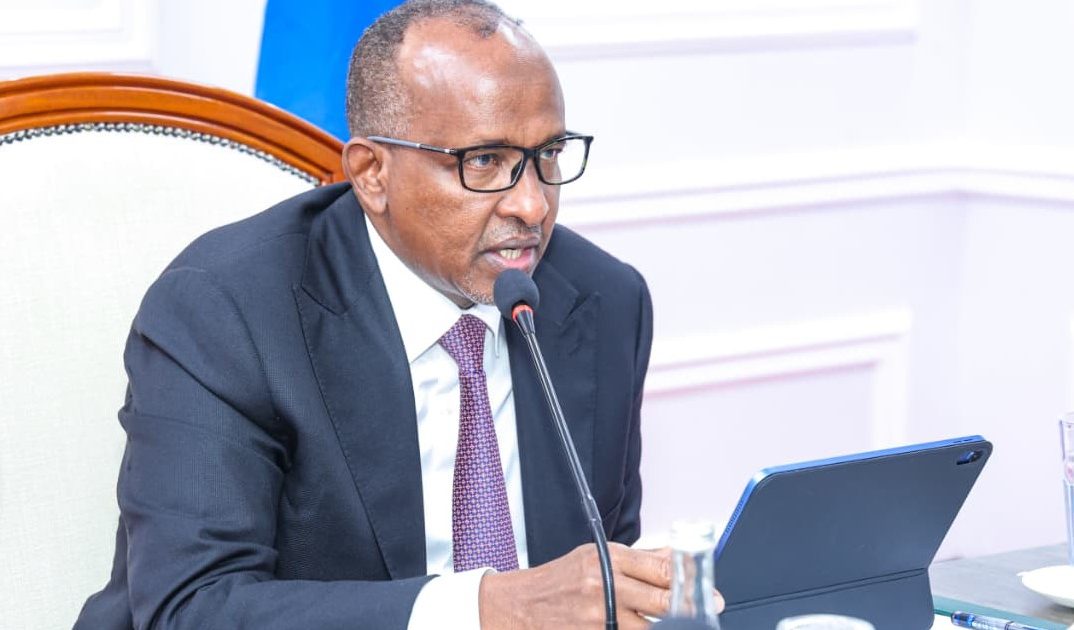
Health Cabinet Secretary Aden Duale in a press briefing Monday said that audits have revealed deeply troubling patterns of fraud that included billing for more expensive procedures than those actually performed and submitting altered or false medical documentation, and all this contravenes Section 48(5) of the Social Health Insurance Act, 2023, and Regulation 34(2)(f) of the Social Health Insurance Regulations, 2024.
Others are illegally billing for inpatient admissions for what were simple outpatient visits and also submitting claims for services provided to nonexistent patients.
He named Nabuala Hospital, Bungoma; Kotiende Medical Centre, Homa Bay; Vebeneza Medical Centre, Nairobi; Jambo Jipya Hospital, Mtwapa and New Manyalo Nursing Home, Wajir, who were among the few engaged in various malpractices but said that the ministry would make a detailed report public to ensure full transparency.
“Healthcare fraud is a global problem, draining an estimated 3percent to 15percent of healthcare expenditures annually. In Kenya, the Association of Kenya Insurers (AKI) reports that fraudulent claims account for 30percent of all payouts. This isn’t just a challenge for us; it’s a systemic menace,” the CS said.
He noted that rigorous enforcement is therefore necessary, adding that since he took office in April, they have intensified the fight.
On claims for re-evaluation, Duale said there are Sh3 billion worth of claims that were being re-evaluated due to missing documents, and claims worth Sh2.1 billion are under surveillance for further investigation.
“This rigorous process is a key part of the Authority’s function under Section 35(2) of the Social Health Insurance Act, 2023, which mandates the Claims Office to review, process, and validate medical claims and conduct quality assurance surveillance,” he said.
The CS confirmed that for the month of August alone, claims under review total Sh7.6 billion.
Addressing the NHIF Legacy Debt, the CS noted that they respect the recent High Court ruling, but this would not absolve their duty to ensure public funds are used prudently.
On Monday last week, the High Court ruled on the Pending Medical Claims Verification Committee established by CS Aden Duale, terming it to be unconstitutional and quashing it for having no statutory basis.
“As committed by His Excellency the President, the government will pay all verified claims of Sh 0–10 million, and these payments will be factored into the supplementary budget in full respect of the Constitution and relevant financial acts,” the CS said.
However, Duale noted that claims above this threshold must still undergo a rigorous verification process and that as a government they have a duty to pay only for services legitimately rendered in full respect of Article 201 of the Constitution on the Principles of Public Finance, as well as the Public Finance Management Act and the Social Health Insurance Act, 2023.
Furthermore, the CS mentioned the role of health care associations, saying that SHA contractual agreements were made directly with individual health care facilities, not with associations.
Section 34 of the Social Health Insurance Act, 2023, specifies that the Authority negotiates and enters into contracts with individual healthcare facilities.
According to CS Duale, while they respect the crucial role played by associations such as
RUPHA, it is important to clarify that the government’s primary obligation is to pay for genuine claims and to protect public money.
“All obligations and accountability vest with the contracted parties, he individual facilities and the Social Health Authority. It is the responsibility of each facility to adhere to its contractual and ethical obligations,” the CS said.
Duale had called for a press conference to provide a comprehensive update on the fight against fraud and also to address recent discussions, including those on social media and from various professional associations on the Taifa care programme.
By Wangari Ndirangu