In the rolling hills of Kasphat, Kiambaa Subcounty, Susan Nduta has built a successful dairy farming enterprise that produces 180 litres of fresh milk daily, demonstrating how modern farming techniques can transform rural livelihoods.
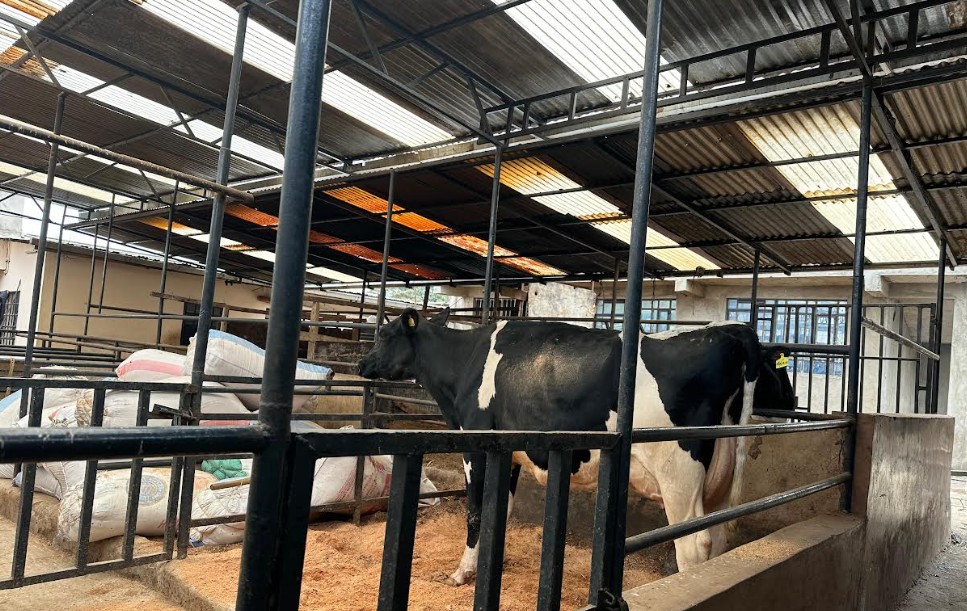
Nduta’s farm is home to six Friesian Holstein cows and three calves, with each mature cow producing an impressive 30 litres of milk per day.
This high-yielding breed has become the backbone of her thriving dairy business that serves both local communities and commercial suppliers.
The dairy operation has grown to support two full-time employees, creating employment opportunities in the rural area while meeting the growing demand for fresh milk in the region.
The business model combines direct sales to local residents with bulk supply contracts to milk suppliers, ensuring steady income streams.
Nduta explained the key to her success during a visit to the farm.
“When I started this dairy business, I focused on getting the right breed and providing proper nutrition for my cows. The Friesian Holstein breed has proven to be excellent for our climate,” she said.
The farmer emphasises animal husbandry practices, including regular veterinary care, balanced feeding, and maintaining clean milking conditions to ensure high milk quality and quantity.
The operation maintains well-stocked stores of hay and other organic cow feed products to ensure livestock receive consistent, quality nutrition throughout the year.
Douglas Wanjala, one of the farm workers, highlighted the importance of proper care in maintaining high milk production.
“The cows are well-fed and healthy, which is why we get consistent milk production every day. Good feeding and clean conditions make all the difference,” he said.
The operation serves dual markets, supplying fresh milk directly to local households while also meeting the demands of commercial milk suppliers who distribute to urban markets. This diversified approach has helped stabilise income and reduce dependence on a single market channel.
Nduta’s efforts demonstrate how agricultural entrepreneurship can drive economic development in rural areas, providing both direct employment and supporting value chains that benefit the broader community.
The farm’s success story reflects the potential of dairy farming in Kiambu County, where favourable climate conditions and fertile soils provide an ideal environment for livestock keeping.
Nduta has become a model for other aspiring dairy farmers in the area.
By Michelle Njeri