The first lesson Josephine Achieng learnt about her body was not how it worked, but how dangerous it was perceived to be.
When she started menstruating, she was pulled aside by a school matron and warned to “stop playing with boys” because she could now get pregnant.
There was no explanation. No conversation. Just fear, wrapped in silence. That moment would shape her life in ways she could not yet imagine.
Today, Josephine is a young advocate championing access to Sexual and Reproductive Health (SRH) information and HIV prevention services for young people, especially those most at risk and excluded.
Her journey from a girl warned into silence to a woman speaking boldly about choice, control, and dignity mirrors a broader shift in Kenya’s HIV prevention landscape; the challenges remain, but the options are expanding.
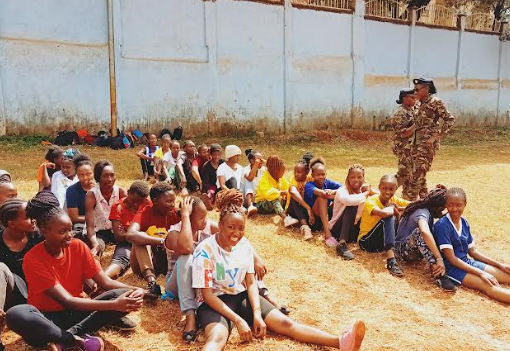
Like many girls across Kenya, Josephine grew up in a community in Kakamega, where sexuality was discussed indirectly, if at all.
Like most other Kenyan communities, what was acceptable was communicated through uncomfortable pauses, glares from mothers, warnings, and social cues rather than honest dialogue.
Girls were taught how to behave, not how their bodies functioned. Sexuality, especially female sexuality, was treated as shameful and dangerous.
“HIV was only mentioned in whispers, usually after someone fell sick or died. It was never talked about as something you could plan for or prevent,” Josephine recalls.
The message was clear: a “good woman” avoids risk. Yet no one explained what risk actually looked like or how a young woman could protect herself with confidence and knowledge.
That silence left many girls unprepared, relying on myths instead of facts, learning about their bodies only after consequences appeared.
For Josephine, it meant growing up believing she had no say over her own health.
She avoided asking questions, delayed seeking care, and internalised the idea that decisions about sex and protection were not hers to make. It took years to unlearn the conditioning.
Josephine’s entry into HIV prevention came through research.
Motivated by curiosity and a deep sense of responsibility to herself and her community, she joined her first oral Pre-Exposure Prophylaxis (PrEP), an HIV prevention pill research trial conducted by local partners working with public health institutions and community organisations supporting key populations.
“I was nervous, but I was also proud, for the first time, HIV prevention felt personal, a situation I could actively control rather than just fear,” she says.
That first trial changed how she saw prevention. It was no longer a warning or a moral judgement; it was a practical tool.
Over the years, Josephine participated in two major HIV prevention research experiences in Kenya.
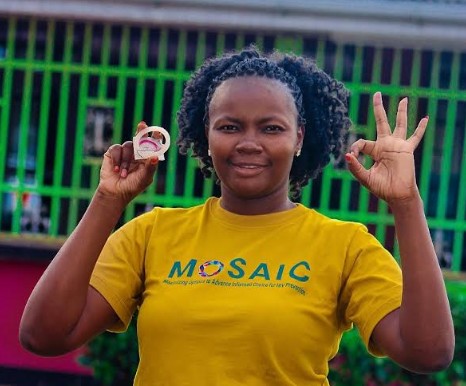
Oral PrEP became her introduction to intentional protection. Later, the dapivirine vaginal ring offered a different, discreet, long-acting option that fit quietly into her daily life.
Through the MOSAIC study, a programme that helps young women learn about and try different HIV prevention options, Josephine did more than use a new method.
She learnt how her body works, grew more confident, and began to feel in control of her own health.
“I realised prevention is evolving, and finally, it was starting to meet people where they are, here in Kenya,” she says, adding, but protection came at a price.
When Josephine used oral PrEP, family members and partners questioned her motives.
The pills were mistaken for HIV treatment. Some assumed she was promiscuous. Others assumed she was already infected.
The daily pill burden became emotionally exhausting, especially in a context where PrEP is often confused with HIV treatment.
Even clinics, meant to be spaces of care, sometimes felt unsafe. Josephine remembers walking into a hospital for a routine refill of her PrEP HIV prevention pills and immediately sensing judgement: whispered conversations, sideways glances, and questions asked in condemning tones.
“I felt like I had done something wrong, just by taking care of my health,” she says. She walked out without her medication.
At one point, the pressure nearly pushed her to abandon prevention altogether. What kept her going were healthcare workers who treated her with dignity, who answered her questions without judgement, and who reminded her why her participation mattered.
“They held my hand when others pushed me away,” she says.
Josephine’s story is unfolding at a critical moment for Kenya’s HIV response. Stigma, judgement, and silence still shape the experiences of many young women seeking prevention services.
Clinics are not always safe spaces. Families still misunderstand prevention. The daily realities remain heavy.
But unlike before, the conversation is no longer about whether women should protect themselves; it is about how they can do so with dignity.
“Kenya’s HIV prevention toolkit has expanded from the traditional ABC approach of abstinence, being faithful to one partner, and condom use to a wider range of options, including daily oral PrEP, the dapivirine vaginal ring, injectable cabotegravir, and the anticipated roll-out of long-acting Lenacapavir,” Josphene noted.
Dr. Jonah Onentiah, HIV Prevention Manager at the National AIDS and STIs Control Programme, says the tools are redefining what protection can look like.
The science is moving forward; social acceptance, however, is struggling to keep pace.
“Everything shifted for Josephine when she began using the dapivirine vaginal ring. For the first time, I felt relief; I felt in control,” she says.
The ring was discreet. No one could see it. No one questioned it. It offered privacy, peace of mind, and dignity, things she had struggled to maintain while on oral PrEP. That sense of autonomy transformed how she approached relationships, work, and her future.
“Having options is not just medical; It is personal power,” she reflects.
Josephine soon realised her story could do more than protect her; it could protect others.
During community trainings and youth forums, especially those supporting the roll-out of HIV prevention options, she began sharing her journey openly.
She remembers a young woman approaching her after a training and saying, “Your story gave me the courage to stand up for myself.”
“That’s when I knew speaking out mattered,” Josephine says.
Today, she works with young people and sex worker communities, often blamed rather than supported. Stigma, misinformation, and even threats are constant realities.
Many are judged, denied services, or treated as sources of disease rather than individuals with rights, dreams, and choices.
“The barriers are real, but they are also what drive my work. If we do not give equal health care to all, then we expose all of us to risk,” she says.
In 2023, while attending an international HIV advocacy programme, Josephine heard about long-acting injectable HIV prevention, Lenacapavir, for the first time. Two injections a year. No daily pills, less stigma, more control.
“This felt like hope, not because the challenges had disappeared, but because, for the first time, there were even more options,” she says.
As Kenya prepares for the rollout of Lenacapavir, a twice-yearly injectable form of PrEP, in January 2026, Josephine is optimistic but cautious; she knows innovation alone will not guarantee access.
“Communities need accurate information. Health workers must be trained in respectful, stigma-free care. And services must be affordable and integrated into youth- and key-population-friendly spaces. Otherwise, people will still be left behind,” she says.
Today, ‘choice’ means something radically different to Josephine than when she was first warned into silence.
Where once there were few visible options, there are now multiple paths to protection.
“For women, power in HIV prevention comes down to three things: control, Choice and Access,” she says.
Her vision is of a Kenya where young women can make decisions about their bodies freely and safely, where healthcare spaces are inclusive and confidential, and where silence no longer defines girls, futures.
When Josephine reflects on her journey, from fear and stigma to confidence and advocacy, what stands out most is resilience.
“I learnt that even the hardest experiences can be turned into protection and hope for others. I am grateful to the mentors who held my hand as I navigated these spaces,” she says.
If her younger self could see her now, she believes she would be proud.
“She would see a girl who was warned into silence, who grew into a woman who speaks, chooses, and stands for others,” Josephine says softly.
The challenges that shaped her journey have not disappeared. But things have changed. There are now choices. New tools, New conversations.
“For every girl still growing up in silence, my story carries a simple truth: the fear has not disappeared, the stigma has not vanished, but today, there are options. To every girl, choosing protection, in whatever form fits your life, is not something to be ashamed of. It is an act of power,” she adds.
And in a country where too many girls are still taught to fear their bodies, Josephine’s story offers a powerful reminder: choice is not just a medical option or a scientific breakthrough; it is a form of freedom.
For girls who once had no choices at all, having an option that fits their lives is no longer a distant promise. It is power.
By Violet Otindo