The Geothermal Development Company (GDC) is looking to expand the area under geothermal exploration and development as it seeks to increase the amount of electricity produced using renewable energy.
GDC Acting Managing Director and Chief Executive Officer Mr Stephen Busieney said the company was marking a significant expansion of its footprint in Kenya’s renewable energy landscape and had begun geothermal exploration at the Suswa field in Narok County,
The move, the MD explained, is expected to further reduce Kenya’s dependence on hydroelectricity that is prone to dry weather as well as eventually retiring costly fossil fuel fired thermal power plants.
Speaking at the Menengai Camp in Nakuru, Busieney confirmed that drilling rigs had been mobilized to Suswa, joining GDC’s active projects in Menengai in Nakuru and Paka and Silali in Baringo counties.
While indicating that Suswa had a potential of 300 Megawatts, Busieney emphasized that the move signals a new phase in Kenya’s bid to harness its abundant geothermal resources adding that detailed surface studies were completed in early 2013.
He said the state-owned corporation would initially target to harness 100 Megawatts and expressed optimism that by July, they would have in place the first rig. He further noted that GDC was now better placed in the field of steam exploration from its past experiences at Menengai in Nakuru and in Baringo County.
The MD said it was time for GDC to expand from the places it has been exploring for geothermal steam because Kenya needs additional clean energy adding that Suswa was a bigger and a more accessible area for exploration.
“We believe within the next three years we will have achieved our target,” the Managing Director assured.
The first stage that will incorporate three phases will develop a total of 300MW, with each phase developing 100MW, the official explained.
Busieney said the company was prepared for the task ahead as they had the team and capability to break new frontiers.
He said the project reflected the firm’s growing technical strength and offered staff development opportunities.
Kenya’s geothermal resources are among Africa’s richest. The country has nearly 1,000 megawatts of installed geothermal capacity and an estimated 7,000 to 10,000 megawatts of untapped potential along the Rift Valley.
Geothermal power forms a substantial share of Kenya’s clean energy mix and offers stable baseload generation, reducing reliance on hydropower and fossil fuels.
GDC’s mandate is to de-risk early exploration and sell geothermal steam to investors and power producers, laying the groundwork for future energy projects.
Busieney pointed out that the expansion was part of Kenya’s broader strategy to join the geothermal “gigawatt club” and lower national energy costs through renewable sources.
He noted that last year, GDC struck steam at the Silali field marking a major milestone in opening up a new frontier of renewable energy for Kenya.
Silali is part of three fields including Korosi and Paka which are part of the Baringo- Silali -Paka Geothermal project where GDC has been drilling wells for the past seven years in the geothermal rich region.
He said the success is a major boost in the State corporation’s quest to provide Kenya with affordable and reliable energy.
The first viable well at the Baringo-Silali-Paka Geothermal project was struck at the Paka field in 2020 “This was an exciting time for GDC and Kenya. It proved the viability of the Silali geothermal field ushering Kenya into an age of vibrant geothermal energy,” Busieney said.
Having one well discharging steam at 22MW is equivalent to drilling about four wells that discharge at 5MW. Considering that drilling a well costs Sh700 million (costs $5 million), it is a huge saving, the MD said.
The acting CEO indicated that the first phase of the Baringo-Silali-Paka project targets to develop 300MW spread in three geothermal areas of Korosi, Paka and Silali with each of fields producing 100MW.
“Our commitment is to ensure timely delivery of renewable energy projects that will greatly support the country’s development vision plans,” the acting CEO said.
Paka field, where most of the work has been done, is slated to start production of the first 100MW by 2028.
He said they had drilled for the steam and next was power plant construction adding that they were doing a feasibility study and thereafter scout for investors.
The MD noted that all major economies thrive because of access to abundant energy adding that Geothermal would power Kenya into a vibrant future of great industrial and social development.
At Baringo-Silali -Paka, Busieney disclosed that GDC has harnessed 75MW of geothermal steam. The company targets to have a 105 MW power plant at Paka by 2027.
He disclosed that power producers would be competitively selected to build power plants at the Baringo-Silali-Paka geothermal fields, which are then expected to start electricity production by 2028.
This is as Kenya eyes increased electricity production from geothermal to reduce reliance on hydro power that is prone to weather shocks as well as displace costly thermal power plants.
The Baringo-Silali fields, which are outside the traditional geothermal fields of Olkaria, have capacity to produce an estimated 3,000 megawatts making them an appealing alternative for the country that now needs to balance between availing power to the grid and making it affordable.
While geothermal resources in Kenya are estimated to have a potential to produce 10,000MW, the country has exploited about 950MW to date.
Of this, about 800MW is generated at power plants built by Kenya Electricity Generating Company (KenGen) while the balance is by Independent Power Producers (IPPs) Orpower that produces 150MW at its plants at Olkaria and the recently launched 35MW plant by Sosian Energy at Menengai Geothermal Project.
At Baringo-Silali-Paka, GDC has drilled wells that could generate up to 70MW which it intends to increase to 100MW by end of the year.
Busieney indicated that the IPPs that would put up power plants at the Baringo-Silali fields would sell electricity to Kenya Power at between Sh8 and Sh10 (six and seven US cents) per unit. This is the cost for the power producers and is before taxes and levies as well as costs such as fuel and forex adjustments are loaded on the power bill.
GDC has been derisking the fields by way of exploring and drilling wells in areas that show high potential. It did the same in Menengai and parts of Olkaria.
Since it was established about 15 years ago, GDC, by bearing the high capital investment for exploring and drilling wells and then inviting other firms to put plants, has accelerated development of geothermal.
Power generation through geothermal stood at around 200MW in 1998 when GDC was formed. At the moment, about of the 950MW geothermal installed capacity is generated using steam from GDC wells.
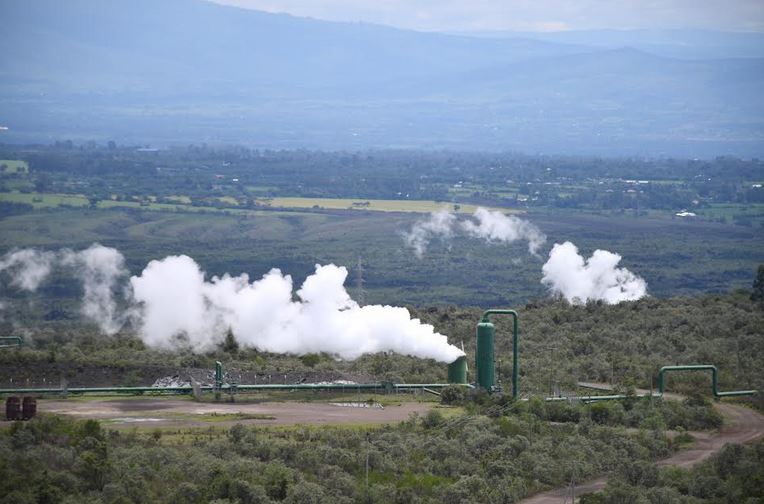
Busieney indicated that GDC was also exploring wellhead technology at both Menengai and Baringo-Silali-Paka projects, which allows for smaller, modular power plants to be built directly at the wellhead, enabling faster deployment and access to revenues earlier in the investment cycle.
Ideally, wellheads take the shape of a normal geothermal power plant, but in a smaller version. While a geothermal power plant is run by steam piped from tens of wells, a wellhead utilizes steam from just a single well.
Once the main plant is fully constructed, the wellheads are removed and moved to different stations so that steam from the wells could then feed into the main plant.
The MD noted that that this concept would help generate more power from each individual well, where the technology reduces well redundancies and prevents well failures. It involves tapping steam from wells that are undergoing tests or awaiting connection to permanent plants.
The technology not only helps to utilize the investment put into drilling the wells, which would otherwise be lying idle, but also yields benefits through early power generation, added the CEO.
According to the CEO, GDC plans to pump an extra 1065mw into the national grid in the next ten years which would be generated from Menengai (465 Mega Watts), Baringo-Silale (300 Megawatts) and 300 Megawatts from South Rift region as the government seeks more geothermal energy.
Busieney noted that the Power plants being developed at Menengai and Baringo-Silali Paka geothermal projects would significantly boost Geothermal Development Company’s (GDC) revenues adding that the State Corporation still had its sights on achieving financial sustainability by 2029.
“GDC will be able to pay its bills and have some spare money for investments,” he noted.
At the Menengai Geothermal Project in Nakuru, the first geothermal power plant built by local firm Sosian Energy started electricity production in 2023 after completion through Sh6.5 billion funding from the China-based Zhejiang Kaishan Compressor.
After derisking the fields GDC competitively selected three firms; – Sosian Energy alongside, Quantum Power East Africa and the American firm OrPowerTwenty Two Company in 2013 through competitive bidding to build, operate and own the first three power plants in Menengai, each generating 35 Mega Watts to pump into the national grid a cumulative 105 Mega Watts.
Busieney explained that the State Corporation has drilled steam wells at the Menengai Geothermal Project with an output of 165 Mega Watts which is more than enough for the first 105MW of electricity expected to be generated by the three IPPs.
GDC has constructed the steam gathering system while Kenya Electricity Transmission Company (Ketraco) has set up a 132 kilovolt (kV) substation that will transmit electricity from the three power plants.
Under the arrangement — christened Menengai Model- GDC was to take care of upfront risks and then invite private sector players to construct, own and operate the plants for 25 years.
According to Busieney, the completion of the 105MW Menengai project will elevate Kenya’s global ranking to fifth overall, establishing beyond all contestation that economic growth and clean energy development can go hand in hand.
In addition to increasing the renewable energy generation capacity in the country, the Menengai geothermal project is expected to reduce greenhouse gas emissions by 1.95 million tonnes of carbon dioxide annually.
By Esther Mwangi & Dennis Rasto