State Department for Correctional Services Principal Secretary Salome Beacco, has reaffirmed the government’s commitment to evidence-based rehabilitation and adoption of best practices in the treatment of offenders.
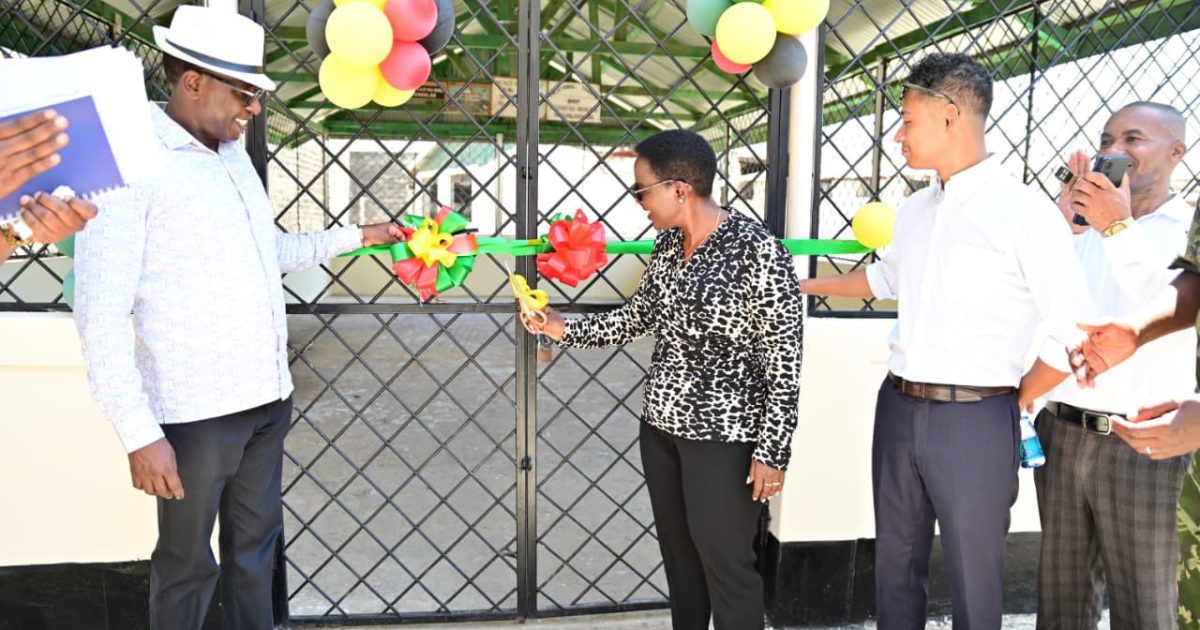
Speaking during the commissioning of a Counselling Centre and Vocational Training Facility at Shimo la Tewa Maximum Security Prison, constructed by Japan’s Ministry of Foreign Affairs through Accept International, Dr Beacco said the transformative agenda aligns with national legal frameworks and international standards.
The transformative agenda, she said, aligns with national legal frameworks and international standards, including the United Nations Standard Minimum Rules for the Treatment of Prisoners, commonly known as the Nelson Mandela Rules, the Bangkok Rules, the Beijing Rules, and the Havana Rules.
Beacco emphasised that the government is adopting a whole-of-society approach to corrections, noting that the new facilities will offer structured training in market-driven skills relevant to Kenya’s growth sectors.
She explained that the vocational pathways provided at the centre align with current labour dynamics, giving inmates practical skills that enhance their employability upon release.
Dr Beacco urged inmates at the facility to seize the opportunity for skills enhancement, broadening of mental acuity and rebuilding of self-confidence.
She appreciated the support offered by Accept International, noting that partnerships bring shared expertise, exposure to global trends and professional exchange that augment the Kenyan correctional landscape.
“These collaborations are essential in ensuring our correctional facilities meet international standards while addressing the unique needs of our offenders,” said Dr Beacco.
Commissioner General of Prisons Patrick Aranduh recognised Accept International for their continued support and urged officers and inmates to take care of the new facilities and equipment.
He encouraged inmates to make use of the counselling services and vocational training opportunities, noting that graduates of the programmes receive government-issued trade certificates, which increase their employability and support reintegration into society.
Probation and Aftercare Services Secretary Dr Christine Obondi praised Accept International’s contribution, noting that the empowerment and resources provided directly improve rehabilitation outcomes within correctional institutions.
Accept International Director Phiri Kanyakiso expressed commitment to continue supporting the department in its reform agenda, explaining that the Japan-based organisation supports de-radicalisation, rehabilitation, and reintegration programmes in conflict-affected regions globally.
“The new facilities are more than just physical structures. They represent hope, reforms, and new opportunities for individuals who walk through these doors,” he said.
by Sitati Reagan