The living conditions of over 200 households in Baringo South Constituency is set to improve after the government connected them to the national grid.
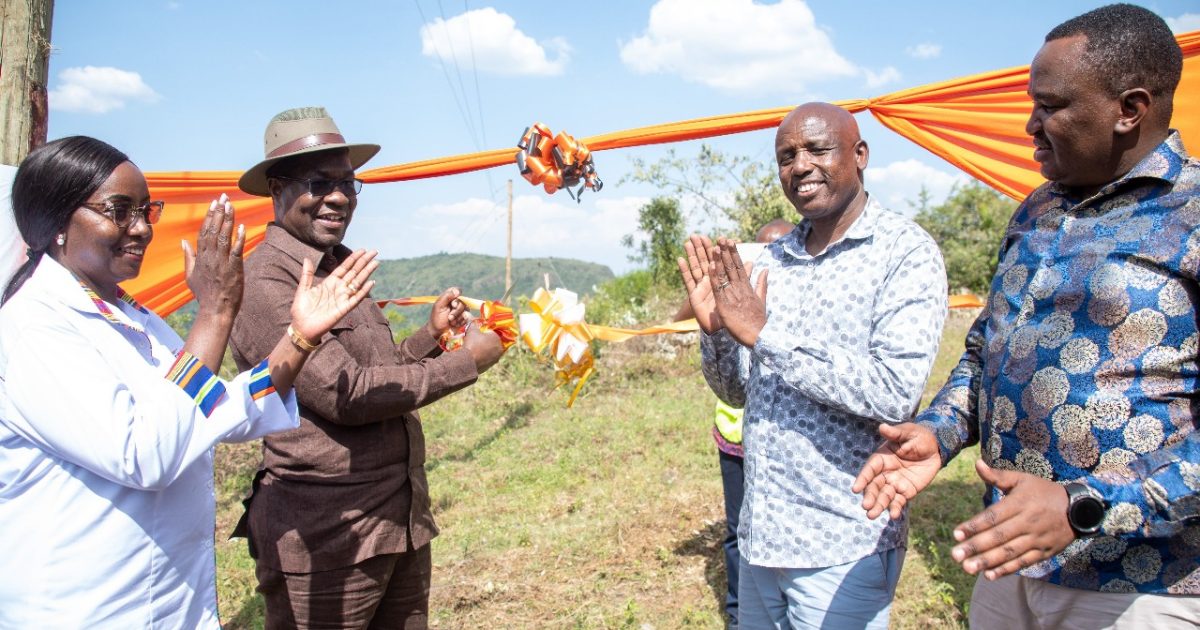
Speaking during the commissioning of the last mile connection, Cabinet Secretary for Energy Opiyo Wandayi said the aim of the electrification projects is to enhance access to power and stimulate economic growth.
The CS launched the Keting–Kabuswo–Kapkures Electrification Project, which will benefit 156 customers including Kapkures Dispensary and the area Chief’s Office.
He was accompanied by Baringo South MP Charles Kamuren, Deputy Governor Felix Kipng’ok, and REREC CEO Dr. Rose Mkalama.
Earlier, Wandayi, together with Dr. Mkalama, commissioned the Kibagenge primary school and Village Electrification Project, connecting over 65 households, Kibagenge primary school, market and dispensary to the national grid.
“As I commission today, I advocate that every household should have electricity, so that students from this area can compete equally with others from different counties. It is these same children who will benefit in the future,” the CS said.
He noted that access to power would open new opportunities for economic activities. “This launch today will help the youth and women engage in different businesses, which will in turn effectively increase the economic standards here in Ramacha and Baringo at large,” he added.
The CS emphasized that peace remained the foundation of development in the region. “In our view, this is the way to go. The matter of peace in this region is very important because for the economy to grow, it requires peace and tranquility. We must thank President Dr. William Ruto and local leadership led by Charles Kamuren for working tirelessly to ensure that peace and harmony are restored,” Wandayi said.
He underscored the historical coexistence of the Pokot and Tugen communities, remarking: “The people of this area, the Pokot and Tugen, have lived together since time immemorial, just like sisters and brothers. There is no reason whatsoever why they cannot continue to live in peace and tranquility”.
Residents described the electrification as a turning point after years of insecurity. Ramacha village, once plagued by banditry, lit up with electricity for the first time in history.
“Women here had never seen electricity in their lives,” said the head teacher of Ramacha primary school, which reopened two years ago after being shut for 19 years.
Assistant Chief of Arabal sublocation, Emily Kimoi, said, “Before, these communities could not see eye to eye. Now, they stand together in the glow of one light”.
Local leaders urged churches and organisations to seize the opportunity to uplift the community, noting that electrification symbolized not only development, but also renewed peace and unity.
by Christopher Kiprop