The Government is in the final stages of developing comprehensive policies on research development, Artificial Intelligence, and science diplomacy, to strengthen Kenya’s innovation ecosystem and enhance health care delivery.
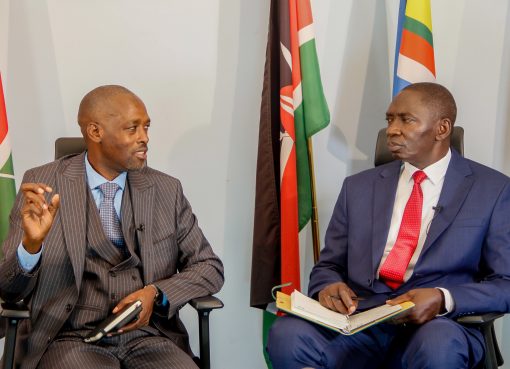
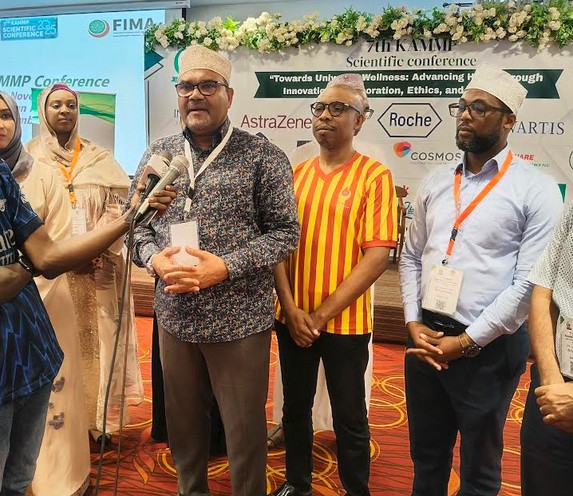
Speaking during the 7th Kenya Association of Muslim Medical Professionals (KAMMP) scientific conference in Mombasa, Principal Secretary (PS) for Science, Research and Innovation, Professor Abdulrazak Shaukat, announced that the government is finalizing the Research Development Policy, to complement the Science, Technology and Innovation Act of 2013.
“We already have the Science, Technology and Innovation Act, that was enacted in 2013, but we are finalizing the science, technology and innovation policy that is going to look at the entire ecosystem, including health,” said Professor Shaukat.
The PS revealed that two additional policies are in the pipeline, including a strategy for Artificial Intelligence and a policy on science diplomacy, to promote international collaboration in scientific research.
“We are developing the policy for Artificial Intelligence and we are in the trajectory of finalizing the Science Diplomacy Policy, so that we can bring the internationalization of science and work in the country, in the region as a continent and globally in contributing to global knowledge and have impact in the community and society at large,” he said.
The PS commended the Conference for addressing cutting-edge technologies, including Artificial Intelligence, genomics, and nanotechnology, particularly in nano-medicine applications.
He also noted the emergence of local pharmaceutical industries, capable of producing medicines for Kenyan consumption, stating this was a commendable development towards self-sufficiency in medical production.
Professor Shaukat disclosed that the government currently allocates 0.8 per cent of GDP, to research and development, with plans to increase this to one per cent.
“The government is committed to supporting research and development, including the areas of health through the National Research Fund,” he said.
Dr. Abdullah Bajaber, Secretary General of KAMMP, emphasized the importance of government support, in enabling youth innovations to flourish.
“There are many youths who have innovation, but there are challenges here and there that make them not to get far and their innovations not to be seen or be exposed as needed,” said Dr. Bajaber.
He noted that through the promises given by the PS and the Ministry of Health, collaboration would be critical in motivating young people, to pursue research and innovation.
Dr. Bajaber identified funding, regulatory approvals, and policy frameworks, as key challenges facing young innovators, adding that collaboration with associations and partner organizations would help address these obstacles.
Dr. Omar Ahmed, Director of the State Department of Public Health Standards, said the ministry looks forward to collaborating with professional organizations like KAMMP, to drive the government’s health agenda.
“We look forward to collaborating with partners and professional organizations like KAMMP ,to really drive the big agenda, which includes strengthening the Social Health Authority (SHA), reducing the burden of disease, strengthening primary health care and ensuring every Kenyan has access to quality affordable health care,” said Dr. Ahmed.
He noted that Kenya has one of the best health systems in the Sub-Saharan Africa, second only to South Africa, and emphasized the need to make health services accessible to all citizens at primary, secondary, and tertiary levels.
Dr. Zainab Gura, CEO of Kenyatta University Teaching and Referral Hospital, underscored the critical role of human resources in achieving Universal Health Coverage.
“This is a solidarity to show that science is important, research is important, innovation is important, but most importantly, human resources is the cog in the wheel of achieving Universal Health Coverage,” said Dr. Gura.
She called for collaboration between health professionals and the Departments of Health and Science, to translate research findings into policies and practice that serve Kenyans and their communities effectively.
by Sitati Reagan