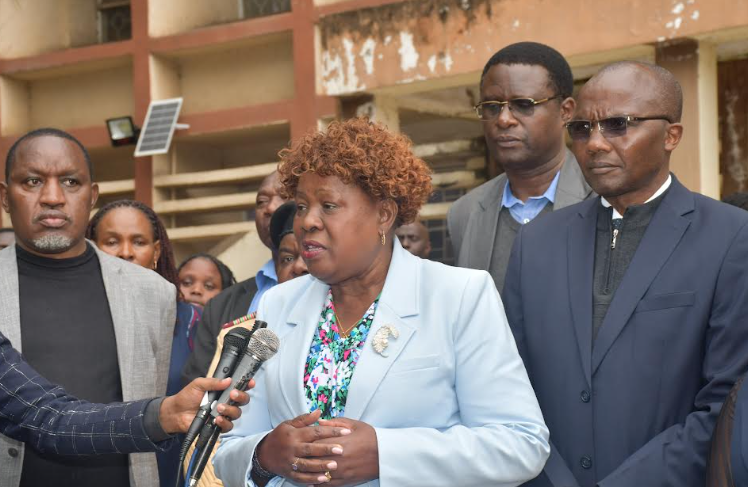
Lands, Public Works, Housing and Urban Development Cabinet Secretary Alice Wahome has assured that all land-related records in the country would be fully digitized by 2029.
The assurance comes as the government puts necessary measures in place to eradicate land-related corruption and fraud in a move aimed at protecting public resources and improving service delivery to the citizens.
Wahome said the National Lands Management Information System (NLMIS) dubbed the ‘Ardhisasa system’ was currently fully operational in Nairobi and Murang’a Counties adding that it would cost the government Sh15 billion to carry out the first phase of the digitization exercise and a further Sh15 billion to fully conclude the process.
The CS said at the heart of the lands reforms was the Ministry’s commitment to the digitization of all land registries, which she said was a crucial pillar in the transformation of the lands sector.
Wahome explained that digitization was not just about technology, but about eliminating manual inefficiencies, curbing fraud, securing land records, and enhancing access and transparency for all citizens.
She reiterated that the ongoing digitization process was aimed at not only modernising the sector but also restoring public confidence on its management.
“We are not just reforming systems, we are rebuilding trust, and as we move, we must walk with the people, not ahead of them,” she stated.
The CS elaborated that digitalization had helped citizens in embracing improved ease of doing business, increased accessibility of land services, and enhanced transparency in day-to-day land transactions.
Wahome who conducted an impromptu inspection of the Nakuru Lands Registry on Thursday afternoon, issued a strong warning against corruption, inefficiency, and outdated practices that allegedly facilitate fraud in most lands offices.
She has made similar visits and inspections at the Naivasha, Nyandarua and Laikipia land registries.
The Cabinet Secretary who was accompanied by County Commissioner Dr. Lyford Kibaara and Deputy Governor David Kones, said under her leadership those entrusted with responsibilities in the sector must protect public resources and improve service delivery.
She stressed the need for accountability in the generation of revenue and land acquisition processes, valuation and registration to avert loopholes through which unscrupulous individuals found ways of engaging in malpractices.
“Any loopholes that enable the loss of public funds must be sealed. Accountability is not optional. Every coin we safeguard strengthens our ability to deliver better, faster, and more transparent services to Kenyans,” She declared.
During her visit at the Nakuru registry, the Cabinet Secretary assessed the condition of the facility and the quality of service delivery in the registry.
She underscored the need for transparent and efficient service delivery to the public and reaffirmed her Ministry’s zero-tolerance policy on the mismanagement of public resources.
The Cabinet Secretary disclosed that digitization of land records at the Mombasa lands registry was at 50 percent complete and assured that the Ministry would be finished with digitizing land registries at Isiolo, Marsabit and Machakos counties within the next few months.
For decades, Kenya’s land sector grappled with inefficient manual processes, delays, and rampant fraud. Navigating land transactions was often a daunting exercise marred by lost records, forged documents, and bureaucratic bottlenecks.
The Cabinet Secretary noted that Kenya, like other nations, endeavours to harness the transformative power of data, innovation, and technology in solving multifaceted challenges in land governance.
She said that data and technology tools were not only essential for modernizing land governance systems but also for ensuring transparency, accountability, and inclusivity by addressing matters to do with land tenure security, land use planning, environmental sustainability, and equitable resource distribution.
She added that Kenya was adopting the use of block chain technology, Geographic Information Systems (GIS), remote sensing, and drone technology to enhance land registration, title management, create detailed and interactive maps, and provide high-resolution imagery and real-time data.
The Cabinet Secretary pointed out that Ardhisasa was not just a system upgrade, but also represented a fundamental shift from outdated paper-based workflows to a real-time, transparent, and secure online framework that serves citizens, professionals, and institutions alike.
“Through Ardhisasa, users can now conduct land searches, apply for title deed transfers, pay land rent, register charges and cautions, and initiate subdivision and amalgamation processes, entirely online. This 24/7 accessibility has cut transaction timelines drastically, reduced dependency on physical visits to land offices, and minimized human error and interference,” Wahome explained.
She said the system was also accredited with addressing long-standing concerns around land fraud by digitizing records, enhancing traceability, and ensuring data accuracy. The aim, she added, was to eliminate loopholes, boost investor confidence, and protect the sanctity of land ownership.
“The new lands system will expose fraudulent surveyors who have been taking advantage of unsuspecting landowners, “she assured.
Wahome exuded confidence that the security and operational protocols deployed during development of the National Land Information Management System had greatly aided in warding off quacks and fraudsters.
She said the system was developed with strict adherence to the law and would therefore not allow for illegal transactions.
She said unlike the manual system that had loopholes which impersonators, fraudsters and middlemen capitalized on to solicit bribes, the digital system upholds the integrity and sanctity of the title.
Users can sign into Ardhisasa through a computer or mobile phone, and within seconds make applications for various services on the platform.
The CS said the launch of Ardhi Sasa would strengthen the security of land tenure as it had been designed to remove human interference with land records.
The digitalization which started back in the year 2018 is a rigorous process which includes validation and manual verification of the records of all the departments from different state departments.
The digitization derives its legality from the Land Registration Act No. 3 of 2012 which mandates land registrars to maintain land registers and documents relating to land in a secure, accessible, and reliable format including electronic files. The Land Registration (Electronic Transactions) Regulations, 2020 also outline the legal framework relating to digitization.
The Cabinet Secretary noted that like other nations and agencies, Kenya is also fast moving away from old methods of doing business by embracing data innovation and technology, which are vital elements in efficient governance and management of different sectors, including the land governance sector.
Wahome indicated that the introduction of the National Land Information System (NLIMS) to address land management records that were held in paper form and managed manually for a long time has proven very successful and timely.
The CS said that land transactions that were handled through paper forms and files have today turned into E-Systems, while physical visits to land offices have been reduced as services are delivered at the touch of a button from somewhere else.
She said that Kenya is committed to making land information available in a language that could be understood by populations.
She said that Kenya plans to establish a comprehensive, computer-based, user-friendly, accessible, affordable, transparent, and gender-sensitive land information management system and revealed that Kenya was currently developing national guidelines on land information to govern matters on land information standards, security, dissemination, and pricing.
The CS further said that the Ministry of Lands had gone cashless by embracing FinTech in the collection of revenue, which had replaced conventional cash payments with Mpesa mobile money payment services.
By Esther Mwangi and Lucy Mukui