The national government is edging closer to sealing a public-private partnership (PPP) agreement to complete the stalled Sh.19.8 billion Koru-Soin Multipurpose Dam.
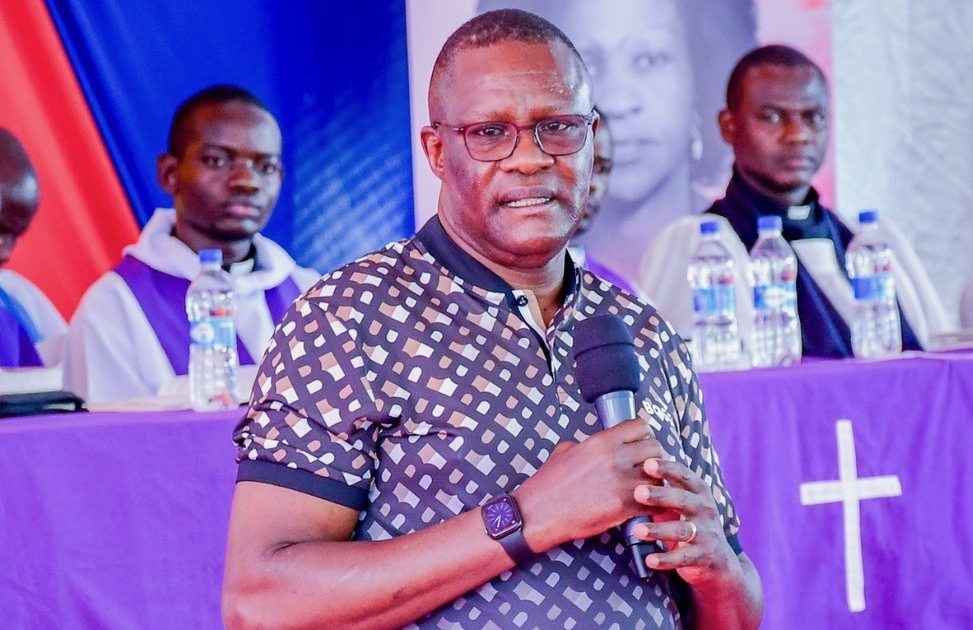
Deputy Chief of Staff Eliud Owalo discussions with potential private sector investors were at an advanced stage and that the government was firmly committed to ensuring the long-overdue project finally sees the light of day.
“We are now fine-tuning the financing model under a PPP arrangement that will guarantee not just completion of the dam, but sustainable management and operation going forward. This is because the earlier model which was 100% financing by the government was not tenable,” he said.
The Koru-Soin Dam, which straddles Kisumu and Kericho counties, he said, is designed to serve multiple functions — flood control, domestic and industrial water supply, irrigation, and power generation.
Located near the confluence of the Nyando and Sondu rivers, the dam is expected to store up to 93.7 million cubic meters of water upon completion and will supply over 70,000 cubic meters of treated water daily to Kisumu City and surrounding towns.
Owalo said the project, was a long tern solution to the perennial devastating floods, especially during long rains where thousands of residents are displaced annually, crops destroyed, and infrastructure damaged.
“The dam is expected to regulate the river’s flow, significantly reducing the risk of flooding across low-lying areas of Nyando. I want to assure you that this project will be completed to its logical conclusion during the tenure of this government,” he said.
Speaking over the weekend at Koru in Muhoroni Sub-County during the burial of former Catering Levy (Tourism Fund) Chief Executive Officer (CEO) Agnes Ojany added that the dam was critical in spearheading last mile potable water connectivity in the two counties besides supporting irrigation and production of electricity to augment the Sondu-Miriu power plant.
“The benefits of the Koru-Soin Dam go far beyond flood control,” said Owalo. “It will secure water for homes, industries, and farms, generate clean power, and anchor broader economic development for the Lake Region.”
Originally conceptualized in the early 1990s and formally launched in 2009, the Koru-Soin Dam has remained largely on paper due to persistent land acquisition hurdles, budgetary constraints, and inconsistent political commitment.
In 2022, the project was awarded to China Jiangxi Economic and Technical Cooperation Co., Ltd (CJIC) and China Jiangxi International Economic and Cooperation Company Limited.
The contract fully funded by the Government of Kenya started on 27th August 2022 but the contractor stopped the works citing nonpayment.
The renewed push for completion comes amid rising pressure from local leaders and communities, especially in the wake of increasingly unpredictable climate patterns that have worsened the flooding situation in Nyando and the lower reaches of the Lake Victoria basin.
“We are no longer relying solely on public funding for mega-projects. This administration believes in leveraging the private sector to deliver results faster and more efficiently,” said Owalo, noting that the PPP framework will ensure value for money and accountability over the project’s lifespan.
Leaders from Kisumu and Kericho counties have expressed strong support for the project, calling on the government to expedite remaining formalities.
Speaking during the same burial, Kisumu Governor Prof. Anyang Nyong’o welcomed the plans to kickstart the project, saying it will go a long way to address the flooding problem in Nyando.
“I have listened to my brother Owalo and I cannot agree more. We need this project to take off so that we alleviate the suffering of our people and at the same time intensify irrigation and power generation,” he said.
If successful, the Koru-Soin Dam could become a model for future PPP-driven water infrastructure in Kenya, addressing pressing climate resilience and economic development challenges in one of the country’s most vulnerable regions.
By Chris Mahandara