The government is determined to construct a modern correctional system that balances justice, rehabilitation, and reintegration.
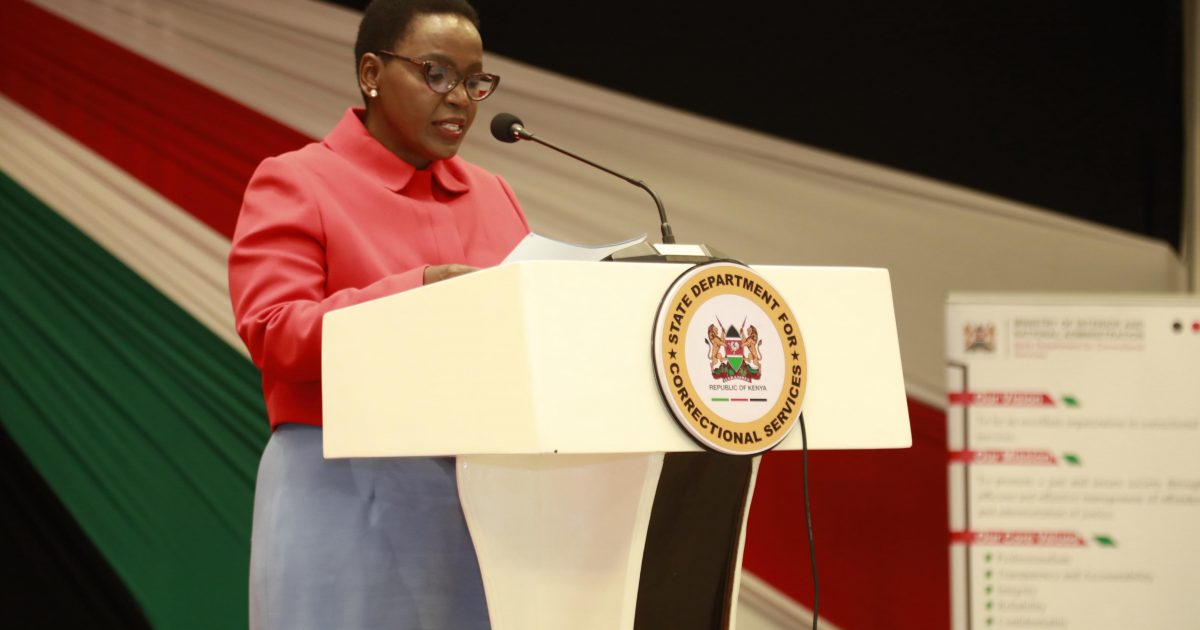
The Principal Secretary (PS) for Correctional Services Dr. Salome Beacco said the State Department for Correctional Services’ focus is not only on inmates but also on the welfare and capacity building of the staff who serve diligently across the country’s prisons and correctional facilities.
Dr. Beacco also reaffirmed the government’s commitment to transformative reforms in correctional services through strategic partnerships.
The PS was speaking on Tuesday during the 2nd Bilateral Stakeholders meeting held at a Nairobi that brought together key stakeholders in the correctional sector to strengthen collaboration, align policy frameworks, and mobilize resources to enhance service delivery in the country’s correctional system.
The meeting was attended by senior government officials, the Kenya Prisons Service, non-governmental organizations, development partners, civil society, and representatives from academic institutions among others.
The PS said the purpose of the meeting was a call to action to restructure the correctional landscape in Kenya since collaboration is central to the country’s reform agenda.
“Today’s meeting is a reaffirmation of our dedication to pursue a correctional system that is humane, rehabilitative, and responsive to the needs of the society,” said Dr. Beacco, while noting that no single entity could achieve the transformative reforms on its own.
The PS singled out the initiation of a correctional policy review, pilot projects on alternative sentencing, and improved healthcare access for inmates as some of the milestones achieved since the first bilateral meeting held in 2024, adding that much more needed to be done.
In his remarks, the Vice Chancellor of Strathmore University Dr. Vincent Ogutu emphasized the role of educational institutions in supporting correctional reforms and called for an inclusive approach to rehabilitation that prioritizes mental health, skills development, and moral transformation.
“Correctional facilities should be environments of transformation. Universities like Strathmore are ready to partner with the government to offer educational opportunities to inmates and correctional staff alike,” said Dr. Ogutu.
He added that true reform was not only about changing laws or infrastructure but about restoring hope and offering second chances, and that every inmate should be seen as a potential contributor to society.
The Commissioner General of Prisons Patrick Aranduh used the platform to share insights into the internal reforms currently underway within the Kenya Prisons Service of which he highlighted efforts to digitize prison records, expand vocational training programmes, and improve living conditions in correctional facilities.
“Our service is undergoing a paradigm shift. We are moving from a punitive model to a correctional one that emphasizes rehabilitation and reintegration. We are keen to work with partners who bring innovation, resources, and goodwill into our system,” Aranduh said.
He also pointed to recent successes such as the establishment of green energy projects in prisons, the rollout of agribusiness initiatives for inmate training, and partnerships with faith-based organizations that provide psychosocial support to prisoners.
The meeting included a plenary, where stakeholders deliberated on priority areas including prison infrastructure, alternative dispute resolution mechanisms, policy harmonization, and budgetary allocations.
During the meeting, participants unanimously agreed on the need for a multi-sectoral approach that would see both public and private institutions play an active role in correctional reforms.
One of the critical outcomes of the meeting was the proposal to establish a National Correctional Reforms Coordination Committee, which would oversee the implementation of policy decisions made during the bilateral engagements.
The committee is expected to draw members from the public sector, judiciary, civil society, academia, and international development partners.
As the correctional sector in Kenya continues to evolve, the government hopes that such stakeholder engagements would accelerate reform, enhance accountability, and ultimately lead to a correctional system that upholds human dignity and fosters national development.
By Fride Amiani and Amina Bakari