Kenya has reaffirmed its commitment to strengthening early warning systems to mitigate the effects of climate change, with the government pledging to scale up investments in disaster preparedness and resilience.
Director of Multilateral Environmental Agreements, Linda Kosgei, said the government remains determined to close the early warning gap through policy reforms, partnerships and the use of science-based information.
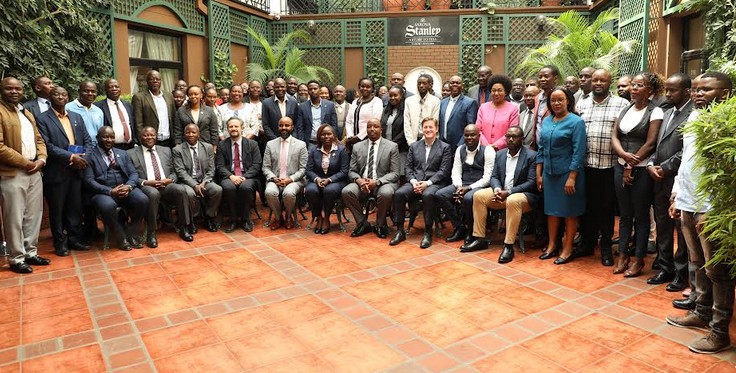
She lauded the convening of the 11th National Climate Outlook Forum (NCOF-11) in Nairobi, terming it a crucial platform for bridging the gap between producers and users of climate information.
“The government of Kenya has demonstrated leadership through the launch of the Early Warnings for All initiative, the development of the Disaster Risk Management Strategy and the ongoing work on the Disaster Risk Management Bill,” she said, adding that these efforts are geared towards ensuring that every Kenyan is protected from hazardous weather, water or climate events through life-saving early warning systems.
Kosgei highlighted Kenya’s participation in global climate resilience platforms and reaffirmed the country’s bid to host the 9th Global Platform for Disaster Risk Reduction in 2028, describing it as proof of the government’s dedication to safeguarding communities from climate risks.
She noted that according to the 2024 Global Status of Multi-Hazard Early Warning Systems Report, countries with advanced early warning systems record significantly lower disaster mortality rates, yet half of the world’s nations still lack such mechanisms.
“This disparity is unacceptable, especially for countries like Kenya that have experienced recurring droughts and devastating floods,” said Kosgei, while calling for stronger international partnerships to close the gap.
Deputy Chief of the United Nations Office for Disaster Risk Reduction (UNDRR) Regional Office for Africa, Huw Beynon, said Kenya’s efforts to strengthen disaster preparedness are commendable and demonstrate leadership in Africa.
He noted that the UNDRR, working with the Italian Agency for Development Cooperation (AICS), has committed EUR 1.5 million in Kenya to enhance institutional capacities, strengthen governance frameworks and enable anticipatory action.
“Countries with robust early warning systems experience fewer casualties during disasters, but the reality is that half of the world still lacks such systems,” Beynon said.
“Community engagement is central to closing this gap. Early warning must be people-designed, people-delivered and people-owned,” he added.
He outlined five priority actions to accelerate progress in Kenya, including strengthening risk knowledge, enhancing governance, scaling up impact-based forecasting, advancing community driven approaches and increasing investment in early warning systems.
“We are here to support Kenya in walking this journey towards a future where no one is left behind in the face of disaster risk,” Beynon said.
Acting Director of the Kenya Meteorological Department (KMD), Edward Muriuki, emphasized that early warnings must be simplified and made more accessible to the public.
“We were previously accused of being too scientific, but today we are speaking in a language that everyone can understand. There will be no point of producing this information if it doesn’t get to the grassroots. Our objective is to ensure actionable advisories reach end users.” he said.
Muriuki added that forecast accuracy had significantly improved in recent years, with location-specific advisories, now possible through enhanced regional collaboration.
He also underscored the importance of indigenous knowledge in complementing scientific forecasts, though official advisories remain evidence based.
Muriuki expressed appreciation to sponsors of the forum, including UNDRR, UNDP, WFP, ICPAC and AICS, for supporting Kenya’s efforts to strengthen early warning systems.
“The recommendations from this workshop will provide support to planning and decision-making in critical social and economic sectors. We appreciate your time and participation, and I declare this forum officially open,” he said.
Kenya Red Cross Society Secretary General (SG) Dr. Ahmed Idris, defended the reliability of KMD forecasts, particularly for the October–December season.
“Our history with Kenya Met has been very precise. The October–December short rains forecasts have been consistently accurate,” he said.
“Forecasting is a probabilistic science that becomes more precise as the season approaches, and this should not be mistaken for inaccuracy,” said Dr. Idris.
The SG explained that the forum would allow experts to downscale regional forecasts to national and county levels, providing actionable information for agriculture, health, disaster management and other sectors.
He also linked the discussions to the forthcoming Africa Climate Summit in Addis Ababa, warning that Africa continues to suffer the worst impacts of climate change despite contributing least to global emissions.
“We must push for stronger conversations on adaptation and mitigation resources, and urge developed countries to honour climate finance pledges,” he said.
The Director of the Italian Agency for Development Cooperation, Fabio Minniti, urged Kenya to embrace anticipatory action rather than crisis response.
“Kenya is in transition from disaster management to risk management, and from crisis response to anticipatory action. This platform is critical because it involves all stakeholders in planning before the season starts,” he said.
Italy, through AICS, is supporting Kenya in strengthening early warning and anticipatory action systems including funding under the Strengthening Early Warning and Early Action Programme.
The official forecast for the October–December 2025 short rains provides critical guidance for planning in agriculture, water, health, infrastructure and disaster preparedness.
By Naif Rashid