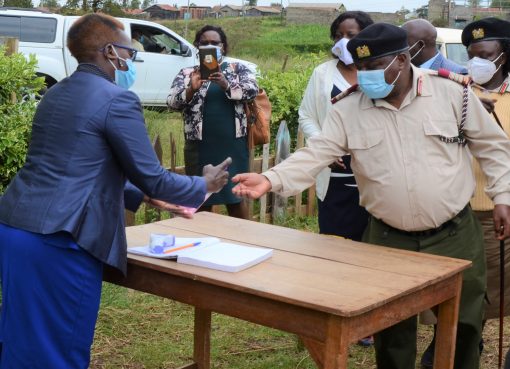
The Government has embarked on training over 400 County trainers drawn from across the country in preparation for the transition of Junior Secondary School (JSS) learners to senior secondary school starting next year.
The ongoing nationwide training is spearheaded by the Ministry of Education and facilitated by the Centre for Mathematics, Science and Technology Education in Africa (CEMASTEA).
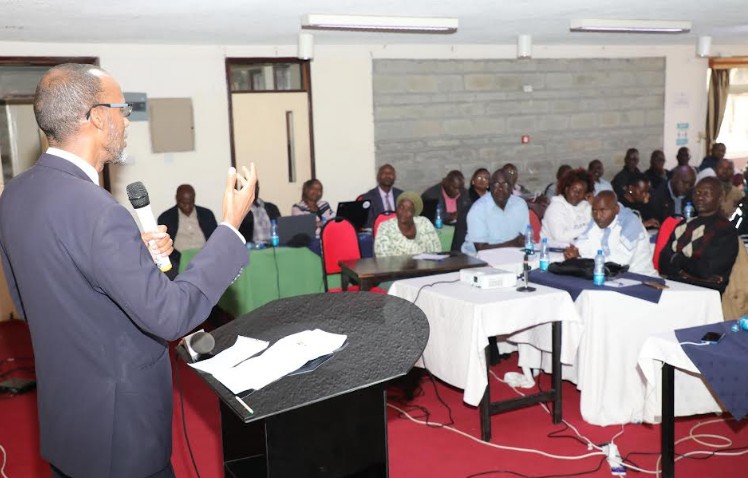
Speaking during a training workshop held at Egerton University’s Agriculture Resource Center (ARC), Director General in charge of Basic Education Mr Elias Abdi said the County trainers were being retooled to enable them to cascade the training to Heads of Departments (HoDs) in schools.
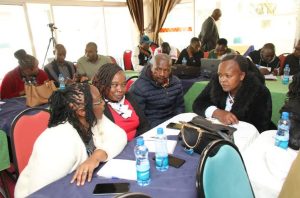
Abdi stated that the HoDs were in turn expected to play key roles in the successful implementation of the curriculum, hence the need to enhance their handling of the transition successfully.
Under the new structure, senior schools will offer three career pathways namely Science, Technology, Engineering and Mathematics (STEM), Arts and Sports, and Social Sciences.
Schools will be categorised as either triple pathway institutions that will be offering all three pathways or dual pathway institutions offering STEM alongside one other pathway.
The Basic Education Director explained that senior schools would take all the students from junior schools, where 60 percent would take Science, Technology, Engineering and Mathematics (STEM); 25 percent would take social sciences while Arts and Sports will take 15 percent.
He stated that by the end of the training, the HoDs would be able to describe the basic education curriculum framework for effective implementation of competency-based education, explain components of the STEM pathway, Tracks and Subjects and describe basic requirements for the provision of the STEM pathway in a school.
The workshop training themed “Enhancing the Capacity of STEM Heads of Departments to manage transition to Competency-Based Education” is being conducted at three centres spread across the country, including Egerton University in Nakuru, CEMASTEA headquarters in Ngara Nairobi and Golf Hotel in Kakamega. Facilitators are drawn from CEMASTEA, the Teachers Service Commission (TSC), the Kenya National Examination Council (KNEC), the Kenya Institute of Special Education (KISE) and County Trainers.
Abdi affirmed the government’s readiness for the Grade 10 transition in January 2026 under the Competency-Based Education (CBE) system, amid growing concerns from school heads and stakeholders over the level of preparedness.
Concerns raised included the adequacy of facilities, sustainable financing, teacher retooling in career pathways, and congestion.
The Director however dispelled the fears, saying the government was fully prepared to transition all Grade 9 learners to Grade 10.
He added that the transition to Grade 10 would be easier than the earlier move to Grade 9, which was more difficult due to inadequate infrastructure and stressed the importance of strengthening the capacity of teachers to manage the transition effectively.
“The transition into senior school is a significant milestone, especially the introduction of career pathways that align with learners’ aspirations and abilities and must be guided well,” Abdi offered.
He challenged the participants to give proper guidance by being at the forefront of ensuring a seamless transition and effective implementation of the CBC in senior schools, saying their leadership in schools was instrumental in ensuring the success of the new education system.
The Basic Education Director said the Ministry of Education had developed a comprehensive programme to assist high school principals and Boards of Management in ensuring that they are able to implement the senior school programme.
He explained that the senior school programme outlined curriculum organisation and implementation, guidelines on how schools will do their timetables, allocation of lessons per subject and preparations schools need to undertake in order to receive Grade 10 students.
The document also contains information on how Grade 12 students will transition to Technical Vocational Education Training (TVET) institutes and universities.
Abdi assured that the government was ensuring that the requisite textbooks are delivered to schools on time as placement of the students commences in December.
Acting Director in charge of STEM Training at CEMASTEA Mr Patrick Ogolla said the retooling was a follow up to a training programme that was conducted for principals in April and June this year.
Ogolla said STEM literacy is crucial for developing nations to keep pace with technological advancements and remain globally competitive because it enables them to develop a skilled workforce, foster innovation, and address national challenges.
He stated that the County trainers and HoDs, as strategic leaders in school during implementation of the Competency-Based Education (CBE), needed to understand the growing desire for innovation, development and commercialisation of science technology and innovation.
The STEM Director said that participants at the forum would be enlightened on the new CBC guidelines which include selection, placement and admission of the learners to various categories of senior schools across the country.
He indicated that the modern economy demands a workforce that is not only knowledgeable but also adaptable and capable of innovation. The shift to competency-based teaching is designed to ensure that learners are prepared for multiple post-secondary pathways, he added.
Ogolla explained that the participants would also be sensitised to the Competency-Based Assessment (CBA), which is a purposeful, systematic, continuous process of gathering information from multiple sources for making decisions on what learners know, what they needed to learn/have learnt, and what they could do.
The STEM Director said the assessments used a wider variety of tools and gave opportunities to learners, peers, teachers and parents to track the progress of the learner through real-time feedback mechanisms.
He added that the assessment methods and tools were varied in order to address the learning needs of different individual learners, including tests, observation schedules, questions and answers, checklists, quizzes, rubrics, journals, portfolios, learner profiles, anecdotal records, oral or aural questions, questionnaires, rating scales and projects.
The Director in charge of Teacher Professional Management at the Teachers Service Commission, Dr Reuben Nthamburi Mugwuku, noted that the transition of learners to senior school was a critical process that demands attention to detail in order to lay a good foundation.
Dr Mugwuku explained that outcomes of the workshop would enhance participants’ ability to describe the basic education curriculum framework and competency-based assessment framework for effective change management in implementing the competency-based education.
He added that beneficiaries would be able to integrate appropriate transformative pedagogies into lesson planning and delivery for improved learning outcomes and mentor teachers in developing professional documents aligned to CBE principles and pedagogical requirements.
Dr. Mugwuku noted that the workshop has been designed to address strategic issues and gaps in the implementation of cascaded programmes in schools. “Let us make the most of this opportunity to embrace professional growth,” he urged.
The TSC Director pointed out that Kenya subscribes to international, continental and national policy aspirations that support the development of STEM education.
He said that globally, STEM education has been recognised to be fundamental for national development, productivity, economic competitiveness and society wellbeing in line with the United Nations (UN) global Sustainable Development Goals (SDGs) adopted in 2015.
He added that the African Union Agenda 2063 calls for a prosperous Africa based on inclusive growth and sustainable development with well-educated and skilled citizens underpinned by science, technology and innovation for a knowledge society.
At the national level, the Sessional Paper No. 1 of 2019 Policy Framework for reforming education and training, recognises science and technology as a critical form of wealth to the nation. Practical work in STEM education plays a central role in preparing the youth for industrial production of diverse products, including digitalisation, nutritional, agricultural and indigenous knowledge-based innovations, added Dr Mugwuku.
By Esther Mwangi and Dennis Rasto