The National government is set to construct a total of 12 modern markets in Baringo County to promote the livelihoods of small scale traders.
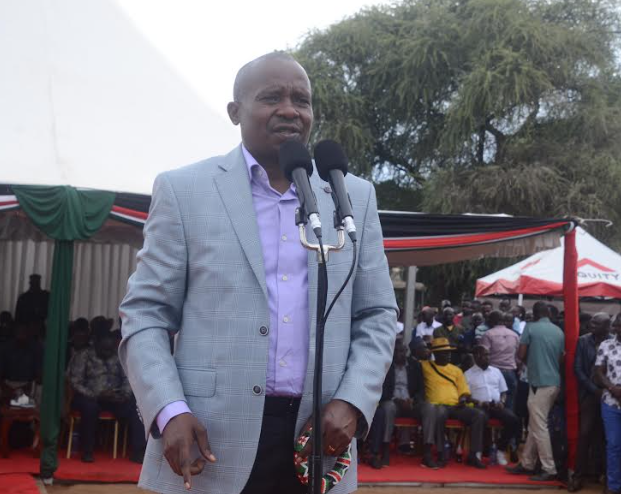
Speaking at Marigat Boys high school grounds during an economic empowerment programme for Baringo South Constituency, Deputy President Prof. Kithure Kindiki said the markets would be located across major towns and trading centres like Kabarnet, Marigat, Mogotio, Eldama Ravine, Chemolingot, Kabartonjo, Tenges and Barbelo.
While announcing that the Marigat market would be one of the largest in the county and that it would cost the government Sh350 million, Kindiki said the ambitious programme was in line with the Bottom-up Economic Transformation Agenda (BETA).
The Deputy President accompanied by Cabinet Secretary for Gender Hanna Cheptumo amongst other leaders stated that the storey building market which has already been designed shall have a wholesale and retail spaces, a daycare centre, an ICT hub and many more amenities.
He encouraged farmers from the region to venture into extensive agriculture to make good use of the markets for economic prosperity.
“We are building these markets because we want to provide our small scale traders, particularly vegetable vendors and hawkers with improved working conditions,” the DP said.
Kindiki at the same time highlighted the government’s intervention on food security noting that the Kenya Kwanza administration has for the past two and half years subsidized fertilizer from Sh7,000 to Sh2,500 in order to encourage more farmers to contribute in food production which has significantly reduced exportation of maize and other commodities.
Member of Parliament for Baringo Central Constituency Joshua Kandie who was present during the event encouraged local farmers to embrace cash crop farming and team up with government agencies that played a crucial role in promoting best agricultural practices.
Kandie noted that the region has a great agricultural potential and it was high time residents gained from it as well as supporting the country in building food security.
By Benson Kelio and Joshua Kibet