Kenya Seed Company has committed to producing sufficient quantities of top-quality certified seeds in an effort to eliminate the use of substandard and uncertified seeds among farmers across the country.
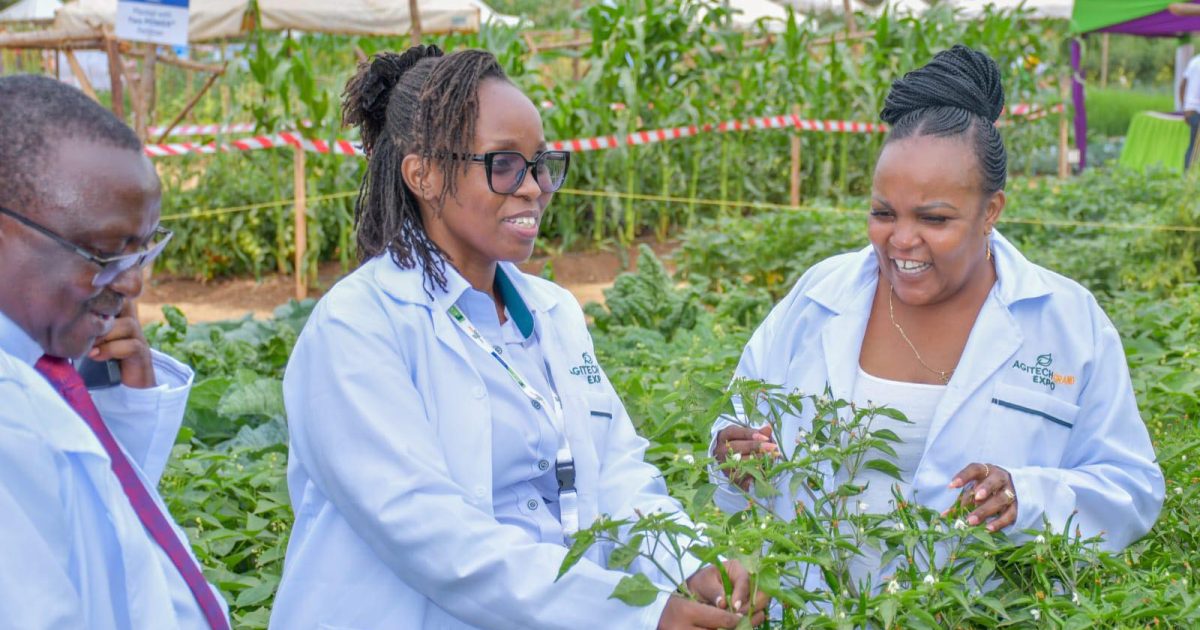
Speaking during the Agitech Grand Expo held in Mitithi, Mwea, Kirinyaga County, Kenya Seed Company Chairperson Wangui Ngirici assured farmers that all necessary measures were being put in place to meet the country’s seed demand and curb the circulation of fake seeds.
Ngirici noted that a shortage of certified seeds in the market has created a loophole exploited by unscrupulous traders, who distribute counterfeit seeds to unsuspecting farmers severely affecting food production and security.
“I would like to tell Kenyans that what results into bad seed getting into the market mostly is the opportunity taken by the unscrupulous people who, when the supply is low, make fake seeds and supply to the market,” Wangui noted.
She also urged farmers to embrace crop diversification, advising that if certified seed for one crop is unavailable, they could opt for alternatives that were in supply.
“I’m asking the farmers not to go for the cheap because cheap ends up becoming very expensive by causing very low yield or no produce at all,” the chairperson said.
To further combat counterfeit seeds, Ngirici announced that the government, through the Kenya Plant Health Inspectorate Service (KEPHIS), has introduced a verification system with each packet of certified seed now comes with a scratch-off code. Farmers could send this code via SMS to 1393 (free of charge) to verify the seed’s variety and species.
The Agitech Expo, which aims to empower farmers with knowledge and innovation, brought together key agricultural stakeholders. Many cited the proliferation of fake seeds and agrochemicals as one of the greatest threats to food security in Kenya.
Peter Karanja, Director of Mazao Afya, raised concerns over the influx of uncertified seeds and harmful agrochemicals in Kirinyaga County, allegedly imported from neighbouring countries.
“We need to take action against these people who are propagating or bringing in fake seeds, fake and unregistered chemicals, counterfeit inputs, because they are bringing products that are unsafe to our farmers,” Karanja noted
He called on government agencies, particularly the Pest Control Products Board (PCPB), to remain firm and vigilant in monitoring and regulating pesticide imports, some of which posed serious health and environmental risks.
“I would urge the government in conjunction with the PCPB to be very tough on these particular products because they’re hazardous and very poisonous,” he said.
By Mutai Kipngetich