Kisumu county governor Prof. Anyang` Nyong`o has called for urgent action among the two levels of government in order to avert disasters that have caused untold suffering to communities in the past.
Nyong’o observed that the national and county governments should generate policies and legal frameworks that make resilience more than just an aspiration.
The frameworks, he said, should embed resilience into the daily business of the governments and at the county level, policies that put risk reduction at the centre of planning should be prioritized.
“Kisumu like many of our counties, has known hardships. We have endured floods that have swept away homes, lives and livelihoods. We have experienced disease outbreaks that have claimed lives and shaken our communities to the core, and we have encountered climate shocks that have stolen away our years of progress in a matter of days and these moments remind us of a simple truth that disaster response alone is not enough,” Nyong`o stated.
The governor said that if all counties do is wait for tragedy and then react, then they will always be one step behind and they must now move from response to reduction and from reaction to resilience.
Nyong`o explained that this shift begins with vision and does not end there; counties have to generate policies and legal frameworks that make resilience more than just an aspiration.
Frameworks that embed resilience it into the daily business of government.
At the county level, that means policies that put risk reduction at the centre of planning. At the national level, it means passing the National Disaster Risk Management Bill into law as soon as possible, which once enacted, will create a foundation, upon which counties can build harmonized approaches, clear accountability, and stronger institutions for disaster risk management.
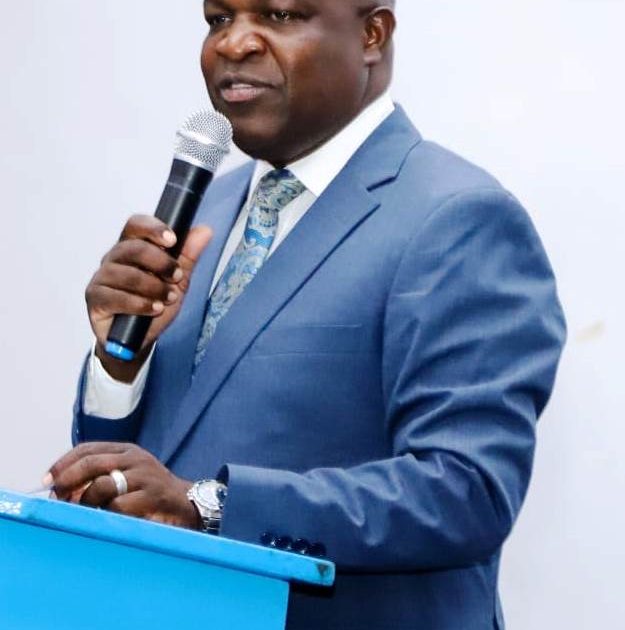
The remarks were contained in a speech read on his behalf by the Deputy Governor, Dr. Mathew Owili during a quarterly meeting of the County Executive Committee Members (CECM) responsible for disaster risk management across the 47 counties, held in Kisumu.
Nyong`o further stated that the options the participants take in their deliberations and decisions, will determine whether communities live in fear of the next possible disaster or in confidence, that those responsible for them are on top of their game.
He added that at the national level, the government should pass the National Disaster Risk Management Bill into law as soon as possible.
That law, once enacted, will create a foundation upon which we can all build harmonized approaches, while ensuring accountability and stronger institutions.
The governor reminded his audience that no county should face these disaster challenges alone and none should have to reinvent the wheel, or repeat the mistakes of others. This is because Council of Governors’ Maarifa Centre gives counties a place to come together and share what works, and to support each other in building stronger, smarter systems in disaster response.
“If we use it well, it can become a catalyst for resilience across the nation and is why inter-county learning is so important,” he said.
However, Nyong’o was quick to note that for this resilience is to be realized, it must be financed and so counties must take the bold step of creating their own disaster management funds, which will assist in fore planning and help to avert disasters before they occur.
The National Treasury too, has to be made aware of this fore-planning through discussions between the two levels of government, hence the need to move swiftly and operationalize the National Disaster Risk Management Fund.
This is because when financing is predictable, it becomes easier to deal with disasters by bringing about preparedness.
Nonetheless, the governor pointed out that much as this disaster fund is critical, we must be alive to the fact that money alone is not enough.
Coordination, partnership and harmonization of thoughts, is the fulcrum on which the success of disaster risk management and resilience swings, he added.
“Counties and the national government, alongside likeminded partners, have to work together towards this cause. Together aligned, coordinated and united, we will make sure that our systems are stronger and our response is faster in order to leave our people safer,” he said.
Nyong`o urged the CECMs in charge of disaster management to have courage and foresight and renewed determination to embed resilience in their policies and to secure financing for the disaster programmes.
“The story of Kenya can no longer be one, where disasters erase our progress. With brains and determination, we can come together and share what works, and to support each other in building stronger, smarter systems. If we use it well, it can become a catalyst for resilience across the nation,” the governor said.
It’s worth noting that Kenya has in the past been plagued with disaster ranging from floods, drought and fires among others, due to climate change.
Kenya is still recovering from a drought that ravaged parts of the country for five consecutive seasons with inadequate rains in 2021 and 2022, which severely affected people and animals.
This was followed hot on the heels by a devastating floods that ravaged the country, equally leading to loss of lives and property, as well as damage to wildlife.
By Mabel Keya – Shikuku