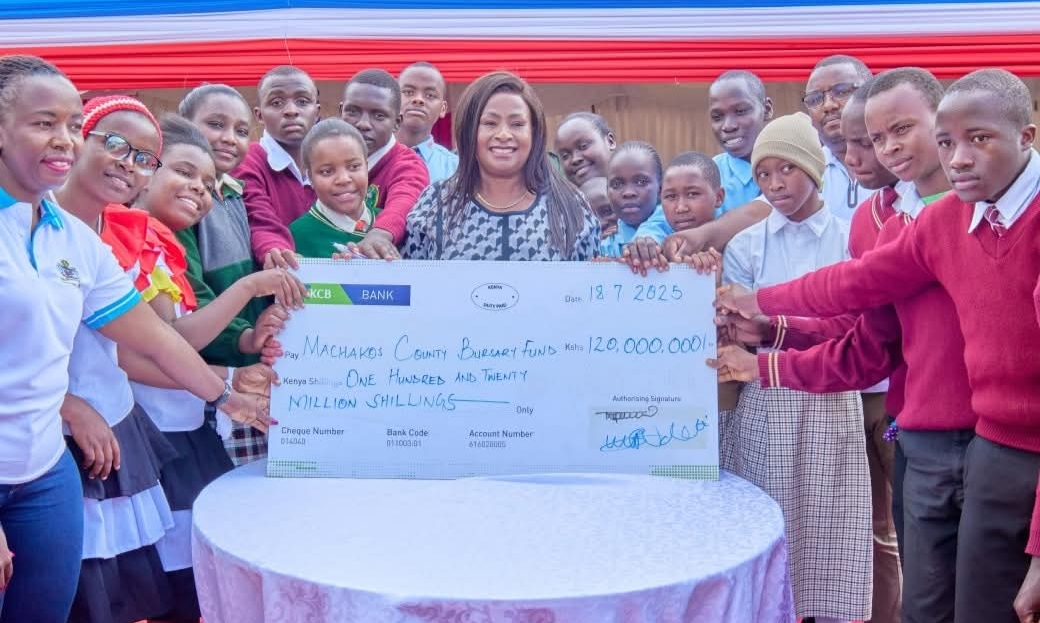
Machakos Governor Wavinya Ndeti has launched a Sh120 million education bursary fund set to benefit about 28,000 needy students within the 40 wards of Machakos County.
The Governor, while speaking during a bursary event held at Ivumbuni Primary School in Mumbuni North on Friday, said that the county has set fair and transparent criteria to allocate the funds.
“It’s important to note that my government uses a fair criterion in the assessment and identification of beneficiaries and a public participation forum was held earlier in the year and it aimed to identify the neediest cases especially orphans and children with special needs,” the Governor remarked.
Wavinya, further, noted that since assuming office she has issued bursaries to a total of 92,500 students, which reflected fulfillment of her pre-election pledges to transform education by supporting programmes that improve access to quality education for all children in Machakos.
She also revealed that the bursary allocation since she took office has progressively increased from Sh 80 million to Sh 120 million, with plans to scale it up to Sh 200 million in the coming years.
The Governor called on school principals from Machakos to exercise tolerance and patience in cases of delayed fee payments, warning that sending learners home could lead to increased absenteeism and delinquency, especially among less privileged children.
“In the meantime, I call upon principals to be tolerant in the wake of delayed payment,” said the Governor.
Wavinya acknowledged the Intergovernmental Agreement (IGA) signed between the county and national governments to streamline bursary disbursements for secondary and university students, adding that the bursaries directly help families by covering books, food, and school workers’ salaries, reinforcing the government’s commitment to accountable governance.
She further acknowledged the tough economic times facing many families and underscored the importance of community support while urging fellow leaders and education stakeholders to develop innovative solutions that not only enhance access to education but also empower young people to become self-reliant.
By Purity Mwende and Joy Mwikali