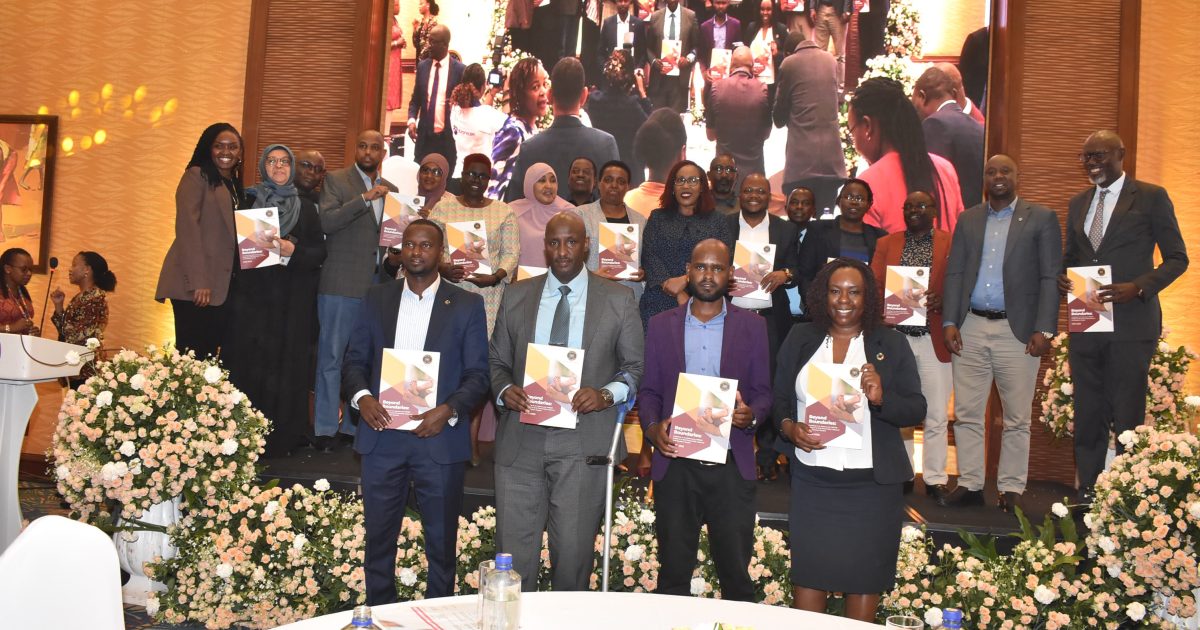
The Council of Governors has launched the Inter-County Maternal and Perinatal Death Surveillance and Response (MPDSR) initiative aimed at strengthening accountability and coordination in efforts to end preventable maternal and newborn deaths across Kenya.
CoG Health Committee chairperson Abdulswamad Shariff Nassir said that the launch of the platform marks a milestone in ensuring that no mother or newborn dies from preventable causes.
In a speech read on his behalf by Nandy Governor Stephen Sang in Nairobi, Nassir said the initiative will enable counties to track, discuss, and act on every maternal and newborn death or near-miss case, ensuring that lessons are learned and systems are strengthened.
“As governors, we have had some of the lowest moments in our lives when called to account for the loss of a mother or a newborn,” he said.
“It is even more painful when you go to mourn with the family knowing that perhaps something could have been done differently. This initiative ensures every case is reviewed, lessons are shared across counties, and accountability is restored.”
He added that requiring every medical professional to account for maternal or newborn deaths would in itself transform health practices.
“Even before we look at the lessons learned, the fact that you must give an account for every death changes behaviour,” he said.
The initiative, developed by the Council of Governors with support from the Ministry of Health and development partners, builds on earlier county-level MPDSR programmes that have already shown positive results.
Kiambu Level 5 Hospital, for instance, reported zero maternal deaths for seven consecutive months after consistent review meetings, while Machakos and Homa Bay counties also recorded remarkable progress.
However, Governor Nassir noted that despite heavy investment in health infrastructure and staffing, maternal and neonatal mortality rates remain high still above the Sustainable Development Goal target of 70 deaths per 100,000 live births for mothers and 21 per 1,000 for newborns.
“Behind every number is a family devastated and a future cut short,” he said. “We cannot allow the lives of our mothers and babies to remain mere statistics.”
Mandera Governor Mohamed Khalif said the programme is especially vital for marginalised counties where access to healthcare remains a challenge.
“When I became a governor, Mandera had only 126 health workers. Today we have 1,600,” he said. “We have made progress, but mothers still travel over 100 kilometers to deliver. This programme is close to my heart because it will save lives in areas like ours where distances are vast and facilities are few.”
Khalif urged the national government to review the Social Health Authority (SHA) policy restricting deliveries to facilities with inpatient beds.
“For us in Mandera, dispensaries are crucial. Denying deliveries there undermines everything we’ve built,” he said.
He called for depoliticizing health financing, warning that resource cuts and donor transitions could derail progress.
“Universal health coverage is noble, but how we manage it will determine whether our indicators improve or continue to decline,” he said.
On his part Sang echoed the concerns, saying that no law should deny a mother the right to deliver safely because a facility lacks inpatient status.
“You can fake any other disease, but you can’t fake pregnancy. The law was made for man—not man for the law,” he said.
He noted that despite progress made through devolution, counties continue to face challenges such as inadequate financing, uneven distribution of health workers, cultural barriers, and weak referral systems.
He called on both national and county governments to collaborate in strengthening primary health care, while development partners and the private sector complement efforts through innovation, infrastructure, and capacity-building.
Kiambu County Obstetrician/Gynecologist and Kenya Mental Health Board representative Dr. Mary Maina, shared that the initiative began as a simple idea during a coffee meeting in April 2024 between herself and Dr. Menge of Kenyatta National Hospital.
Dr. Maina, who co-founded the Inter-County MPDSR platform said: “We realized that mothers were crossing county borders for care, yet there was no feedback between facilities.”
“We started a WhatsApp group just the two of us and today it has grown into a national platform.”
She said the initiative has enabled health workers to collaborate in real time, improving referrals and outcomes.
“One of the biggest nightmares for a health worker is watching a mother die because you can’t find an ICU bed or blood in time,” she said. “Through this platform, we have had countless success stories, and we have learned that coordination saves lives.”
Dr. Maina urged leaders to support frontline staff with resources, mentorship, and protection from blame.
“Governors, you do not send your soldiers to battle without weapons,” she said. “Stop sending us to end preventable deaths without the tools we need. We are not enemies; we are partners.”
Governor Sang reaffirmed the Council’s collective commitment where he said that the goal is simple yet profound.
He also noted that no woman and no newborn should die from preventable causes.
by Mary Ndanu & Samuel Kivuva