The national government has stepped up its efforts to combat gender-based violence (GBV) and femicide through a countrywide public participation drive led by a high-level technical committee, which was gazetted by President William Ruto in January 2024.
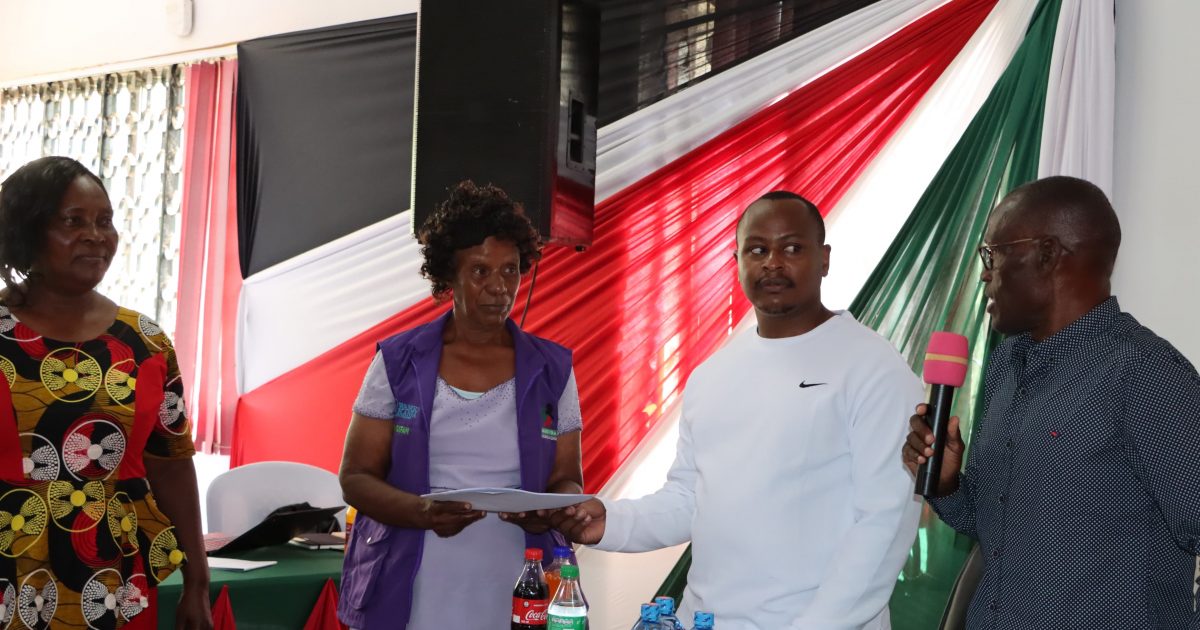
The Technical Working Group on GBV and Femicide, led by Abdi Washala Mohammed, held a public engagement forum Mwatate, Taita Taveta County, where survivors, community leaders, and gender rights advocates called for stronger enforcement, more rescue centers, and public awareness campaigns to address the growing threat.
The committee is on a 30-day mission to collect views across Kenya and develop actionable strategies to curb GBV and femicide. It was formed following a national outcry over the alarming increase in cases, particularly targeting women and girls.
Washala revealed that 226 women and girls were murdered in February 2024 alone, with 100 of them being girls, emphasizing the urgency of the government’s intervention.
“These are not just statistics. These are lives lost, families shattered, and futures stolen,” he said.
The committee’s presence in Taita Taveta is part of its coast region outreach, which includes Kilifi, Kwale, Lamu, Mombasa, and Tana River. Washala emphasized that the views collected will directly inform the national action plan, including potential legal reforms, budget allocation, and the establishment of prevention and response mechanisms.
Taita Taveta Deputy Governor Christine Kilalo commended the national government for deploying the taskforce to the grassroots, saying that its presence would enhance collaboration between national and county actors.
She urged the committee to recommend increased funding for rescue centres and support systems for survivors, particularly in rural areas.
“Our women and girls in remote villages have nowhere to run when facing abuse. Establishing safe shelters and training officers on gender sensitivity will go a long way in restoring dignity and saving lives,” said Kilalo.
She noted that there is need for the government both national and county, to allocate funds to the grassroots towards the fight against GBV and Femicide to facilitate services to the affected communities.
“This is a serious issue which we normally talk about but it’s like people don’t understand, thinking that because we are politicians, we are just talking politics. The fact is most of the services that the citizens need to get are supposed to come to the grassroots level,” she said Kilalo reiterated the need for intergovernmental cooperation, stating that county governments require more technical and financial support from the national government to set up functional GBV recovery centers, offer psychosocial support, and conduct awareness campaigns.
She further urged the committee to push for legal reforms that fast-track GBV and femicide cases in court, increase penalties, and protect witnesses.
“Without swift justice, we risk normalizing violence,” she said.
County Commissioner Josephine Onunga said that the government had already made strides in strengthening the response to GBV in the county. She confirmed that all four sub-counties of Mwatate, Voi, Taveta, and Wundanyi, report at least 10 GBV cases monthly, with some involving infants as young as one year.
Onunga noted that each police station now has at least one trained gender officer to handle such cases. However, she acknowledged that underreporting remains a major challenge, often due to stigma, fear, and lack of trust in law enforcement.
“The government is doing its part, but we need communities to break the silence,” she said.
She added that, “If you want witness protection, we have it. We shall discuss with you and we will see how to help you. When the perpetrator has been caught, you will be safe as a family and community.”
She referred to GBV as a monster and that the more communities keep quiet, the more they punish their children, parents and themselves.
The Kenya Demographic and Health Survey of 2022 found that 34% of women and 17% of men aged 15–49 have experienced physical or sexual violence. Experts believe the real numbers may be higher due to stigma and systemic failures that discourage victims from reporting.
Community-based organizations at the forum presented written memorandums highlighting cultural practices, economic dependency, and social media as enablers of violence. Several speakers urged the government to introduce stricter online content regulation and digital safety education.
By Arnold Linga Masila