The Kenyan government has secured over 15,000 job opportunities for youth in Canada and other countries, covering a wide range of professions. These include roles such as paramedics and construction workers, offering diverse opportunities for both skilled and semi-skilled labour.
According to the Principal Secretary for Labour and Skills Development, Shadrack Mwadime, some of the positions offer earnings of up to Sh10,000 per day.
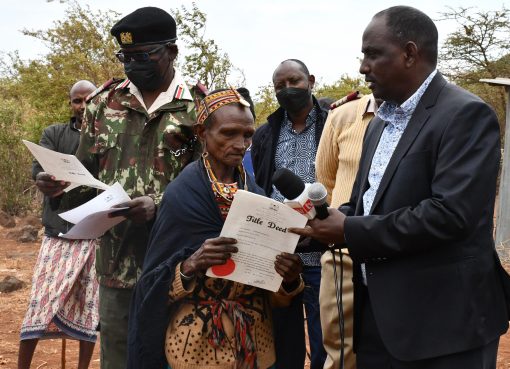
Speaking to youth in Werugha in Wundanyi, Taita Taveta County, yesterday, PS Mwadime said the government is shifting its labour migration strategy from Arab countries to European nations, citing challenges faced by Kenyan workers in the Middle East.
“The secured positions include 5,000 openings for paramedics and 10,000 for construction workers. Agricultural sector opportunities are also available for seasonal work lasting up to six months,” he said.
PS Mwadime emphasised that quality overseas employment opportunities are a critical solution to Kenya’s youth unemployment crisis.
“Independence fighters fought so hard for our freedom. But if you are poor and cannot access food or opportunities, are you truly free?” he asked.
Acknowledging the high unemployment rate among educated youth, he said many graduates remain jobless despite their qualifications. While the domestic economy cannot absorb all graduates immediately, the government is implementing parallel strategies to bridge the employment gap.
Mwadime noted that remittances from Kenyans working abroad, especially in Arab countries, contribute significantly to the national economy, amounting to approximately Sh1 trillion (USD 5 billion) annually.
“There are over 300,000 Kenyans living and working in the Middle East. But we are rethinking our strategy to explore better destinations in Europe,” he said.
The PS urged youth to acquire passports immediately to take advantage of emerging overseas opportunities.
For European job openings, he assured there are no additional costs beyond obtaining a valid passport and medical report.
“No commissions are required. Youth only need a passport and medical report to apply,” he said.
The government has streamlined passport applications through a green channel, reducing processing time to an average of two weeks. Applications for labour migration purposes can be processed even faster.
Mwadime encouraged youth to visit the Kenya Labour Market Information System (KLMIS) website to identify available overseas job openings and pursue relevant short-term training programmes at polytechnics and vocational training centres.
“Even if it’s a six-month course, you will have a certificate, and with a passport, you can immediately apply when jobs are advertised,” he explained.
He also highlighted the over 400,000 current job openings listed on the National Employment Authority (NEA) website, urging youth to match their skills with job requirements before applying.
Addressing the Nyota Programme, Mwadime noted the Recognition of Prior Learning initiative, which allows youth to obtain verifiable certificates to help secure overseas employment.
“This programme has already secured opportunities for 100 youths on two- to three-year contracts,” he said.
The government is also cracking down on rogue recruitment agencies. Labour Market Research Analyst Becky Onguko from KLMIS warned youth about fraudsters impersonating the Nyota Program.
“Nyota does not request any payment for registration. Some youth have lost up to Sh150,000 to conmen. The matter is now with the Directorate of Criminal Investigations,” she said.
Onguko encouraged youth to register their skills on the KLMIS platform to access career navigation tools.
“The career navigator shows where job openings match your skills. We want to tackle unemployment, and youth must push themselves to succeed,” she added.
The initiative reflects a comprehensive government effort to expand access to meaningful employment, empower youth, and maximise the socio-economic benefits of overseas labour migration while safeguarding against fraudulent practices.
By Arnold Linga Masila