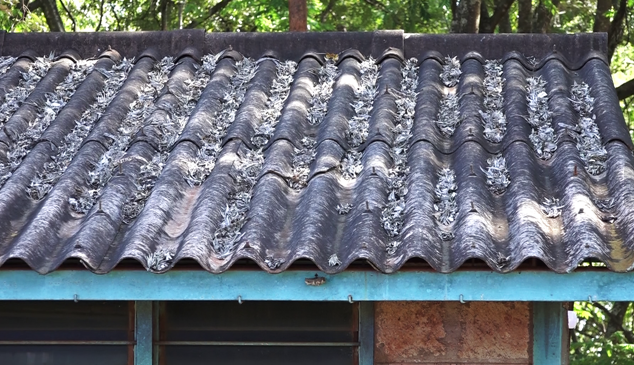
The Government is seeking funding from international financiers, including the World Bank and the European Union, to facilitate safe removal of harmful asbestos roofing from public housing units across the country.
This follows a recent Cabinet decision approving the removal of decades’ old and cancer-linked asbestos materials from government housing.
The ageing roofs, widely used in construction from the 1960s through to the 1990s, will be replaced with modern, environmentally friendly materials as part of the government’s broader green housing initiative.
Principal Secretary (PS) for Housing, Charles Hinga, said the exercise required substantial funding and specialised expertise, making international support essential.
“The removal of cancer-linked asbestos roofs demands significant resources and highly specialised handling procedures and we are engaging international partners such as the World Bank and the European Union to support this national health and safety effort,” said Hinga.
According to the PS, his docket has more than 120,000 housing units across the country which contain asbestos roofing, posing long-term health risks to residents and construction workers if not handled properly.
According to recent corroborated research, asbestos exposure has been globally linked to diseases such as lung cancer and mesothelioma.
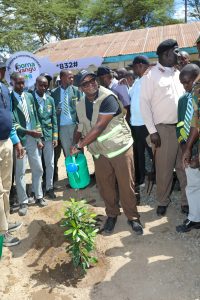
Speaking Friday in Naivasha during a tree-planting exercise at Naivasha Boarding Primary School, Hinga reaffirmed the government’s commitment to providing affordable, safe, and sustainable housing for all Kenyans.
He noted that over 257,000 housing units are currently under construction nationwide, employing more than 300,000 Kenyans daily under the Affordable Housing Programme.
The PS added that the government is building 147,000 student accommodation units to ease housing pressure in tertiary institutions.
“This noble programme is designed to restore dignity and provide clean, decent homes to more than seven million Kenyans currently living in informal settlements,” Hinga added.
He observed that housing remains a global challenge, with more than 1.6 billion people worldwide living in slums or inadequate shelter.
The PS said Kenya has been recognised internationally for its commitment to delivering affordable housing, supported by the monthly housing levy introduced under the Kenya Kwanza Administration.
Hinga dismissed the politicisation of the Affordable Housing Programme, saying it is a transformative initiative, aligned with Kenya’s Vision 2030 and the Sustainable Development Goals (SDGs).
During the tree-planting event, the PS led students and government officials in planting over 1,000 trees, underscoring the government’s broader climate resilience agenda.
He lauded President William Ruto’s directive to establish 300 tree nursery sites across the country, supported by the Kenya Forest Service (KFS) and the Kenya Wildlife Service (KWS).
These nurseries, Hinga said, will contribute to the government’s ambitious plan to grow 15 billion trees by 2032, aimed at restoring degraded landscapes, enhancing biodiversity and mitigating the effects of climate change.
“Climate change is a real and urgent threat, and we have witnessed its devastating impact through prolonged droughts, floods, and the loss of lives and livelihoods,” said the PS.
These initiatives, from asbestos removal to tree planting, form part of the government’s broader environmental and public health agenda.
The Government’s dual focus on sustainable housing and environmental restoration reflects Kenya’s growing leadership in integrating green development into national policy and infrastructure planning.
By Erastus Gichohi