The government has expressed intentions to revamp the adult education sector to better equip Kenyans for a knowledge-driven economy.
The modernisation effort seeks to align the adult and continuing education sector with the national development goals and the ever-increasing demands of the 21st century.
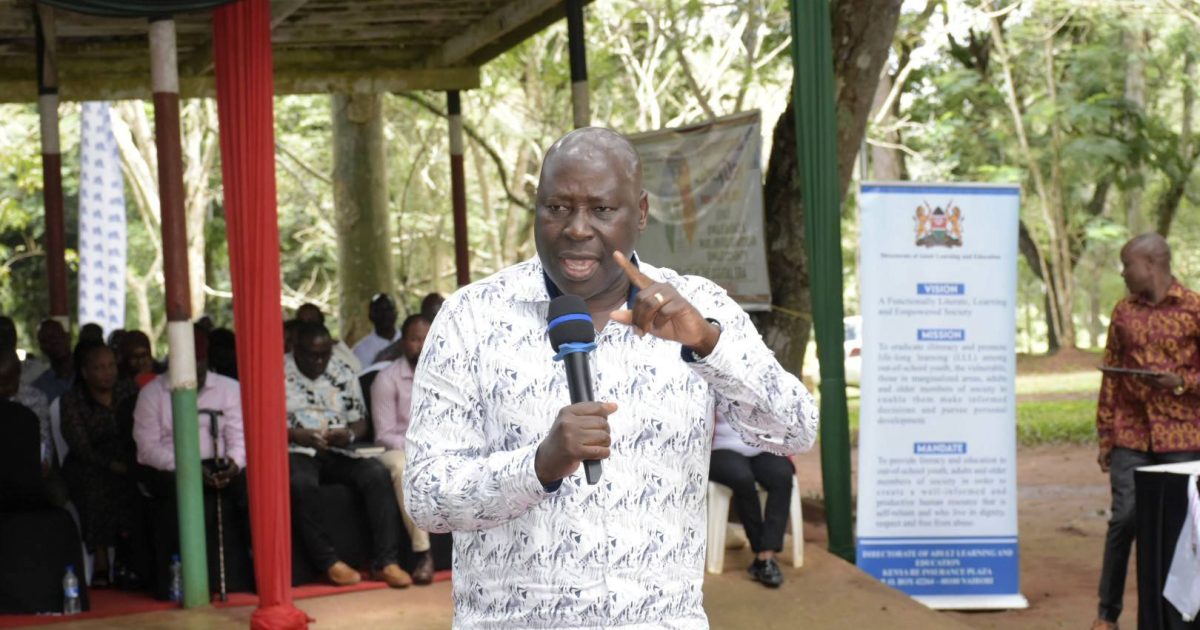
Principal Secretary (PS) for Social Protection and Senior Citizen Affairs, Joseph Mogosi Motari, says plans are at an advanced stage to align adult education with the current Competency-Based Education (CBE) system.
PS Motari says the government is revising the adult-based curriculum by expanding instructor staff, upgrading learning centres and increasing funding to equip adult learners with relevant modern skills for national development.
The PS said that currently, the government is reforming both the adult basic education and teacher education curricula to align with the Competency-Based Education and training framework.
Mr Motari said this will ensure that learners acquire modern, practical and digital skills to thrive in the digital era and leverage the advancement in technology to improve literacy levels in the country.
“Computer literacy centres are being introduced in training institutes, community learning centres, and adult education facilities to equip learners with ICT skills essential in today’s economy,” he said.
The PS underscored the need to modernise the adult education curriculum at a time of rapid advances in technology, artificial intelligence and automation are transforming the world of work.
He said education must therefore shift from traditional models to problem-solving, skills-based and flexible learning that embraces digital literacy, critical thinking and adaptability to improve personal and professional outcomes.
He decried that the number of adult education officers has declined over the years, undermining service delivery.
“My ministry is consulting with the Public Service Commission and the National Treasury to recruit more officers, lecturers and instructors,” he said.
He went further ‘We are also committed to continuous professional development to build the capacity of our existing personnel.
He says these strategic reforms are intended to revitalise the adult learning sector, which is grappling with challenges like understaffing, outdated resources and a lack of up-to-date data.
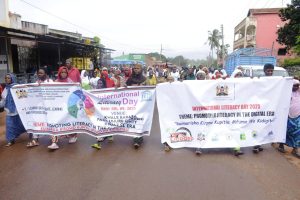
Mr Motari was speaking in Kwale town during the commemoration to mark this year’s International Literacy Day celebrations held at the Kwale Baraza Park.
The celebration’s theme was ‘Promoting Literacy in the Digital Era’.
International Literacy Day was established by UNESCO in 1967 to highlight the importance of literacy as a human right and to advance global efforts for a more literate society.
Celebrated annually on September 8, the day serves to raise awareness about the ongoing challenges of illiteracy and to promote literacy as a foundation for individual development, peace, and sustainable societies.
“This day allows us to celebrate the courage and achievements of our adult learners who have taken bold steps towards personal growth and empowerment through education,” he said.
He added ‘at the same time it reminds us of the continuing burden of illiteracy which contributes to poverty, inequality, limited economic opportunities and social exclusion’.
PS Motari who was accompanied by Kwale Deputy Governor Chirema Kombo and County Commissioner Stephen Orinde, said the government is determined to ensure that every citizen has the literacy skills needed to participate fully in society and contribute to national development.
“Today, government services, learning, communication and businesses increasingly take place on digital platforms,” he said adding that to thrive in such a knowledge-based economy, literacy must go beyond reading and writing to include digital skills.
He said that without digital skills, citizens, especially the elderly, risk being excluded from vital services, economic opportunities and civic participation.
PS Motari said the decision to hold the national event in Kwale was deliberate, noting that while Kenya’s national adult literacy rate is 82.9 per cent Kwale county stands at 57 percent with a significant gender gap of 66.6 percent for men and 47.4 percent for women.
“By holding the international literacy day celebration in Kwale we seek to draw attention to these challenges, rally commitment from all stakeholders and strengthen efforts to expand literacy opportunities,” he said.
He said adult learning and education play a critical role in empowering different groups of society.
“For older persons, including those benefiting from the Inua Jamii cash transfer programme, it provides financial literacy that enhances their ability to budget, protect themselves from fraud and manage resources for a dignified life,” said Motari.
Motari said adult learning and education helps older persons upgrade their skills, adapt to changing labour markets, and better understand their rights and responsibilities.
“In the long run, adult education supports national goals such as gender equality, sustainable resource management, innovation and economic resilience,” he said.
Ps Motari said currently there are 3,219 adult education centres across the 47 counties with 101,235 learners-37,135 men and 64,100 women.
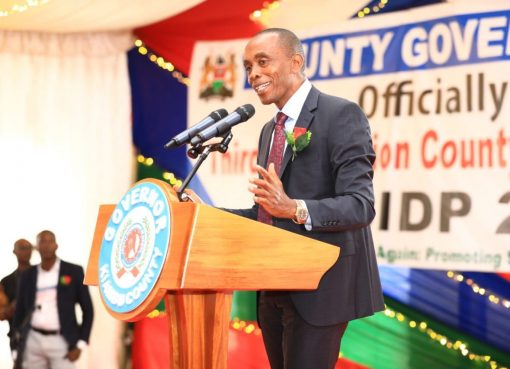
Deputy Governor Chirema Kombo says model schools are being equipped with modern technology and stimulating learning facilities that will serve as beacons of excellence and he called on the area residents to support the new education initiative.
Kombo says needy students continue to benefit greatly from the county government’s Sh500 million ‘Elimu Ni Sasa’ scholarship scheme.
He says the bursary programme that started in 2013, during the inception of devolution, targets bright but needy students joining secondary schools and colleges.
The DG said the Elimu Ni Sasa bursary scheme will serve as a significant milestone in the journey to providing quality education.
By Hussein Abdullahi and Rachael Nzioki