The government is keen to leverage the country’s vast maritime resources for sustainable socio-economic development through the unveiling of the first national ultra-modern fish hatchery facility in Kwale county.
Cabinet Secretary (CS) for Mining, Blue Economy and Maritime Affairs, Hassan Joho, says the state is actively working to boost the country’s blue economy sector, recognising its potential for economic growth and sustainable development.
The blue economy encompasses a range of marine-related sectors that contribute to economic growth, improved livelihoods, and job creation while ensuring the health of marine ecosystems.
These sectors include fisheries, maritime transport and logistics, tourism, aquaculture, and marine biotechnology.
Stakeholders contend that newer activities like offshore renewable energy and seabed extractive activities are also part of the blue economy under the vision of the blue revolution.
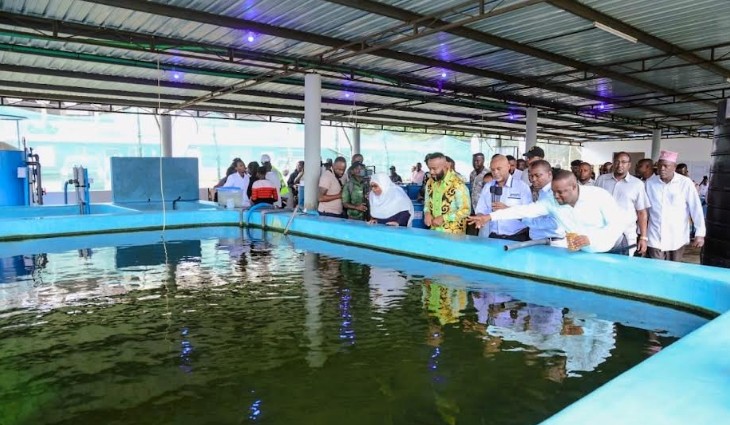
CS Joho says as part of efforts to tap into the blue economy, he commissioned Kenya’s first National Marine Hatchery at the National Mariculture Resource and Training Centre (NAMARET) in Shimoni, Kwale County.
The ultramodern fish hatchery facility will play a key role in contributing to Kenya’s Blue Economy initiative, which aligns with the Sustainable Development Goals (SDGs) by promoting food security, reducing poverty, and enhancing livelihoods at the coast.
The hatchery will play a vital role in addressing the longstanding shortage of quality fish seed among coastal farmers by ensuring a stable supply of prawn seed for aquaculture.
The initiative is a significant development, as it addresses the issue of seed scarcity, a major obstacle in coastal aquaculture, as previously farmers in the coastal region have had to rely on juvenile fish from the Indian Ocean.
Mariculture, a branch of aquaculture, involves farming marine organisms like fish, shellfish, crustaceans and seaweed in seawater environments, either in open ocean areas, enclosed sections of the sea, or in tanks and ponds filled with seawater.
Mariculture plays a key role in increasing seafood production, reducing pressure on sea fisheries, and providing sustainable livelihoods for coastal communities.
Joho says the new hatchery is part of the government’s continued efforts to unlock the full potential of the blue economy as a pillar of national growth and community transformation.
“The new model fish hatchery project would address the challenges of unavailability and inaccessibility of fish which were identified as impediments to fish farming in the coastal counties,” he said.
He says the new centre will be providing training to fisherfolk on modern mariculture farming, underscoring that sustainable aquaculture is an alternative to reducing pressure on wild fish stocks besides protecting coastal ecosystems from pollution.
Joho says the government is out to promote economic growth and improve life and social inclusion without compromising the oceans’ environmental sustainability.
“The new fish hatchery is aimed at boosting aquaculture production and food and nutrition security,” he said, adding that the blue economy has the potential to contribute significantly to the country’s economic growth and development.
The maritime minister says the new state-of-the-art hatchery is a game-changer, as it is set to bridge the fish seed gap, boost mariculture and uplift the livelihoods of communities along the coastal region by providing high-quality fish seed to local farmers.
“We encourage the fisherfolk to actively leverage government support mechanisms such as access to quality fish seed, modern technologies, and innovative practices to enhance their income and strengthen their livelihoods,” he said, adding that the hatchery project includes a feed mill and a fish processing centre.
He says the new facility will be instrumental in building local capacity, equipping youth and coastal residents with practical skills for employment and enterprise within the blue economy realm.
Joho says as the first National Marine Hatchery, the facility is a significant step in the country’s pursuit of a sustainable and inclusive blue economy and is anchored on the Bottom-Up Economic Transformation Agenda (BETA).
The BETA is a national strategic initiative to improve livelihoods and welfare through inclusive and sustainable economic growth and is aligned with Vision 2030.
BETA focuses on five key pillars of Agriculture, Micro Small and Medium Enterprises, Housing, Healthcare, and the Digital Superhighway and Creative Economy.
The mariculture centre comprises three major components: a marine hatchery, a resource centre and advanced laboratories designed to support research, innovation and training.
The hatchery has a production capacity of six to eight spawning cycles that translate to 4 to 5 million larvae annually at optimal operations.
To further support sustainable water management, the facility includes engineered wetlands that purify water between hatcheries and aid in circulation.
The centre also houses a reverse osmosis system for water desalination and a fully equipped powerhouse with a Kenya Power connection, generator and battery backup systems, ensuring uninterrupted operations.
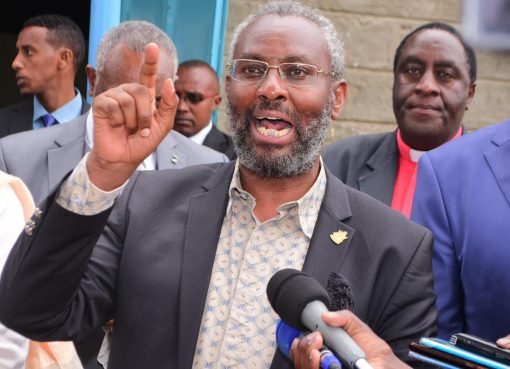
The CS who was accompanied by Kwale Governor Fatuma Achani, Principal Secretaries Harry Kimtai (State Department for Mining) and Betsy Njagi (State Department for Blue Economy and Fisheries), Kwale Woman Rep Fatuma Masito, Msambweni MP Feisal Bader and CEO of the National Research Fund, Prof. Dickson Andala, later visited other sites like the Kibuyuni seaweed farmers, the Gazi fish landing site and seawall and the Swahili Oyster Farm, Kenya’s first commercial oyster farm.
Developed in close partnership with the Kenya Marine and Fisheries Research Institute (KEMFRI), the marine hatchery will supply fingerlings and aquatic species to fish farmers, while the Kibuyuni Seaweed Processing Centre will enable local groups to create value-added seaweed products such as soaps, lotions, and seaweed powder/flour.
“The blue economy is no longer a future idea; it is today’s opportunity, by investing in infrastructure, research, and local entrepreneurship through NAMARET, we are securing sustainable livelihoods while preserving our marine ecosystems,” said Joho.
The CS says the new hatchery is inaugurated at a time the Sh2.6 billion Shimoni fish port project is complete and ready for commissioning.
Joho says the new dedicated fish port is one of the strategic projects by the government to leverage the blue economy sector as the new frontier in the country’s economic transformation.
He said the new port facility is equipped with modern facilities for vessel landing, fish processing, and cold storage and is expected to bolster the fisheries value chain.
“The Shimoni fish port will create jobs and enhance household incomes, impacting positively on the local coastal communities,” he said, adding that the fish port will generate employment opportunities and boost local economic growth in the region.
“I urge investors and the local community to leverage the infrastructure the government is establishing to maximise the potential of our fisheries and blue economy sector by embracing Mariculture,” he said.
Governor Fatuma Achani emphasised that the county government is committed to unlocking the full potential of marine resources through grassroots empowerment and strategic investment.
“The ocean is our county’s greatest asset and with facilities like the state-of-the-art hatchery, our people can harness its full potential, “she said.
“We are not just talking about empowerment; we are making it real through programmes that give tools, training, and opportunities directly to the people,” Achani added.
She highlighted the county support for 21 active seaweed farming groups and the distribution of 13 fibreglass boats to enhance harvesting, transport, and income generation.
The county boss said apart from contributing to food security, the new facility would also serve as a hub for employment and income generation for youths and women in the aquaculture subsector.
Fatuma Mohammed, Chairperson of the Kibuyuni Seaweed Farmers’ Cooperative, welcomed the government’s support. “This NAMARET centre allows us to process our seaweed locally and increase our earnings. Women here are now able to take care of their families with dignity.”
Through the NAMARET framework, long-term plans include, Scaling aquaculture and seaweed farming initiatives, strengthening marine value chains, supporting women and youth cooperatives, and finalising critical infrastructure such as the Shimoni port, which will boost coastal trade and open new market access for marine products.
By Hussein Abdullahi