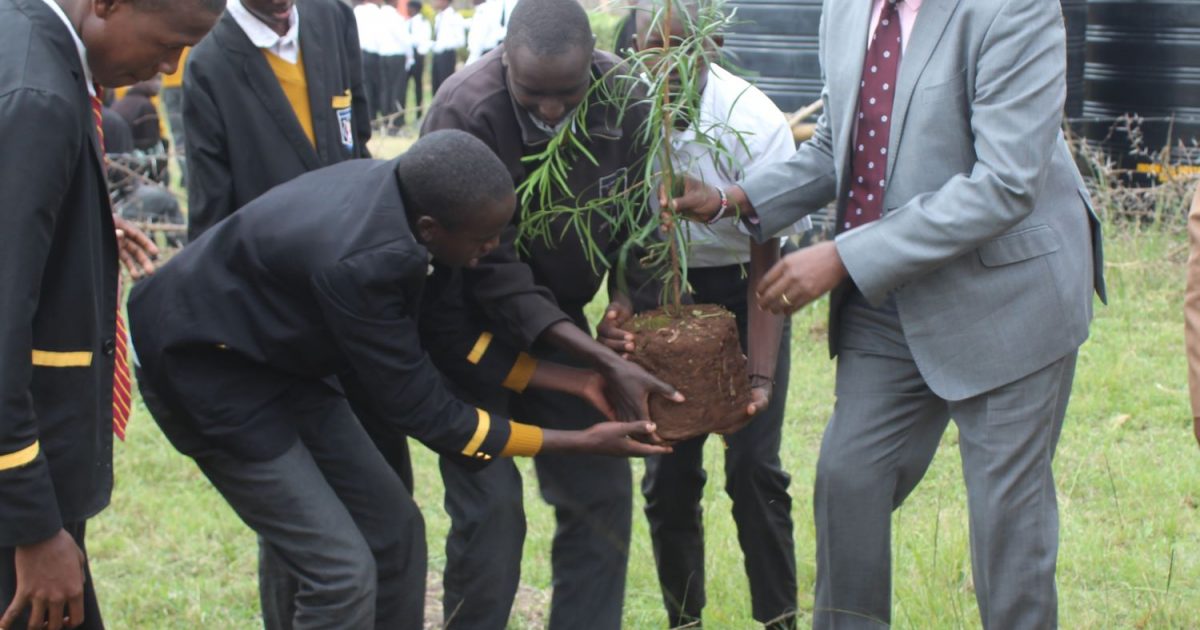
The Ministry of Tourism, Wildlife, and Heritage, led by the conservation secretary in Kenya’s State Department for Wildlife, Dr. John Chumo, on Thursday spearheaded a coordinated tree-planting exercise aimed at combating the effects of climate change, held at Nakeel Secondary School in Rongai.
Nakeel principal, students, teachers, representatives from the Kenya Forest Service (KFS), and staff from the State Department for Wildlife armed with watering cans, hoes, and tree seedlings converged at the school field, filled with excitement as they conducted the impactful exercise that saw over 3,000 indigenous trees planted.
The tree species included crotons and acacias, chosen for their resilience and long-term benefits to the community. Students were at the forefront, greatly involved in the exercise, which was a deliberate move by the elders meant to shape their values on environmental conservation from an early age.
Chumo highlighted that Kenya, like many other countries, is faced with the far-reaching effects of climate change, such as prolonged droughts, erratic rainfall, floods, degraded lands, and loss of biodiversity.
Kajiado County, in particular, is among the areas of concern because of its aridity, population pressure, and human-wildlife conflict, which further exposes the fragile land.
In the last three years, Kenya has experienced a lot of climate change, which resulted in the worst drought ever, which claimed the lives of many domestic and wild animals, especially in Amboseli National Park, where a lot of elephants and antelopes succumbed to the drought.
“It is in response to the growing environmental crisis that the state department for wildlife has prioritized tree growing as one of the key solutions to mitigate the effects of climate change, restore degraded ecosystems and build ecological resilience in areas shared by communities and wildlife,” he said.
The exercise complements the government’s commitment to attain at least 30 percent of the tree cover by 2032 and is a part of the national tree growing and restoration campaign launched by President William Ruto in 2023 to combat climate change, restore degraded landscapes, safeguard water sources, achieve national tree cover targets, mobilize communities and youth, and support wildlife and tourism.
“The government is putting a lot of effort into sensitizing its citizens on the importance of environmental conservation to plant at least 15 billion trees in the next ten years,” Dr. Chumo said.
The government, he noted, enhances biodiversity, improves soil health, recharges groundwater, and provides habitats for treasured wild species and ecosystems, especially in Kajiado County, where tree growing plays a crucial role in maintaining pastoral livelihoods.
“We are here today not just planting trees but growing a vision for a greener, more resilient, and more harmonious Kenya, where nature is not viewed as a threat but as a partner in our learning and development journey,” said Chumo.
He urged the students to ensure that with the knowledge they acquire on environmental conservation, they become positive influencers to inspire others through actions, values, and visions to adopt more sustainable practices and advocate for conservation-friendly policies.
Gabriel Ngale, an official from the wildlife clubs of Kenya, added that wildlife conservation is an important exercise and a duty for every person to ensure the environment is preserved.
He emphasized the importance of the formation of wildlife clubs in schools because students are the greatest influencers; they have a lot of knowledge and can act as good examples in society towards a positive change.
Ngale added that through environmental conservation natural resources like forests, water, and wildlife are protected, adding that healthy ecosystems provide critical services like clean air, fresh water, fertile soil, and climate regulation.
Beyond practical benefits, he noted that environmental conservation promotes a sense of responsibility and respect for nature, saying sustainability and education can lead to more harmonious relationships between people and the earth.
“We human beings need nature, and we cannot do without it, and so we have an obligation to care for that which we cannot live without. Kenya is a blessed nation, and some of the animals and plant species are only found in our country, so we should ensure to safeguard that which is ours for the sake of ourselves and our future generations,” said Ngale.
Kajiado County has a tree cover of 10.94%, and this falls below the national target of 30% tree cover by 2032. The county is actively involved in tree planting initiatives to increase forest cover, with a focus on restoring degraded landscapes and planting trees in homes, schools, and institutions.
By Edwin Gathii