When was the last time you dewormed? You could be among the 25 million Kenyans at risk of suffering from Neglected Tropical Diseases (NTDs).
The Ministry of Health’s Vector Borne and Neglected Tropical Diseases Unit (VBNTDU) has acknowledged that the hazard posed by NTDs is dire and warrants immediate attention as a further 10 million Kenyans require treatment for the diseases.
It is against this background that the Vector Borne and Neglected Tropical Diseases Unit (VBNTDU) conducted a three-week-long granular mapping for bilharzia and intestinal worms.
infestation prevalence in Nakuru in an exercise geared towards developing effective and localised strategies to combat the diseases.
The mapping exercise which ended last week and was jointly conducted by the Ministry of Health, the County Department of Health and the Ministry of Education is part of a broader effort to address the growing prevalence of NTDs in the region through mass drug administration (MDA) and community sensitisation programmes.
According to Gerald Maina, the County Head of Preventive and Promotive Health, the granular mapping project established that the populous Naivasha and Kuresoi South Sub-Counties were grappling with a worrying rise in bilharzia and intestinal worm infections, despite concerted efforts by both levels of government and their partners to combat these Neglected Tropical Diseases.
“The project surveyed over 300 schools across the 11 sub-counties and 55 electoral wards. Data analysis revealed Kuresoi South and Naivasha Sub-Counties are severely affected by these parasitic infections, predominantly among underserved communities with poor sanitation and limited access to clean water,” Mr Maina said.
The mapping exercise covered at least six schools in every ward in Nakuru County where an average of 50 pupils per school were examined.
According to the World Health Organisation (WHO), in the event the testing results show more than 10 per cent of the population have the disease, then everyone in the area must be given drugs, but if it is less than 10 per cent, then the drugs will be administered only to those with symptoms.
The Sub-Counties of Nakuru East, Rongai, Subukia, Molo, Nakuru East, Njoro, Kuresoi North, Gilgil and Bahati recorded lower rates for bilharzia and intestinal worm infestations.
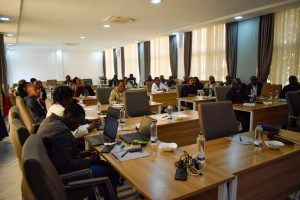
Mr Maina spoke during a dissemination meeting of the survey’s findings that were presented to various stakeholders, including the Department of Health and education officials, civil society representatives, and development partners.
The official affirmed that despite notable interventions by the County Government of Nakuru and partners, the rising number of bilharzia and worm infections in Kuresoi South and Naivasha Sub-Counties underscores the urgent need for stronger sanitation practices, increased public participation in deworming and continued education on hygiene.
Without sustained community behaviour change, he warned that the fight against these preventable diseases may stall.
“Worms and bilharzia are preventable. Communities in all the Sub-Counties must treat deworming seriously. Children should be dewormed every three months and adults at least twice a year,” he added.
Mr Maina noted that Bilharzia, a disease spread by parasitic worms via waterborne snails, is usually widespread where stagnant water is prevalent.
“Our focus is on educating the public about disease prevention. Drug administration is just one part of lasting change that comes from improved hygiene and sanitation practices,” observed the official.
According to the County Head of Preventive and Promotive Health, children aged two to 14 years are more likely to be afflicted by these infestations and the effect on their health is far worse as compared to adults.
He pointed out that worm infections can reduce the absorption of nutrients in the body, leading to anaemia and malnutrition, and weaken the body’s immunological response to other infections such as malaria.
“Infected children may become too sick to attend school or too tired to concentrate in class. For infected girls and women of reproductive age, blood loss worsens iron deficiency anaemia that is routinely caused by menstruation blood loss, hence causing far worse ill health effects,” he observed.
He explained that control of these worms is based on periodical treatment with simple, safe and cheap deworming tablets to eliminate worms, health education to prevent re-infection, and improved sanitation to reduce soil and food contamination with infective eggs.
Deworming drugs, the official added, are tablets for swallowing that are extremely effective with a single dose, at a cost of a few shillings per tablet, and are safe even if taken by those without worm infections.
Periodic deworming tablets every 12 months address reinfection and the health problems associated with high worm loads.
The World Health Organisation (WHO) recommends periodic mass administration of deworming drugs to school children in worm endemic (high-burden) areas.
According to WHO, more than 880 million school-aged children are in urgent need of treatment for soil-transmitted worms worldwide, while 120 million persons are at risk of bilharzia.
Mr Maina, however, observed that all hope is not lost, as the devolved unit’s Department of Health is focusing on measures to move the county from treatment to complete prevention and elimination of this entirely preventable disease burden among the most vulnerable people.
“These measures include entrenching elimination of soil-transmitted helminths and bilharzia in policies such as the school health policy and the strategic plan for elimination of neglected tropical diseases in Kenya by 2030.”
He further explained that this is being achieved through targeted health education, infrastructural investment in water, hygiene and sanitation, and supporting the deliberate effort to move Kenya to an open defecation-free country by 2030 through nationwide safe waste disposal.
Mr Maina advised Kenyans to undergo regular deworming – at least once a year – so as to avoid complications brought about by intestinal worms.
He particularly advised adults to take deworming medication and seek treatment when showing symptoms of intestinal worms, instead of dismissing them as a “child-only” illness.
Data from the Ministry of Health shows Kenya, like other African countries, has reported 16 of the 20 listed neglected tropical diseases.
Mr Maina explained that worms which affect humans are known as soil-transmitted helminths because they are acquired through infective eggs found in soil that is contaminated with faeces of an infected person, in areas where sanitation and hygiene are poor.
“Bilharzia is transmitted through contaminated fresh water, by the urine of infected persons, often found among water puddles, such as is common in rice fields,” he observed.
The eggs can be swallowed or can burrow into the skin of a person and migrate to stay in the intestines as parasites and cause infection and ill health, while the bilharzia worms can penetrate the skin and, in addition to the intestines, reside in the wall of the urinary bladder and cause an infected person to urinate bloody urine.
Soil-transmitted worms (helminths) are a group of three parasites, namely roundworms (Ascaris Lumbricoides), whipworms (Trichuris trichuria) and hookworms (Ancylostoma & Necator). Bilharzia (Schistosomiasis) is also a hookworm.
Intestinal worms are caused by consuming infected water and food, inappropriate hygiene, eating undercooked meat and contact with germ-infected surfaces.
Experts warn that intestinal worm disease causes stunted growth in children, anaemia, malnutrition and poor school performance.
In some severe cases, worms have caused intestinal blockages requiring surgery.
By Anne Mwale