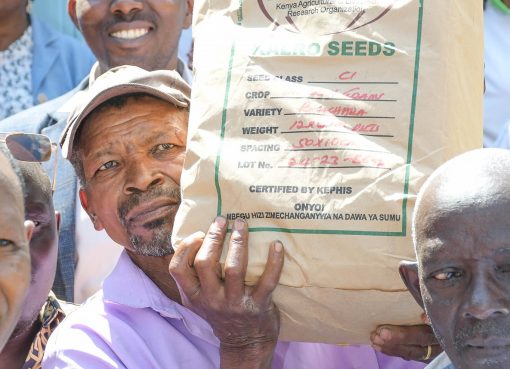
Isiolo County witnessed a major tree planting exercise as government departments and agencies joined hands to advance the national goal of planting 15 billion trees by 2032.
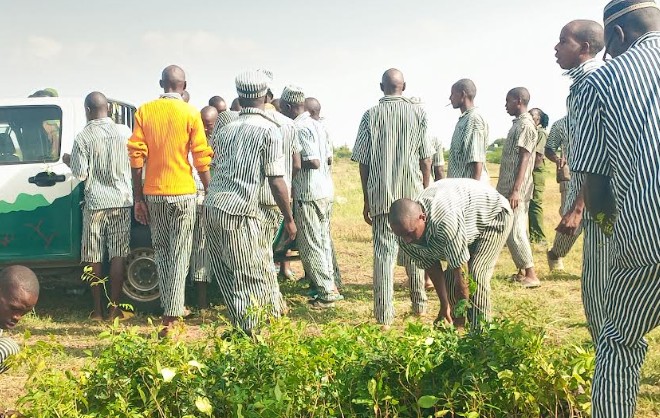
A total of 1,500 indigenous trees were planted at the Isiolo Prisons’ farm, with participation from inmates and members of the local community.
The exercise aims not only to increase forest cover but also to promote environmental stewardship and climate change mitigation.
Speaking during the event, Isiolo Assistant County Commissioner, James Macharia, emphasized that the initiative must go beyond planting to include long-term management and care, ensuring trees reach maturity and contribute to achieving the national target of 30 per cent forest cover by 2032.
Mr. Macharia led officials from the Kenya Forest Service (KFS), GK Prisons, Housing Department, National Environment Management Authority (NEMA), and representatives from the private sector in the planting exercise.
He urged the Prisons Authority to protect the trees and ensure inmates manage them properly through watering and necessary care.
He added that KFS has sufficient seedlings to meet the needs of the local community and encouraged stakeholders to utilize the ongoing short rains to advance the government’s tree planting agenda.
Executive Director of the ASAL Research and Resilience Programme (ASRREP), Mr. Dida Fayo, called for a coordinated effort from the government, donors, and communities to achieve the national target. He revealed that ASRREP plans to support the planting of 200,000 trees across Isiolo in partnership with KFS over the next six months.
Mr. Fayo highlighted the critical role of tree planting in controlling climate change, which threatens pastoralist livelihoods in northern Kenya.
He noted that environmental degradation, including soil erosion and deforestation, has contributed to the loss of thousands of livestock during droughts and floods.
He further explained that the government-led campaigns aim to maximize the socio-economic benefits of trees, from improving soil fertility to providing fuelwood and shade, ultimately outweighing the risks posed by climate change and deforestation.
The initiative reflects a growing commitment by government agencies, local communities, and non-state actors to combat environmental degradation while enhancing resilience to climate shocks.
By David Nduro