Israel is committed to agricultural technology transfer to Kenya to boost food production and mitigate the effect of climate change, Israeli Ambassador Gideon Behar has said.
Ambassador Behar emphasized his country’s commitment to supporting the Kenya Government’s initiatives on innovative agricultural technologies towards boosting productivity, empowering smallholder farmers, and positioning Kenya as Africa’s agribusiness hub.
He stressed the importance of adopting smart and precision farming technologies, including Artificial Intelligence, the Internet of Things (IoT) and climate-smart solutions, to boost yields, reduce waste, and mitigate the effects of climate change.
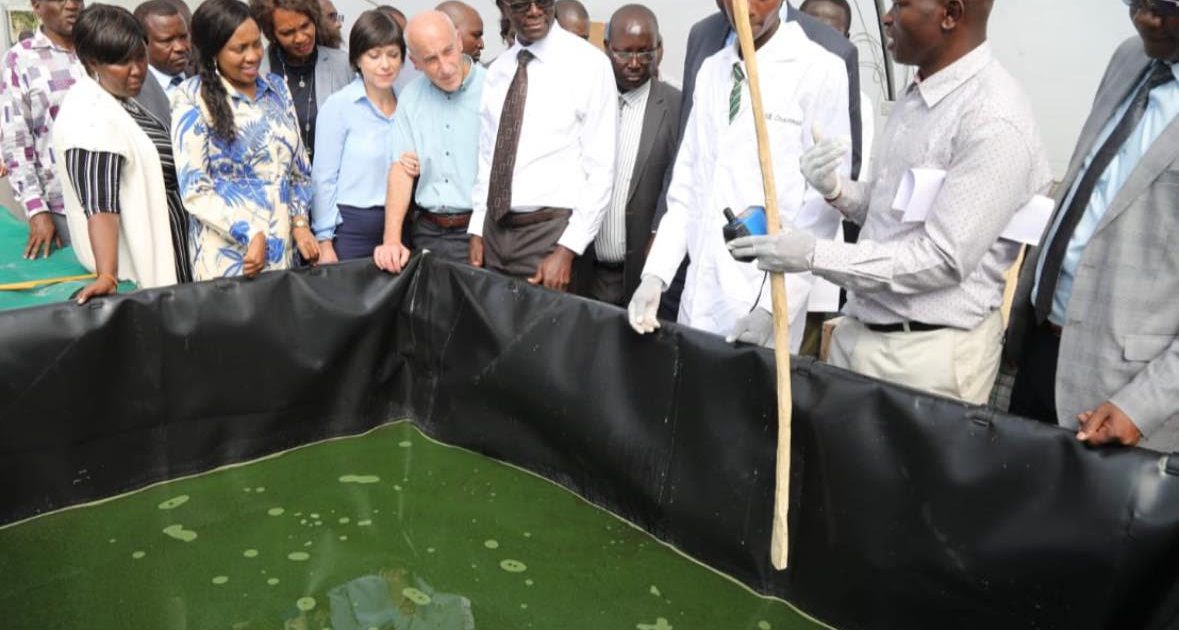
The Envoy who spoke when he visited a facility set-up by the County Government of Nakuru in collaboration with Engineers Without Borders- Israel (EWB-I), to train farmers on ways of manufacturing high protein animal feeds from locally available alternatives, stated that Africa has no option but to adopt climate-smart farming, including investing in irrigation, sustainable soil management, and agro-logistics, to ensure productivity from farm to market.
The facility based at the Agricultural Training Center’s (ATC), is providing techniques on rearing of the Black Soldier Fly Larvae (BSF), farming of Duckweed and Azolla and processing them into animal feeds for cattle, sheep, goats, fish, pigs and poultry.
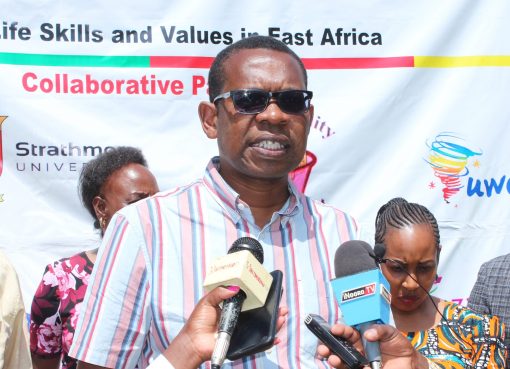
County Executive Committee Member (CECM) for Agriculture, Livestock, Fisheries, and Veterinary Services, Mr Leonard Bor, noted that feed contributes to about 60 -70 per cent of the total production costs in a farm, adding that locally available alternatives, if embraced and processed into feeds, will be a game changer to thousands of farmers in the region, as their household incomes will improve significantly.
Mr Bor noted that through the initiative, youth and women groups are also being trained on the cultivation of Spirulina, which he said is being used as a supplement in Early Childhood Development Education (ECDE) School feeding program.
“The mutual activity is based on building an innovation hub at the Agricultural Training Center (ATC) in order to promote regional capacity through demonstration and development of a toolbox for professional advice to farmers and the entire community,” stated the CECM.
According to the CECM, protein is the most expensive component of animal feed, accounting for 70 percent of production.
He stated that protein feed is costly because of the competition for consumption between animals and humans and that tapping into protein alternatives, will drastically cut the cost of livestock farming and improve the profitability of smallholder farmers.
Spirulina is an aquatic microorganism often referred to as algae, though it more closely resembles bacteria. It is used as a food supplement to combat malnutrition.
“This cyanobacterium is nutrient-dense and is often used as a dietary supplement. It has extremely high protein levels and is packed full of beneficial vitamins, including vitamins B and vitamin K, as well as minerals such as iron, magnesium, and zinc. All of these factors make it perfect for treating malnutrition. We want it to be an essential element of the meals at our early childhood development centres,” stated Mr Bor.
Spirulina grows naturally in rivers. However, outside its natural habitat it is grown in a greenhouse as it also does well in a controlled environment. It’s typically grown in large, shallow tanks where it can receive plenty of sunlight, and the water in the tanks need to be constantly stirred or aerated to prevent the Spirulina from clumping together.
Mr Bor said the partnership with the Middle East nation, is promoting climate-smart and locally adapted appropriate technologies for food security in the County, adding that the training will offer practical solutions to combat the high cost of feed, support sustainable agriculture, and enhance productivity.
EWB-I is an Israeli organization that consists of engineers and technical professionals who volunteer their skills to support various humanitarian projects worldwide.
The CECM emphasized that the initiative would have a positive impact on local economies by creating employment opportunities, particularly in farming and kitchen activities.
Black Soldier Fly Larvae (BSF), scientifically known as Hermetia illucens, is an insect prized for its larvae, which is rich in protein and an ideal feed source for livestock, including poultry, fish, and pigs. These larvae thrive on organic waste, converting it into nutrient-dense feed and producing a secondary byproduct known as frass.
Mr Bor indicated that frass, a type of organic fertilizer, is a natural soil enhancer that provides a sustainable alternative to synthetic fertilizers, which have contributed to soil degradation and reduced agricultural productivity over time.
“With many farmers struggling due to low production linked to overuse of synthetic fertilizers, BSF offers a sustainable solution that supports both the environment and food systems,” said the CECM.
Ms Michal Dolev Hashimhony from EWB-I emphasized the importance of waste recycling in BSF farming as a step toward creating resilient, sustainable food production systems.
Ms Hashimhony observed that BSF farming presents an accessible and affordable opportunity, particularly for women and young people who often have limited access to land and capital. It can be done on a small scale, making it suitable for populations with limited space and budget constraints.
She explained that the use of BSF frass as an organic fertilizer contributes to the fight against climate-change by reducing the need for synthetic fertilizers, which can disrupt soil biodiversity and contribute to greenhouse gas emissions.
“BSF larvae consume large quantities of organic matter, breaking it down into nutrient-rich biomass. This process not only produces high-quality feed but also helps reduce the volume of waste sent to landfills, where it would otherwise release methane, a potent greenhouse gas,” added Ms Hashimhony.
Duckweeds are tiny free-floating vascular plants found throughout the world on fresh (or sometimes brackish) waters. The main duckweed species are Lemna minor, Lemna gibba, spirodela polyrhiza (sometimes spelled Spirodela polyrrhiza and Wolffia arrhizal).
Ms Hashimhony explained that duckweeds can grow very quickly in small ponds, ditches or swamps where they can extract large quantities of nutrients, making the plant a potential source of protein for humans and livestock, notably poultry and fish.
According to experts it contains high levels of protein, vitamins and minerals, grows exponentially and can produce under optimal conditions 6-10 times more protein per hectare than soybean.
Ms Hashimhony observed that the fast-growing and versatile aquatic fern, Azolla, was one of the locally available alternatives to commercial animal feeds. With robust nitrogen-fixing capabilities, the Chief Officer pointed out that the fern also serves as an excellent fertilizer.
“Azolla is the most promising aquatic plant for livestock feed, thanks to its easy cultivation, high productivity, and nutritive value. It has been successfully tested and recommended as feed for fish, swine, and poultry,” she said.
Ms. Hashimhony highlighted that Azolla’s composition makes it an economic and efficient feed substitute for livestock. Its high protein and low lignin content ensure easy digestion by livestock.
“Azolla is very rich in proteins, essential amino acids, vitamins (Vitamin A, Vitamin B12, and Beta Carotene), growth promoter compounds and minerals. It has high levels of calcium, phosphorus, potassium, iron, copper and magnesium. The carbohydrate and fat content are low. The plant is highly digestible because it does not accumulate secondary plant materials such as woody lignin,” she concluded.
By Jane Ngugi