Jaramogi Oginga Odinga Teaching and Referral Hospital (JOOTRH) has strengthened its partnership with Washington University (WashU) to improve cancer care in Western Kenya, as hospital data reveals a heavy disease burden and major gaps in patient follow-up.
The renewed collaboration under the Global Oncology Initiative will focus on data-driven treatment, specialised training for health workers, research and better patient support systems.
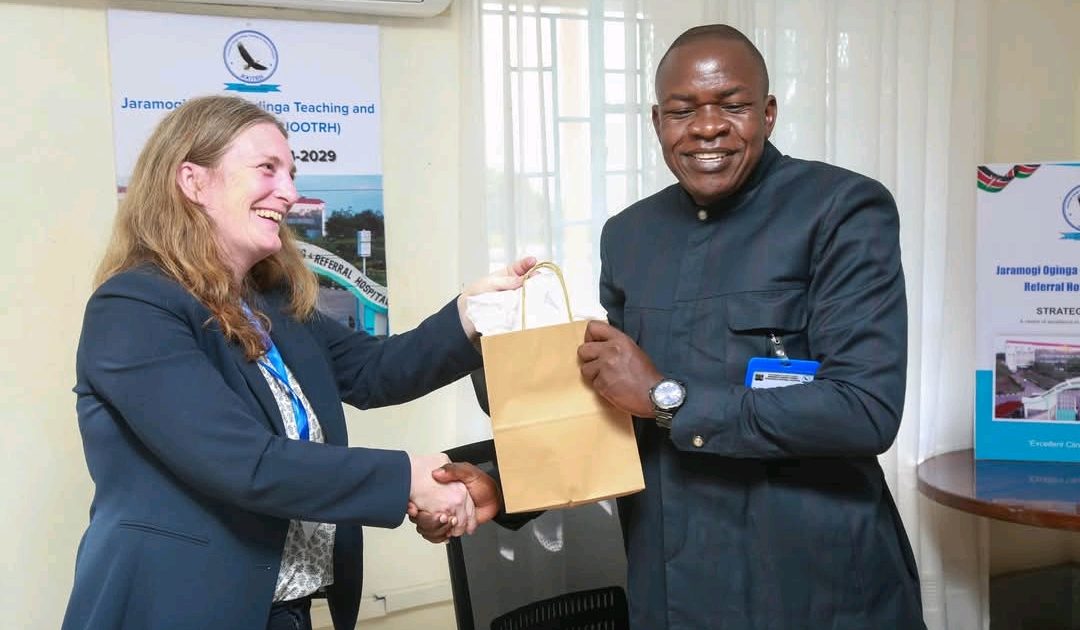
A delegation from WashU led by Dr. Thomas Odeny and Betsy Abente held strategic talks with JOOTRH’s oncology team and hospital leadership to review progress and plan the next phase of implementation.
Central to the partnership is a clinical cancer dashboard developed jointly by the two institutions.
The digital tool tracks cancer trends, treatment outcomes and service gaps, providing one of the clearest pictures yet of the region’s cancer situation.
According to the dashboard, cervical cancer is the most common diagnosis at JOOTRH, followed by oesophageal, breast, prostate and colorectal cancers.
According to the data, most patients seek care when the disease is already at an advanced stage, greatly limiting treatment options and reducing survival chances. The data also highlights serious continuity-of-care challenges.
About 44 per cent of oncology patients are lost to follow-up, while nearly a quarter pay for treatment out of pocket, exposing the financial strain facing many families.
JOOTRH Chief Executive Officer (CEO) Dr. Joshua Clinton Okise said the facility was using the findings to guide urgent reforms.
He said the National Referral Hospital was strengthening digital patient tracking through integration with national health information systems, including AfyaKE, and expanding its Mashinani outreach programme to promote community screening, early detection and tracing of patients who miss clinic appointments.
Speaking during the engagement with WashU officials at the Kisumu based facility on Wednesday, Dr. Okise said reliable data was now shaping how the hospital plans and delivers cancer services.
“Strong data systems and partnerships are essential in guiding priority setting, improving treatment planning and shaping cancer care policy at the hospital,” said Dr. Okise.
The partnership places emphasis on building local capacity, with health workers at JOOTRH benefiting from multidisciplinary training, leadership development and skills in grant writing and implementation science to support sustainable cancer programmes, he added.
Dr. Okise said joint research projects were already underway, including studies on cancer epidemiology, patient retention and new models of financing treatment under the Harambee and Pamoja frameworks.
He added that discussions were also ongoing on opening pathways for future clinical trials at JOOTRH, which could widen access to advanced therapies.
The collaboration was set to significantly change the cancer care landscape in Western Kenya, where late diagnosis, limited specialist services and high treatment costs have long affected outcomes, he said.
“With improved data, stronger systems and international research links, JOOTRH hopes to detect cancers earlier, keep more patients in care and ultimately improve survival rates across the region,” he said.
By Chris Mahandara