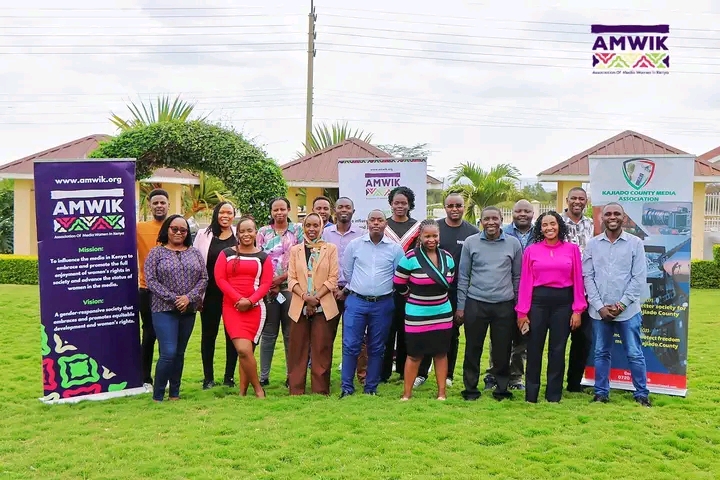
Journalists from different media houses in Kajiado County have received specialized training on nature crimes reporting and community awareness.
The two-day workshop was organized by the Association of Media Women in Kenya (AMWIK) under its project Enhancing Nature Crimes Reporting and Community Awareness, implemented in partnership with the Civil Society Resilience Fund Against Organised Crime (ResFund).
Judie Kaberia, a multiple award-winning journalist and established investigative reporter on environmental and nature crimes, explained that these crimes are often perpetrated by organized criminal networks with operations stretching beyond national borders for huge financial gain. However, she cautioned, the long-term damage inflicted on ecosystems and local livelihoods is devastating.
Kajiado County is considered one of the hotspots for nature crimes. Activities such as encroachment into wildlife reserves, bushmeat consumption, illegal mining, poaching, and unsustainable sand harvesting remain rampant. Kaberia emphasized that journalists, as trusted narrators of the community, have an essential role in raising awareness and exposing the effects of these crimes.
“By showcasing nature crime stories, journalists will not only create awareness but also expose the cartels and send a warning across the world. These crimes have a huge effect on the ecosystem. For instance, poaching has significantly affected tourism and development in the country,” she said.
Kaberia added that effective reporting can also influence cross-border policies, particularly in managing poaching, where elephants and other wildlife migrate between Kenya and Tanzania. “Journalists can help inform both governments on the need for collaboration to dismantle criminal networks and develop strong policies to safeguard wildlife at the borders and across the continent,” she noted.
Queenter Mbori, Executive Director of AMWIK, said the training was vital because reporting on nature crimes has long been under-recognized and under-resourced in Kenya’s media landscape.
“Kenya is a global tourism hub because of our rich natural resources. Unfortunately, this also makes it a hotspot for nature crimes. Yet, this is one sector that is rarely reported. We felt it important to strengthen journalists’ skills so they can highlight issues affecting communities that host natural resources. Most importantly, such reporting helps protect the country’s heritage,” she said.
The training also went beyond environmental crime coverage. Journalists were equipped with tools to strengthen mental health resilience and ensure secure communications in the digital era. This included sessions on data protection, countering surveillance, and managing cyber harassment; challenges that frontline reporters increasingly face in today’s environment.
Peterson Githaiga, Chairperson of the Kajiado County Media Association, lauded AMWIK for the initiative, noting that many journalists often confuse environmental reporting with nature crime reporting. “This training has been an eye opener. We now understand the difference and are better prepared to report these complex issues with accuracy,” he said.
The AMWIK–ResFund partnership seeks to empower journalists not only to highlight the immediate impacts of illegal activities but also to frame them as threats to long-term national development. By linking criminal activities like poaching and illegal mining to governance, livelihoods, and security, journalists can build public pressure for stronger enforcement and reforms.
In closing, Kaberia reminded participants that effective storytelling can galvanize action both locally and internationally. “When we connect these crimes to the daily lives of people, showing how communities lose income, how water sources are depleted, or how food security is undermined, then audiences and policymakers take notice. That is the power of journalism,” she stressed.
The training ended with a call for continuous collaboration between journalists, civil society, and government institutions to tackle organized nature crimes and safeguard Kenya’s biodiversity.
By Diana Meneto