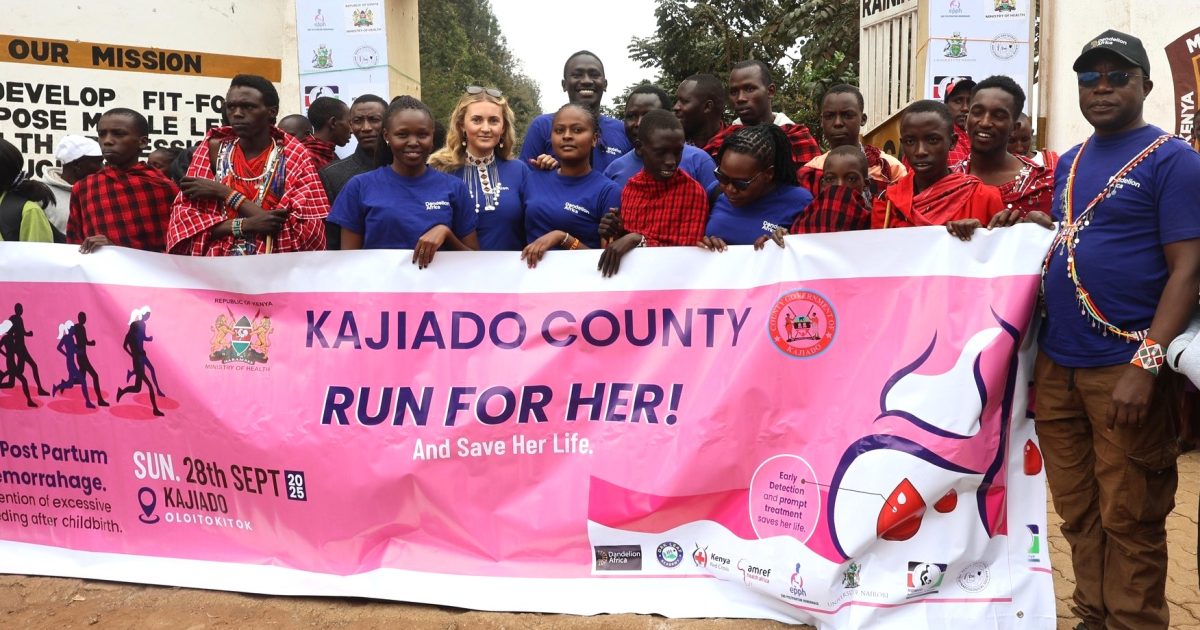
Residents of Loitokitok in Kajiado South Sub-County on Sunday turned out in large numbers for a Postpartum Haemorrhage (PPH) awareness run aimed at sensitizing the community on the dangers of excessive bleeding after childbirth; one of the leading causes of preventable maternal deaths in Kenya.
The campaign, organized by the Kajiado County Government in partnership with health stakeholders, sought to encourage expectant women to give birth in hospitals under skilled care and to promote early interventions to curb maternal mortality.
County Executive Committee Member for Health Alex Kilowua said the devolved unit has prioritized maternal and child health, equipping local hospitals with modern devices, including the Non-pneumatic Anti-shock Garment (NASG), a life-saving tool used to control bleeding and stabilize patients before they are referred for advanced care.
“Postpartum haemorrhage remains one of the top causes of maternal mortality in our county and across the country. We are urging mothers to deliver in hospitals where they can be attended to by professionals and receive timely interventions,” Kilowua said.
He further called on residents to register with the Social Health Authority (SHA) to access affordable healthcare services, noting that county facilities were being equipped to meet rising demand for maternal care.
According to data from the Kenya Demographic and Health Survey (KDHS) 2022, maternal mortality in the country remains high at 355 deaths per 100,000 live births, placing Kenya off track in meeting its 2030 target of reducing the ratio to 70 per 100,000 live births.
Health officials say tackling preventable causes such as PPH, obstructed labour and infections would be critical in achieving this goal.
Local leaders and health officials who joined the run stressed the importance of antenatal care visits, nutrition awareness and community-level education.
They said that beyond equipping hospitals, empowering families with information would play a central role in saving mothers’ lives.
“This is not just a health issue; it is a community issue. Everyone must play their part to ensure no woman dies while giving life,” said one of the health workers who participated in the campaign.
Women in attendance also shared their experiences, saying sensitization drives had helped demystify myths around hospital delivery.
“In the past, many of us delivered at home because that was the tradition. But now we know the risks. Giving birth in hospital gives mothers a chance to survive complications,” said Helena Saitabau, a mother of three from Rombo.
By Rop Janet