The dream that started in 2023 when construction of Kandeki Irrigation Project officially kicked off in Gachatha village in Kirinyaga East is financially improving livelihoods of about 246 households in the area.
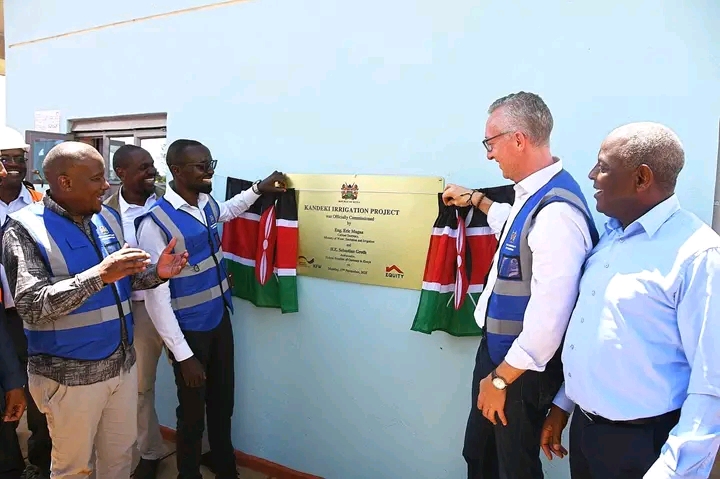
The project commissioned by the Water, Sanitation and Irrigation Cabinet Secretary, Eric Mugaa, together with other leaders and development partners, currently irrigates 225 acres of land and benefits 246 homes, boosting food production and security, as well as family incomes within the local community.
The irrigation system has ensured a consistent flow of water, enabling farmers to increase the production of high-value horticultural crops and adopt effective crop-rotation practices.
The project is implemented through a 50-50 cost-sharing model between the government and farmers. Farmers met their share through loans from Equity Bank, while the government provided the remaining portion through the concessional loan from German Development Bank (KfW).
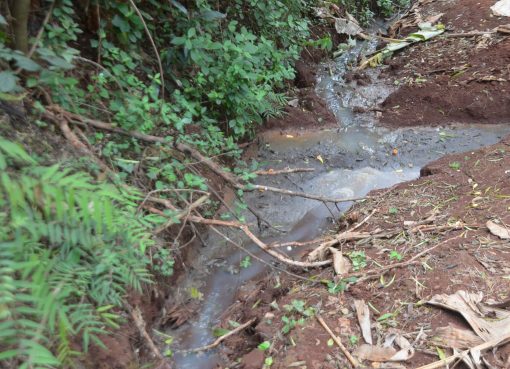
The intake works were set up along river Nyamindi with sedimentation basin followed by more than 4.7 kilometers of conveyance pipeline, distribution lines, sub-mains, feeder networks, laterals, and infield systems all under and across the soil.
Green patches of capsicum, French beans, and tomatoes carpet the once-dry fields. Farmers have also begun fodder production and livestock rearing, integrating crops and animals in ways that improve both soil and household incomes.
CS Mugaa noted that under the same partnership framework with Germany and Equity Bank, the government is developing 24 irrigation schemes across the region, nine of which are in Kirinyaga County. He emphasised the need to adopt modern technology to further expand agricultural productivity, highlighting smart irrigation systems as the future of farming.
“This farming model shows how we can empower our farmers so that even one acre can sustain a family and create jobs,” he said.
Farmers have also formed Kandeki Irrigation Cooperative Society, where they meet to plan, aggregate produce, negotiate better prices, and guide the management of the irrigation scheme they proudly own.
The CS visited Muriuki Farm, one of the beneficiaries of the irrigation project, whose owner described it as a great source of prosperity for local residents. Daniel Muriuki explained that he spends over Sh150,000 per half-acre of tomatoes from purchasing seedlings to harvesting with profits highly dependent on prevailing market forces. He noted that access to reliable water has reduced production costs by about Sh20,000, as farmers no longer need human labour or machinery to channel water to their farms.
However, the farmer highlighted several challenges they continue to face, including the high cost of chemicals, a shortage of agronomists to guide farmers on improving crop yields and sustainability through better land management, soil health, crop genetics, and pest control and an unreliable market for their produce.
The CS affirmed the governments’ commitment to strengthening food security through expanded irrigated agriculture noting the Thiba Dam in the same area has to ensure continuous supply of water to major projects in the region enabling increased planting seasons.
Principal Secretary state department for Irrigation, Elphantus Kimotho, said the cost-sharing model enhances sustainability because farmers have a stake in the investment. He added that Equity Bank has offered extensive capacity building to support farmers’ organisations, strengthen governance, and ensure they can manage operations and maintenance of the system long-term.
The PS challenged the farmers to remain in the society for future maintenance of the project that will remained in their hands once the contractor leave the site.
Equity Bank CEO, James Mwangi, described the initiative as a demonstration of the agricultural transformation journey achieved by transitioning from rain-fed to irrigation-based farming to make agriculture both sustainable and commercially viable.
He noted irrigation allows farmers to diversify, mitigate risks, adopt modern crop husbandry, and practice crop rotation, making agriculture profitable rather than merely a social activity.
“We partnered with German and Kenyan governments to transform the livelihoods of farmers via agriculture, we have done 24 irrigation schemes a viable demonstration of what is possible. With support from the World Bank, we will scale up to 200 irrigation schemes. This if the future of agriculture in Kenya,” Mwangi said.
Germany’s Ambassador to Kenya, Mr Sebastian Groth, said Germany has injected 2.5 million euros into the project. While expressing satisfaction of the project he noted that the positive outcomes will serve as a model for similar initiatives in other regions.
by Mutai Kipng’etich