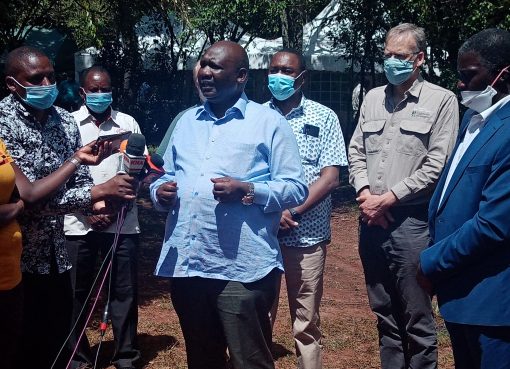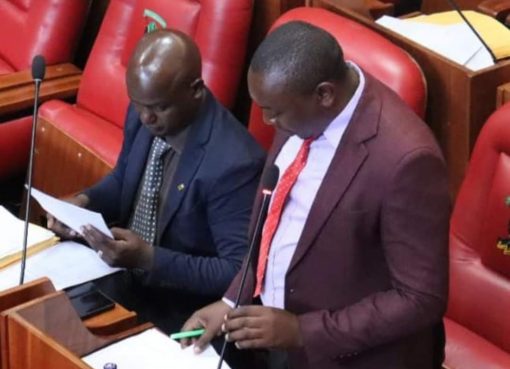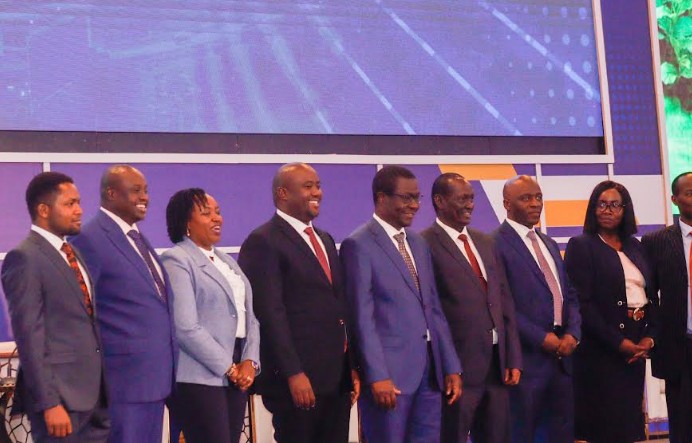
Kenya’s commitment to a sustainable energy transition took centre stage at the 6th Annual Energy and Petroleum Regulatory Authority (EPRA) Research and Innovation Conference.
At the event, senior government officials outlined a series of new and ongoing projects aimed at delivering cleaner and more equitable energy access across the country.
Addressing participants, Mr. Mohamed Liban, Principal Secretary (PS) for Petroleum, announced the rollout of the Liquefied Petroleum Gas (LPG) Adoption Project, targeting institutions that rely heavily on biomass for cooking.
“The initial phase will see 20 public schools equipped with modern LPG infrastructure and trained in safe usage. This is more than an energy initiative; it’s a health, environment and development intervention,” announced Liban, stressing that the project aims to reduce indoor air pollution, deforestation and operational inefficiencies in school kitchens, while laying the foundation for widespread adoption of clean cooking fuels.
He added that the project aligns with Kenya’s National LPG Growth Policy and contributes to the country’s broader climate commitments under the Paris Agreement and Sustainable Development Goal 7 (SDG).
Further, the PS also spoke on the growing Autogas industry, highlighting that 15,000 vehicles have already been converted to use Autogas and are being served at 20 fuelling stations nationwide.
He at the same time confirmed the industry’s collaboration with EPRA, KEBS, and NTSA to enforce safety and environmental standards and promote private investment.
“This is a strategic green job creation and air quality improvement opportunity. We encourage more private sector actors to invest in the autogas ecosystem,” urged Liban.
In his remarks, the PS for Energy, Alex Wachira, outlined Kenya’s ambitious plan to accelerate electric mobility, disclosing that the country aims for 5 per cent of all imported vehicles to be electric by 2030, in line with the Kenya National Energy Efficiency and Conservation Strategy (2020) and COP26 commitments.
“We are building the foundations for electric vehicle infrastructure, local EV motorcycle manufacturing, and e-mobility policy frameworks. This is part of the Fourth Medium-Term Plan of Vision 2030,” stated Wachira.
He further emphasised the government’s push for electric cooking technologies as part of the clean energy transition, highlighting initiatives like smart metering, solar-integrated systems, and local production of pressure cookers as part of Kenya’s strategy to reach rural and off-grid communities.
“Energy access isn’t just about quantity; it’s about quality, affordability, and sustainability. This is why we urge academia, researchers, and transport sector players to collaborate with us,” encouraged the PS.
In addition, the Ministry reaffirmed its partnership with EPRA in aligning licensing, tariff structures, and regulatory frameworks to support innovation.
Meanwhile, EPRA Director General Daniel Kiptoo insisted that the conference should not be theoretical, as he emphasised that innovations witnessed at the conference must move from the boardroom to the field to impact homes, schools, and businesses.
With discussions underway on regulatory resilience, energy financing and youth-led innovation, the conference is expected to produce actionable outcomes that will shape Kenya’s energy policies and investments for years to come.
By Gabriel Mwangi