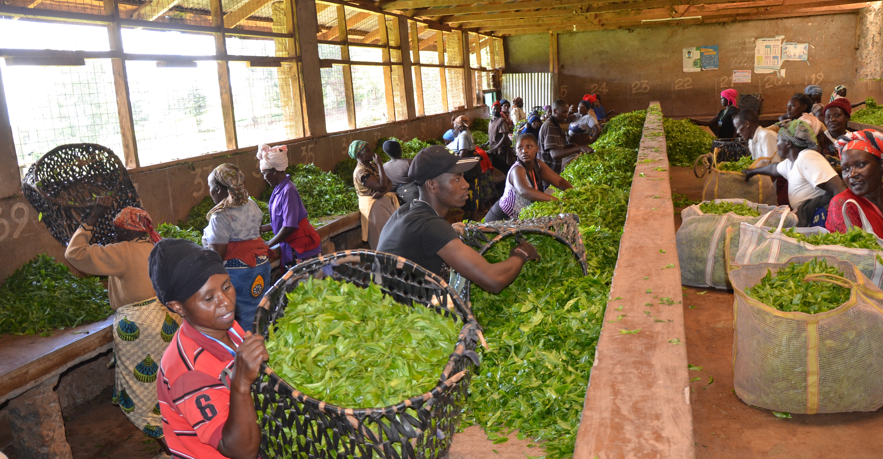
Kenya and Iran have established a joint committee to address trade obstacles within 60 days, paving the way for the lifting of the ban on Kenyan tea exports to Iran.
The breakthrough was reached during the 7th Session of the Kenya–Iran Joint Commission for Cooperation held in Nairobi, which was co-chaired by Prime Cabinet Secretary Musalia Mudavadi and Iran’s Minister of Agriculture Dr Gholamreza Nouri Ghezalcheh.
Agriculture and Livestock Development Cabinet Secretary Mutahi Kagwe said Kenya and Iran had agreed to draft strict regulations to prevent such criminal activity in future and safeguard the integrity of Kenyan tea. He acknowledged that the ban has caused significant losses to Kenyan tea farmers and exporters.
“Kenya’s tea sector is one of our largest foreign exchange earners, and we must protect it from unscrupulous traders who damage our reputation,” said Kagwe.
Iran is among the top 10 importers of Kenyan tea. Data from the Tea Board of Kenya shows that in 2024 Iran imported 13 million kilogrammes of tea worth Sh4.26 billion. The data shows that Pakistan has maintained its position as a leading importer of Kenyan tea, accounting for 34.7 per cent of the total export volumes worth Sh70 billion.
Other key export destinations for Kenyan tea were Egypt, whose import volume was 86.90 million kilograms worth Sh23.96 billion; the United Kingdom, which imported 57.44 million Kilograms valued at Sh16.99 billion; and the United Arab Emirates, which imported 30.50 million kilograms valued at Sh10.27 billion.
Russia imported 28.46 million kilograms whose value was Sh7.43 billion; India imported 17.13 million kilograms worth Sh3.94 billion; Saudi Arabia imported 15.92 million kilograms, earning Kenya some Sh6.02 billion; and Yemen imported 14.13 million kilograms of tea worth Sh5.52 billion during the same period.
On the overall, Kenya’s tea was shipped to 96 export destinations compared to 92 in the year 2023.
The joint committee is also expected to develop a framework to restore trust and ensure compliance with quality standards, with the ultimate goal of resuming tea exports before the end of the 60-day period.
By Wangari Mwangi