The Government has launched the Kenya Industrial Wood Sector Vision, a transformative roadmap aimed at turning forestry into a key driver of green industrialisation, climate resilience, and job creation.
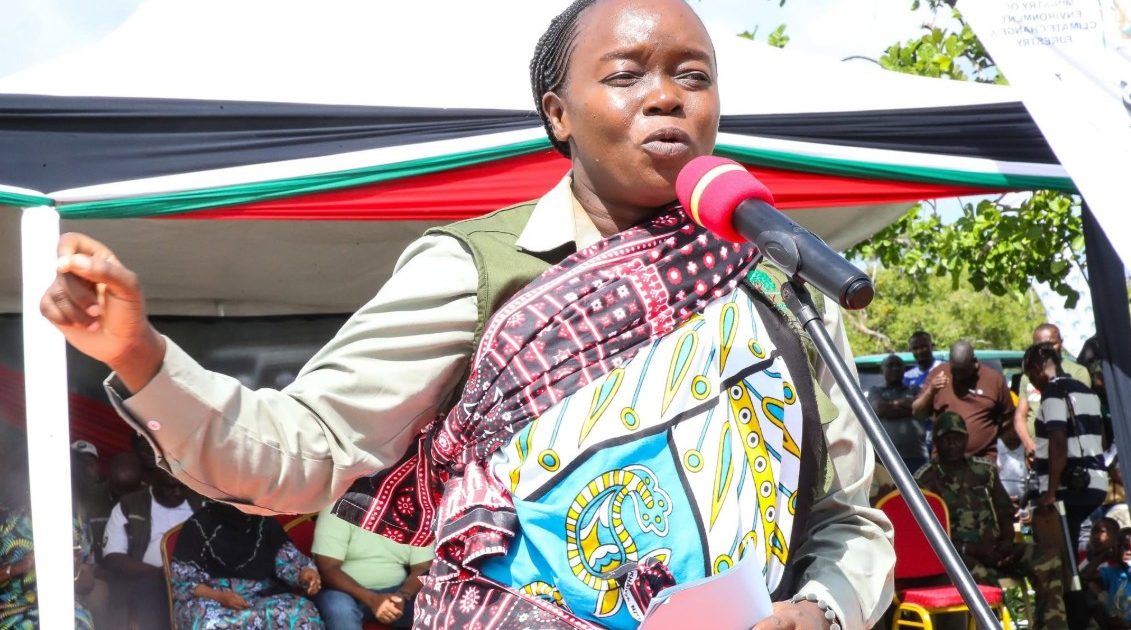
The Cabinet Secretary (CS) for Environment, Climate Change and Forestry, Dr. Deborah Barasa, reaffirmed the government’s commitment to commercial forestry as a key driver of inclusive and sustainable development.
Dr. Barasa emphasised that the new vision is not just about trees but about unlocking economic potential, restoring degraded landscapes, and creating quality jobs, particularly for women and youth.
“For the first time, Kenya is unveiling a comprehensive vision that places industrial wood production at the heart of our green industrial revolution by empowering smallholder growers, upgrading plantations, and attracting private investment,” she announced in a speech delivered on her behalf by the Principal Secretary for Forestry, Gitonga Mugambi.
The vision anticipates increasing full-time jobs in the sector from 15,000 to 85,000 and unlocking Sh13.9 trillion (US$107 billion) in industrial wood Gross Domestic Product (GDP) by 2050.
Additionally, it also supports the national goal of planting 15 billion trees by 2032, with 750,000 hectares earmarked for commercial forestry and 3 million hectares for agroforestry.
In his remarks, the PS noted that past moratoriums had created uncertainty and economic strain, especially for small businesses. “Moratoriums are often a result of failures in both government and the private sector. Though necessary at times, they lead to business closures, job losses, and stagnation,” explained Mugambi.
Mugambi also underscored the massive untapped potential in Kenya’s forestry value chain. Citing the economics of tree sales, he demonstrated that a single tree purchased from a farmer at Sh5,000 could generate up to Sh30,000 once processed into furniture, indicating strong margins that could revitalise local economies.
The PS on the other hand, estimated the potential economic value of 14 billion commercially viable trees at more than Sh7.5 trillion, a figure comparable to Kenya’s entire public debt.
“Forestry could become the magic bullet for our economy. We have examples in countries like South Africa and Sweden where forestry drives export and provides dignified jobs and we can replicate that here,” he observed.
PS Mugambi also called for unity among stakeholders, urging, “Let us believe in this vision, speak the truth, and support it in every way and together, we can turn forestry into a real driver of economic transformation in Kenya.”
Speaking at the event, Robina Abuya from the British High Commission, who manages the UK Partnering for Accelerated Climate Transitions (UK PACT) programme, hailed the launch as a milestone in Kenya’s climate and development agenda.
“This is a bold and timely vision that puts forestry at the core of industrialisation and inclusive growth, and we are proud to support the Ministry and Gatsby Africa in realising this goal, as Forestry is already contributing significantly to national revenue and has the potential to do much more,” expressed Abuya.
Meanwhile, UK PACT and the Foreign, Commonwealth and Development Office (FCDO) committed to continuing their support for commercial forestry, including technical assistance, agroforestry development, urban green spaces, and talent development.
The launch also saw Gatsby Africa, the Kenya Forestry Research Institute (KEFRI), and the Kenya Forest Service (KFS) pledge continued partnership.
Beula Sokoku from Palladium, part of the UK PACT fund management team, praised the years-long collaboration behind the vision. “This has been a long journey and today proves that what we’re doing matters,” she pointed out.
The Kenya Industrial Wood Sector Vision is aligned with national frameworks such as the Bottom-Up Economic Transformation Agenda (BETA), the National Forest Policy (2023), and the Green Economy Strategy and Implementation Plan.
It is also backed by regulatory reforms, including draft regulations on forest concessions, registration of private forests, and timber evaluation, awaiting enactment after public participation.
By Yvonne Wanjiru and Amina Bakari