The government has issued a stern warning over the growing forgery of academic and professional certificates, terming it a national emergency that threatens the credibility of the education system and the integrity of public service.
Speaking during the 2025 Ethics and Integrity Conference held at a Nairobi hotel, Head of Public Service Felix Koskei said the vice is a serious threat to institutional integrity and national development.
“Appointments and promotions must espouse fair competition and merit, yet we are witnessing falsified certificates across sectors, from national and county governments to parastatals and independent offices,” said Koskei.
Koskei cited a recent directive by the Public Service Commission requiring all public officers to have their academic and professional credentials verified, which has revealed widespread fraud further cautioning that the implications of fake credentials go beyond domestic governance.
He warned that such misconduct could undermine the country’s labour export programmes. “We risk national embarrassment if unqualified individuals are exported abroad only for their incompetence to be exposed. This undermines efforts to address youth unemployment, especially when we have many genuinely skilled graduates,” he said.
Koskei announced that a circular had been issued to all public entities to enforce strict adherence to recruitment guidelines, adding that heads of institutions who recruit unqualified individuals would be held personally accountable.
Koskei also revealed that a multi-agency task force had been established, bringing together the Office of the Director of Public Prosecutions (ODPP), the Ethics and Anti-Corruption Commission (EACC), the Directorate of Criminal Investigations (DCI), the Kenya National Examinations Council (KNEC), and the Kenya National Qualifications Authority (KNQA) to address the crisis.
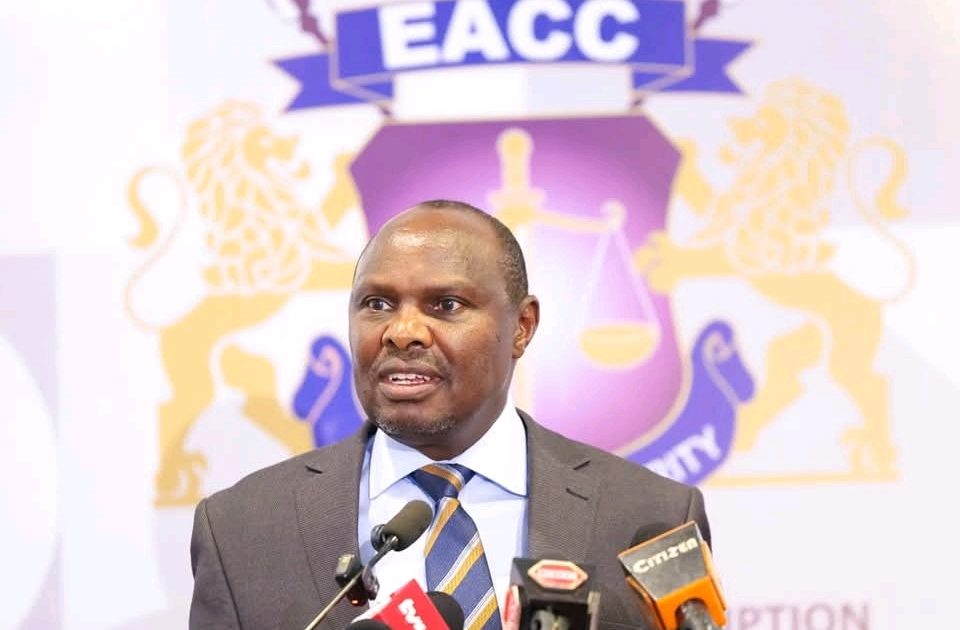
EACC Chairperson Dr. David Oginde echoed Koskei’s sentiments, describing the crisis as systemic and likening it to a pandemic. “This issue is no longer isolated. It’s systemic. We are seeing falsified documents even at the PhD level—people submitting dissertations downloaded from the internet,” said Dr. Oginde.
Oginde decried the normalization of academic dishonesty, pointing out that law enforcement agencies now have to invigilate even primary school examinations.
“We now have to deploy security forces to invigilate primary school exams—something unimaginable in the past,” Oginde said.
Dr. Oginde further warned that Kenya’s reputation as a global academic leader was at stake. “Let us be ruthless with those who have taken shortcuts. We must restore our nation’s integrity,” he urged.
EACC Chief Executive Officer Abdi Mohamud revealed that the Commission has received 549 reports of certificate forgery since 2022. “So far, 85 cases have been forwarded to the Director of Public Prosecutions and 20 have been concluded in court, resulting to13 convictions,” he said.
Mohamud emphasised that enforcement efforts must be accompanied by a multi-sectoral strategy to contain the vice because if not curbed, this menace has the potential to discredit the integrity of Kenyan certificates and reduce competitiveness in the job market.
Mohamud further noted that EACC is actively recovering salaries and benefits fraudulently earned by individuals who secured employment using forged documents, citing that the Constitution envisions meritocracy as the basis of public appointments; hence, institutions must uphold integrity in recruitment processes.
Public Service Commission Chairperson Anthony Muchiri, who also attended the forum, revealed that a recent verification exercise uncovered over 2,500 forged certificates out of 3,000 examined.
Muchiri directed the verification of all public servants’ academic and professional credentials, regardless of rank or position.
“We must go back to our roots. Restoring integrity to Kenya’s education and public service systems is not just a legal obligation, but a moral and cultural imperative,” said Muchiri.
By Naif Rashid and Fride Amiani