The Ministry of Investments, Trade and Industry has assured exporters that Kenya’s access to the European Union (EU) market remains uninterrupted following the East African Court of Justice (EACJ) ruling that temporarily suspended the implementation of the Kenya–EU Economic Partnership Agreement (EPA).
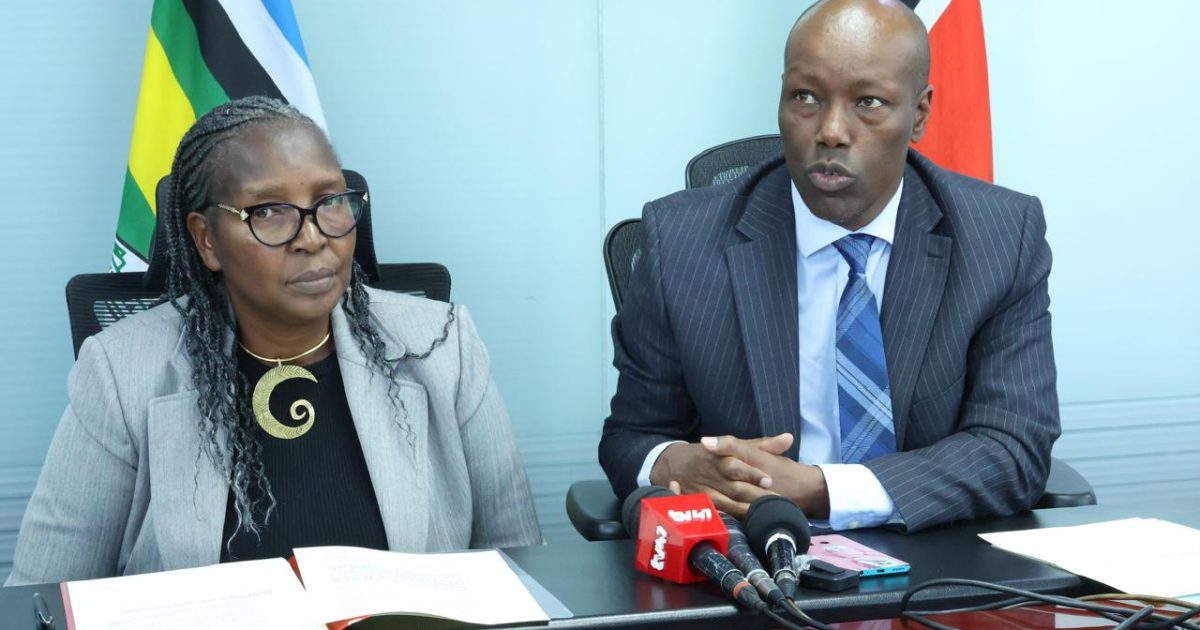
Speaking during a media briefing at the Ministry’s headquarters in Nairobi on Wednesday, Cabinet Secretary Lee Kinyanjui said the ruling had created uncertainty within the business community but stressed that the government had already initiated measures to ensure continuity and protect existing commercial arrangements.
Kinyanjui said trade was a central pillar of Kenya’s economic growth, with the EPA serving as a major driver of exports and employment.
“The Kenya–EU EPA is the lifeline of our booming exports and a source of livelihoods for a large majority of Kenyans,” he said.
He added that the agreement aligns with national development frameworks, including Vision 2030 and the Bottom-Up Economic Transformation Agenda (BETA), as well as other international growth and job creation initiatives supporting sustainable development.
The CS noted that Kenya exported goods worth USD 1.56 billion to the EU in the last year, while imports totaled USD 2.09 billion, making the EU one of the country’s most significant trading blocs.
He said the EPA also includes capacity-building support for counties to improve production in both fresh produce and manufactured goods in line with EU standards.
“Through this agreement, we are not just trading; we are enhancing our production capabilities and ensuring our goods meet international market requirements,” Kinyanjui said.
The Cabinet Secretary emphasised that Kenya’s access to EU markets remains intact.
“We wish to assure all Kenyans, our trading partners and exporting entities that Kenya will continue to trade with the EU, steps are being taken to ensure continuity, predictability and protection of our existing commercial arrangements,” he said.
He highlighted that the government is committed to reducing uncertainty and maintaining investor confidence during the legal proceedings.
Kinyanjui said the Ministry, in consultation with the Office of the Attorney-General, had already begun the process of challenging the ruling.
“We are seeking redress through the appropriate appellate mechanisms aimed at setting aside the injunctive orders and allowing continued implementation of the EPA pending the hearing and determination of the case,” he said.
He added that engagements had begun with EAC partner states regarding the intention of Article 37 of the EAC Protocol, which he stated was designed to promote transparency rather than restrict sovereign trade action.
The CS explained that EPA negotiations initially involved all EAC partner states, but Kenya signed independently after being the only country ready to move forward at the conclusion of talks.
“Because our economy is export-oriented, we had to take the decision that best served the nation,” he said, noting that other partner states could join when ready and had been fully aware of the process.
He added that the government remains committed to protecting the national economic interest while respecting regional integration mechanisms.
He reaffirmed Kenya’s commitment to the EAC’s principle of variable geometry, which allows partner states to progress at different speeds without undermining the region’s collective integration agenda.
“Every case offers lessons that will make our future trade negotiations better informed and more resilient,” Kinyanjui said.
He added that Kenya would host the upcoming EAC Summit, where any concerns by partner states can be addressed within established mechanisms.
He also noted that the current petition had been filed by a non-state actor, stressing that matters involving regional trade should be addressed through EAC structures by member states.
Principal Secretary for Trade, Regina Ombam, reiterated the Ministry’s assurance that Kenya’s trade environment would not be destabilised by actions originating from outside established regional mechanisms.
She emphasised that Kenya is committed to safeguarding its exporters and protecting the livelihoods of thousands of Kenyans whose jobs depend on EU-bound exports.
“On behalf of the Ministry and the State Department for Trade, we want to confirm to the citizens of Kenya that we will ensure the trade environment for our traders is not jeopardised by issues arising from non-state actors who attempt to distort the good relations we have with our partners,” Ombam said.
She highlighted that Kenya remains a reliable partner in international trade and will continue to uphold its commitments while protecting national interests.
Ombam questioned the decision by non-state actors to challenge the EPA instead of allowing concerns, if any, to be raised through EAC structures by member states.
“If a matter is genuine, why would it have to go through NGOs or other non-state actors?” she asked. “There exist structures within the EAC through which such issues can be resolved.”
She further emphasised that Kenya values its regional partners but must also protect opportunities that lie beyond the EAC.
“The number of Kenyans employed in farms and factories exporting to the EU is huge, and we plan to grow this even further,”Ombam said.
“Kenya will do everything possible to safeguard its national economic interests.” added the PS.
She noted that the government will continue to engage all stakeholders to streamline trade processes, enhance predictability, and ensure that Kenya remains a competitive and attractive export-oriented economy.
by Naif Rashid