Kenya has reaffirmed its commitment to transforming tax administration through digitalization, inclusivity, and customer-centered reforms that empower Micro, Small and Medium Enterprises (MSMEs), as the country moves to strengthen domestic revenue and spur economic growth.
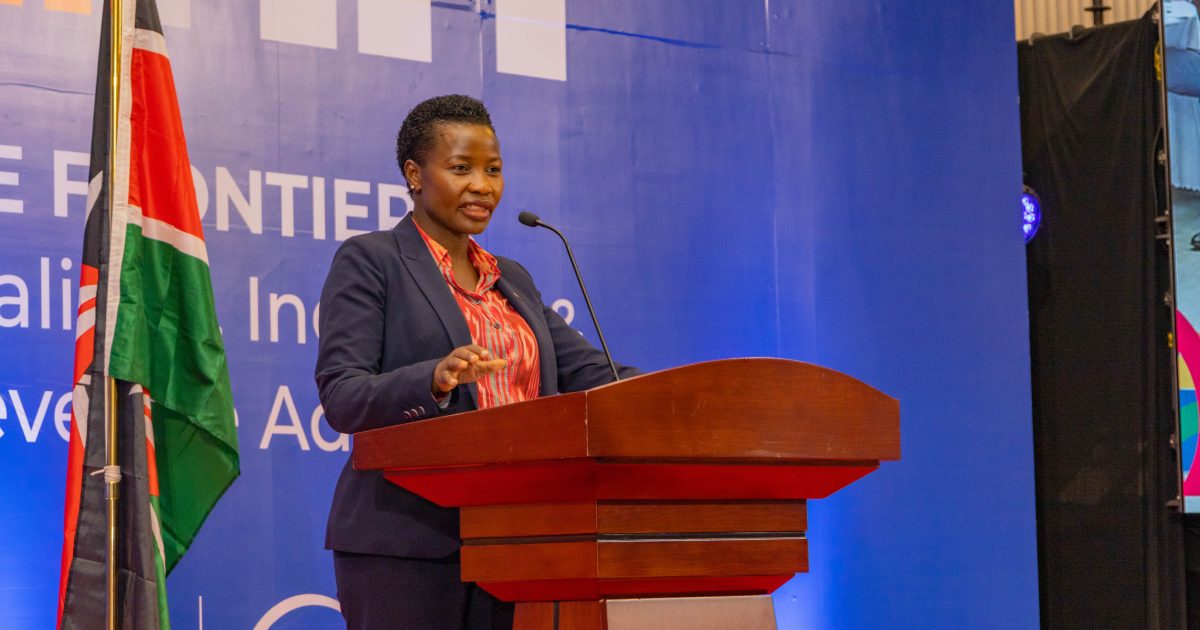
Speaking during the opening of the Kenya Revenue Authority (KRA) Annual Tax Summit 2025, themed “Beyond the Frontiers: Advancing Digitalized, Inclusive and Customer-Centered Revenue Administration,” leaders emphasized the need for technology-driven reforms that make taxation simpler, fairer, and more accessible for all Kenyans.
Ministry of Cooperative and Micro, Small and Medium Enterprises (MSME’s) Development Cabinet Secretary (CS) Wycliffe Oparanya said the summit comes at a crucial time when Kenya is implementing wide-ranging reforms to enhance efficiency and inclusivity in revenue collection.
In a speech read on his by Principal Secretary State Department of Micro, Small and Medium Enterprises Development Susan Auma Mang’eni, Oparanya said that Kenya has embarked on an ambitious journey to align its tax and revenue systems, making them more efficient, transparent, inclusive, and empowering for every Kenyan.”
Oparanya emphasized that digital transformation in revenue systems is essential for building an economy that works for everyone.
“We are not just talking about transformation, but building a tax ecosystem that fuels enterprise, supports innovation, and secures our country’s economic future,” he said.
He reaffirmed the government’s commitment to strengthening the MSME sector, which contributes over 40 percent of Kenya’s Gross Domestic Product (GDP) and provides most employment opportunities.
He highlighted initiatives such as the Kenya Jobs and Economic Transformation (KJET) Project, the MSME Connect platform, and Public-Private Sector Dialogue Forums, which have deepened collaboration between government, entrepreneurs, regulators, and financiers.
“Through the Hustler Fund, millions of micro-entrepreneurs have accessed affordable credit to expand their businesses,” he noted.
On her part PS Mang’eni: “We are revitalizing constituency industrial development centers and establishing county aggregation and industrial parks to provide shared facilities, modern equipment, and value chain support.”
She called for inclusive economic participation, challenging financial institutions to rethink their approach to youth, women, and persons with disabilities.
“We must change perceptions that young people are high-risk or that women cannot access credit because they lack property,” she said.
Mang’eni highlighted the Hustler Fund as a tool that promotes financial inclusion and builds credit history among small borrowers.
“If you can be trusted with Sh.500, you can be trusted with Sh.10 million. Credit is about trust,” she said.
She explained that the NYOTA Project is a scaled-up version of the Kenya Youth Employment Opportunities Project, targeting over 110,000 youth across all 47 counties.
The project focuses on certifying informal skills and expanding employability through on-the-job training and entrepreneurship.
“NYOTA aims to create 100,000 entrepreneurs and prove that entrepreneurs are not only born they can be made,” she said.
Kenya Revenue Authority (KRA) Commissioner General Humphrey Wattanga said the summit serves as a vital platform for collaboration among revenue administrators across Africa.
“This gathering brings together some of the brightest minds and boldest reformers in our economic landscape,” he said.
“It reflects our shared commitment to reimagine tax administration in ways that embrace technology, expand inclusivity, and put taxpayers at the center of service.” Wattanga noted.
He highlighted that KRA is exploring advanced tools such as Artificial Intelligence (AI), blockchain, and mobile money integration to improve compliance and enhance transparency.
“Every taxpayer matters, and none should be left behind,” he affirmed. “By advancing digitalized and inclusive systems, we can strengthen compliance, deepen trust, and secure sustainable development for generations to come.”
KRA Board Chairperson Ndiritu Muriithi highlighted the need for trust, technology, and transparency as the foundation for modern revenue administration.
He commended KRA for 30 years of service to the nation, noting that its evolution from an authority to a service organization reflects its commitment to customer-centric transformation.
“No state can exist without taxes,” he said. “Even when we borrow, we repay with taxes. So, every Kenyan contributes directly to financing the state.”
Muriithi said the focus going forward is to make tax systems more predictable, inclusive, and seamless through digital innovation.
He cited KRA’s growing digital footprint, including mobile and WhatsApp based services, and revealed plans to establish 10,000 customer touchpoints across the country to make tax services accessible to every Kenyan.
“By embedding technology at the heart of service delivery, we are building a more transparent, responsive, and customer-focused administration,” he said.
Muriithi emphasized that enforcement driven tax collection is being replaced by a partnership approach that encourages voluntary compliance.
“When we write to you, it is not always to demand payment sometimes, we just want to say happy birthday,” he joked, underscoring KRA’s shift to human-centered service.
He added that KRA is collaborating with the National Treasury and development partners to secure the financial and technical support necessary for ongoing digital transformation and capacity building.
“These partnerships are indispensable in ensuring our reforms are sustainable and impactful,” he said. “As we celebrate 30 years of service, we do so with pride in our achievements and greater resolve to lead boldly into the future.”
“Together, with our government, development partners, taxpayers, and stakeholders, we will advance beyond the frontiers and secure a stronger, more prosperous Kenya for generations to come.”
by Lucy Mwende