Kenya has urged African nations to strengthen collaboration and adopt a unified approach to anti-doping management as the continent prepares for the implementation of the Revised 2027 World Anti-Doping Code.
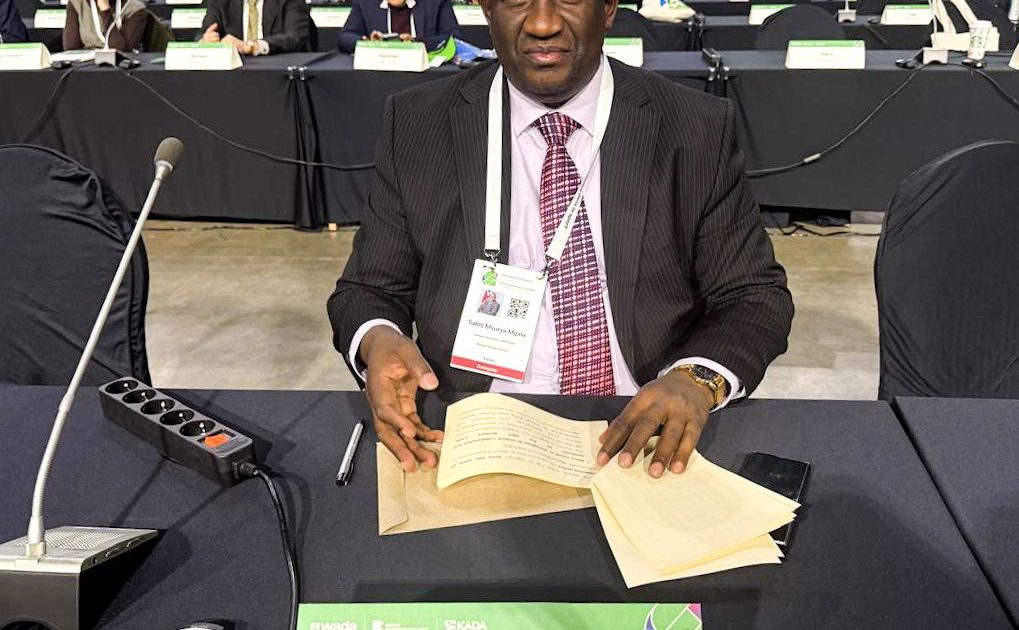
Youth Affairs, Creative Economy and Sports Cabinet Secretary (CS), Salim Mvurya, addressed Busan, South Korea, during the World Anti-Doping Conference on Sport, where global leaders are reviewing progress and emerging challenges in the fight against doping.
Mvurya observed that Africa’s growing dominance on the global sporting stage places greater responsibility on governments to develop credible and harmonized anti-doping structures that can support clean competition and protect the reputation of athletes.
“As our athletes continue to excel internationally, Africa must build anti-doping systems that reflect the same level of excellence,” he demanded, emphasising the need for stronger frameworks that safeguard fairness and reinforce public confidence in sport.
Additionally, the CS noted that African nations have varying institutional capacities, making coordinated planning and shared compliance priorities essential for effective implementation of the 2027 Code.
He said the continent stands to benefit from capacity-building models that allow each country to advance at its pace while upholding common standards.
Mvurya also reaffirmed Kenya’s bid to host the 2028 Regional Conference on Intelligence and Investigations, saying such an event would bolster the exchange of skills and improve regional enforcement mechanisms.
He at the same time held consultations with World Anti-Doping Agency (WADA) Director General, Olivier Niggli and WADA Africa Director, Rodney Swigelaar with discussions focusing on Kenya’s ongoing reforms under the WADA Watchlist, an exercise the CS maintained aligns with President William Ruto’s directive to uphold clean sport as a national priority.
According to Mvurya, the government views the corrective action process as an opportunity to strengthen systems, enhance transparency and build long-term resilience in line with global anti-doping expectations.
“Kenya has recorded notable progress through the Anti-Doping Agency of Kenya (ADAK), which has reinforced governance structures, clarified mandates and enhanced oversight mechanisms,” highlighted the CS, adding that upgrades to the national testing programme have further improved risk-based planning and expanded testing pools to meet international standards.
Mvurya added that ADAK has also strengthened its intelligence and investigations operations by improving coordination and secure information handling, while nationwide education programmes have been expanded to equip athletes and support personnel with accurate, timely and comprehensive anti-doping knowledge.
He expressed confidence that the reforms underway will position Kenya as a regional leader in anti-doping management, assuring that Kenya aims to emerge from the corrective action process with stronger, more transparent and more resilient systems aligned with global best practice.
By Naif Rashid