Kenya’s ambition to reclaim its place as a global coffee powerhouse gained significant traction on Thursday at a high-level policy dialogue organised by the United Nations Industrial Development Organisation (UNIDO) in partnership with the Food and Agriculture Organisation (FAO).
The event brought together government officials, development partners, private sector actors, and youth entrepreneurs for a robust conversation on transforming Kenya’s coffee value chain.
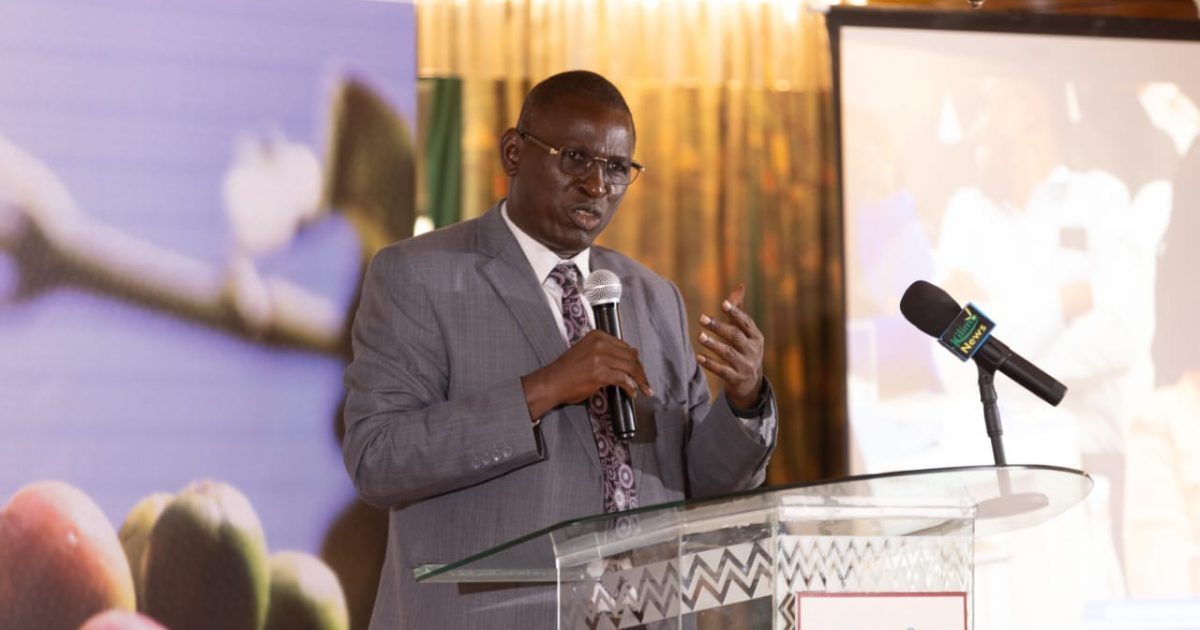
Cabinet Secretary (CS) for Co-operatives and Micro, Small and Medium Enterprises (MSMEs) Development Dr Wycliffe Oparanya outlined the government’s roadmap for the revival of the coffee sector.
In Kenya, according to Dr Oparanya, coffee is more than a crop—it is a national treasure and a lifeline for over 800,000 smallholder farmers, supporting more than five million Kenyans.
“We are therefore embarking on an ambitious but necessary journey to increase our national coffee output from the current 51,000 metric tonnes to more than 150,000 metric tonnes in just three years,” announced the CS in a speech read on his behalf by the Commissioner for Cooperative Development David Obonyo.
He explained that the vision is not merely to boost production but to elevate coffee to its rightful place as a driver of rural prosperity, industrial growth, and global competitiveness.
However, Dr. Oparanya noted that the sector, once the pride of Kenya’s agricultural exports, has in recent years grappled with declining yields, aging coffee trees, fragmented governance, and an overreliance on exporting raw beans.
“Despite our fertile soils and global acclaim for high-quality Arabica, our production has stagnated,” stated the CS.
He continued, “We are losing coffee-growing land to urban sprawl. Our coffee trees are aging—many are over 30 years old. And over 90 percent of our coffee is exported in raw form, limiting our potential for value addition, job creation, and increased earnings for farmers.”
To address these challenges, Dr Oparanya disclosed that the Ministry has already rolled out a number of reforms, including the distribution of over 780,000 seedlings so far, with a target of five million by the end of this year and 20 million by the end of 2026.
In addition, he declared that 33 counties have been engaged in county-level sensitization campaigns to mobilise farmers and cooperatives around the reform agenda.
“County governments must enforce land zoning policies to protect agricultural land. We need them to deploy more extension officers and appoint qualified cooperative officers,” directed the CS, stressing that research institutions must focus on breeding improved varieties and promoting climate-smart farming techniques.
Further, with value addition identified as a key growth lever, the CS urged Kenyans to look beyond the raw bean.
“We cannot build a coffee economy while shipping out 90 percent of our produce unprocessed. Value addition is a viable option. We must roast, grind, package, and brand Kenyan coffee for local and global markets. That’s where the jobs and wealth are,” he emphasised.
During the event, Esther Atieno, a two-time Kenyan barista champion and founder of Linus Coffee School, captivated the audience with her journey from casual curiosity to becoming a celebrated figure in Kenya’s coffee scene.
“I used to watch baristas make beautiful latte art, the hearts and the tulips and I was fascinated. It looked so artistic, and I thought, I want to do that. That curiosity is what got me into coffee,” she narrated.
Atieno’s foray into coffee became serious during the COVID-19 pandemic, when widespread closures of hotels and offices left her unemployed.
“There was nothing to do. No jobs. That’s when I got the opportunity to work in a small coffee shop. It changed everything,” recalled Atieno.
That humble beginning sparked a deep passion and today, Atieno runs a barista training school and has expanded into coffee-based skincare products through her venture, Coffee Club Video Cosmetics.
“I see coffee not just as a product but as a complete value chain from bean to cup to beauty,” she said.
However, Atieno’s story also carried a broader message about youth empowerment as she urged the latter not to wait for their parents or the government to give them jobs but to create something with what is available.
“This sector has space for us. We just need to step in, learn, and build. If my journey can inspire even one person to take that first step into coffee, then I’m happy,” expressed Atieno.
Meanwhile, Kenya’s coffee sector, once a jewel of the economy, is at a crossroads, but with a comprehensive reform plan, bold partnerships, and inspiring champions like Atieno, the message was clear: the coffee renaissance is not only possible, it is already brewing.
By Fride Amiani and George Gerish