Kenya has unveiled seven draft regulations to guide the upstream and midstream petroleum sub-sectors, marking a significant step in the country’s quest to become an oil-producing nation.
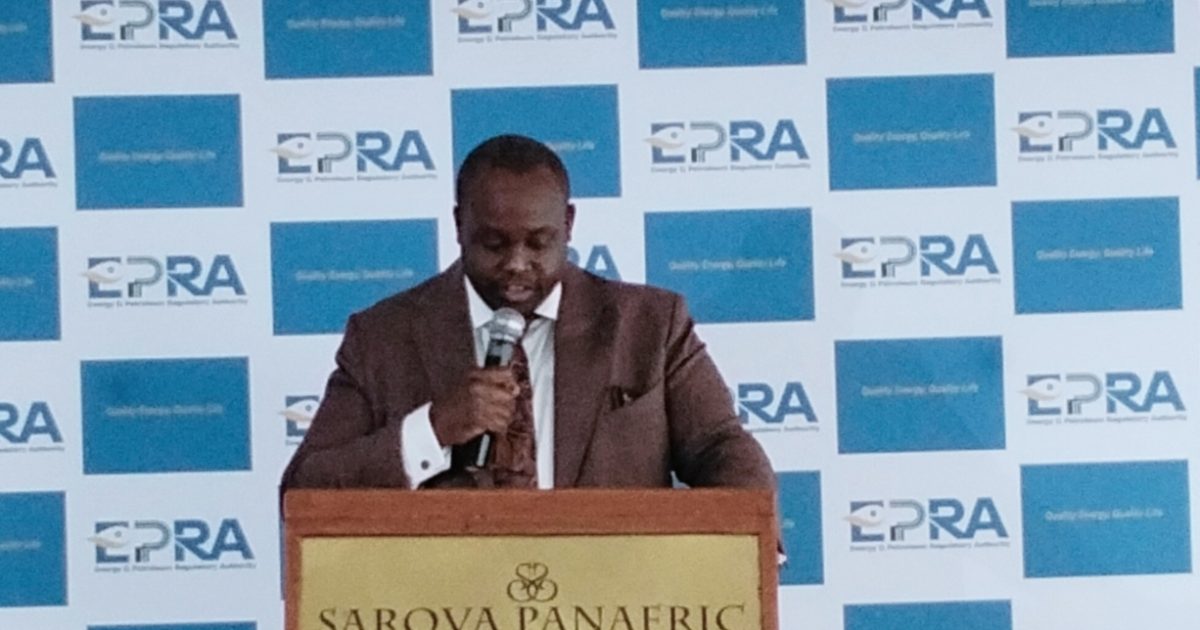
The Energy and Petroleum Regulatory Authority (EPRA) Director General (DG), Daniel Kiptoo, said the proposed regulations are meant to boost transparency, attract investment, and ensure that petroleum resources benefit all Kenyans.
“Today, we are presenting seven regulations developed in collaboration with stakeholders. They will help streamline and strengthen governance in the petroleum sector,” he stated during a public consultative workshop in Nairobi, attended by industry players, civil society, and government agencies.
Kiptoo noted that Kenya’s petroleum industry has evolved remarkably over the last two decades, moving from a downstream-only focus to a fully-fledged sector spanning upstream, midstream, and downstream operations.
He recalled Kenya’s first oil discovery in 2012 at the Ngamia 1 well in Turkana’s South Lokichar Basin, which marked a turning point for the industry. Since then, nine more discoveries have been made, with reserves estimated at 525 million barrels earmarked for development.
The DG explained that the draft regulations rest on four key objectives: promoting fair business practices, ensuring quality and safety across the value chain, advancing sustainability through environmental and social governance, and strengthening data collection for evidence-based decision-making.
Among the key proposals is the Upstream Petroleum Management and Administration Regulation, which outlines licensing procedures, block allocation, and reporting requirements. The regulation seeks to create transparent processes for licensing and effective government monitoring.
The Petroleum Upstream Operations Regulation, 2025 addresses technical and operational issues, including exploration, appraisal, development, production, and decommissioning of oil and gas resources, both onshore and offshore.
Equally critical is the Midstream Petroleum Operations Regulation, which focuses on crude oil and natural gas transportation. It regulates permits, pipeline construction, and facility operations, ensuring compliance with safety, environmental, and technical standards.
The Petroleum Environmental, Health and Safety Regulation applies across upstream and midstream operations. It enhances preparedness to manage risks, safeguard the environment, and protect communities around petroleum sites.
Kiptoo underscored that the regulations are timely, especially given the global shift towards cleaner energy sources that has made financing oil projects more challenging.
“Nearly 15 years since our first discovery, we now have a narrow window to mobilize investment and develop this resource. Success will require a whole-of-country approach involving policymakers, regulators, civil society, industry, and the public,” he emphasized.
He cited Uganda’s progress with the East African Crude Oil Pipeline as an example of how regional peers are advancing, warning that Kenya risks missing out if it delays further.
“It is of no use if the resource remains in the ground for another century. If we fail to act within the window we have, future generations will judge us harshly,” he cautioned.
The DG added that a well-regulated petroleum sector has the potential to create jobs, spur business opportunities, and strengthen local content participation. However, he assured that EPRA will prioritize environmental protection and community welfare alongside investment growth.
“EPRA will walk this journey with stakeholders to ensure that our petroleum resources are managed responsibly and sustainably for the benefit of all Kenyans,” he affirmed.
The Authority has launched nationwide public participation forums to collect views on the draft regulations before finalisation and gazettement into law.
By Wendy Sheilla