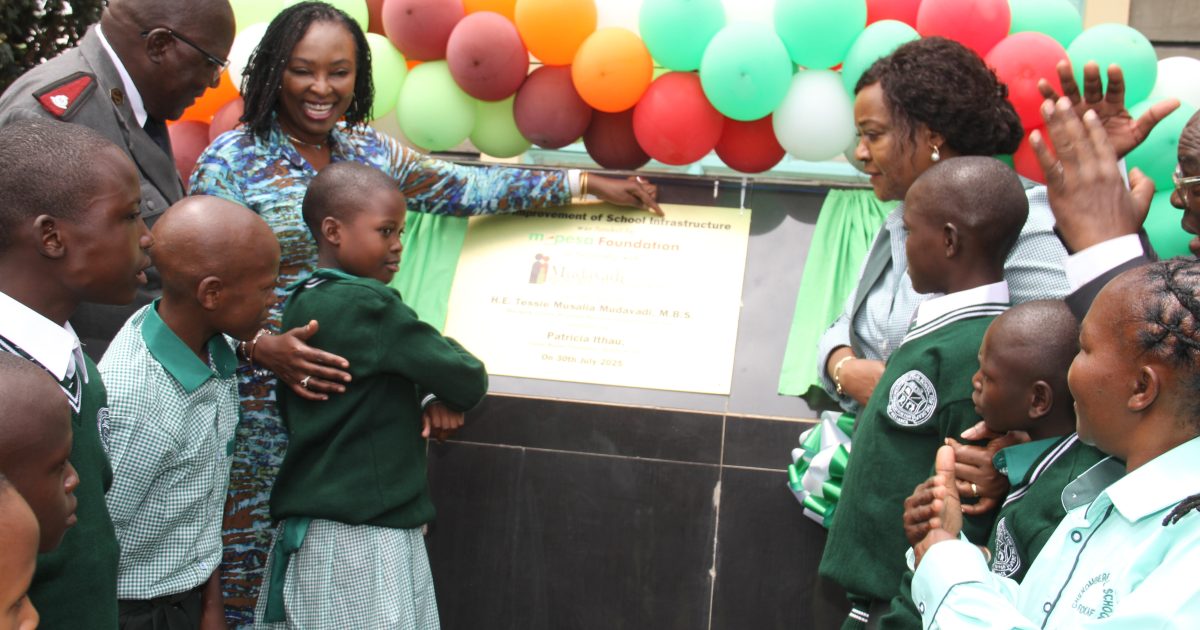
In a major milestone for disability inclusion in Kenya, the Chikombero Special School for the Hearing Impaired was officially handed over yesterday, following a complete renovation and refurbishment.
These marks a significant investment in the future of hearing-impaired learners. The handing over coincides with the forthcoming 5th World Federation of the Deaf Conference, set to be hosted in Nairobi from August 12th to 14th.
Ushiriki Wema Foundation chairperson, Tessy Musalia, spouse to the Prime Cabinet Secretary Musalia Mudavadi and who is a key advocate for disability rights, made a strong appeal to the Government to integrate basic sign language into the national school curriculum, while highlighting the growing importance of sign language in education and public life.
“Integration is a part of the new Act aligning Kenya’s disability rights to the UN Convention on the Rights of Persons with Disabilities,” Tessy Musalia, noting that the recently enacted law is a clearly indicator of the space sign language is taking up universally,” she added.
The newly refurbished Chikombero Special School marks the culmination of a journey that began in 2021 and was executed between November 2024 and June 2025.
The project was spearheaded by the MPESA Foundation under Safaricom PLC, which invested Sh50 million to upgrade the school’s infrastructure, including the construction of Administration and ECD blocks, fully equipped ablution facilities, and even a 20-seater ICT Lab, designed to equip deaf learners with digital skills.
Patricia Ithau, Trustee of the MPESA Foundation, emphasised the holistic nature of the support provided, saying it was not just about buildings. “We ensured that learners have beds, blankets, and a conducive learning environment.
Ms. Ithau said the Foundation also installed 10,000- and 5,000-litre water tanks to improve wash outcomes in line with the Foundation’s mission – to develop citizens of the future, and that includes digital readiness.
MPESA Foundation has invested over Sh330 million in Vihiga County across 84 projects, demonstrating long-term commitment to regional development and inclusive education.
Dr. Florence Otieno, a teacher at the school, praised the transformation, describing the previous state of the school as horrible and dilapidated and that the general infrastructure was not conducive for learners.
The buildings were not fit for use at all; today, the environment has changed completely. We now have flush toilets, showers, and new uniforms for our learners. They are happy and highly motivated,” Dr. Florence expressed joy.
The Teacher believes the school’s new facilities will attract more learners from across the region and beyond. “This one will impact not only the community here but also Kenya and even internationally,” Dr. Otieno stated confidently.
Kenya’s deaf population is estimated at 2.7 million people, about 5.5% of the population, making it a significant linguistic and cultural group.
The 2010 Constitution recognised Kenyan Sign Language as the country’s third official language; however, advocates, including Tessy Musalia, are stressing the need for more to be done to fully integrate the language into mainstream education and public services.
As Kenya prepares to host international delegates for the upcoming Deaf Conference, the Chikombero School community stands as a symbol of progress, inclusion, and the country’s growing commitment to leaving no child behind in search of education and a bright future. The project has immersed global attention in Kenya’s efforts in promoting sign language and inclusion.
By Duncan Sikoyo