Kenya unveils national plan to tackle marine pulution
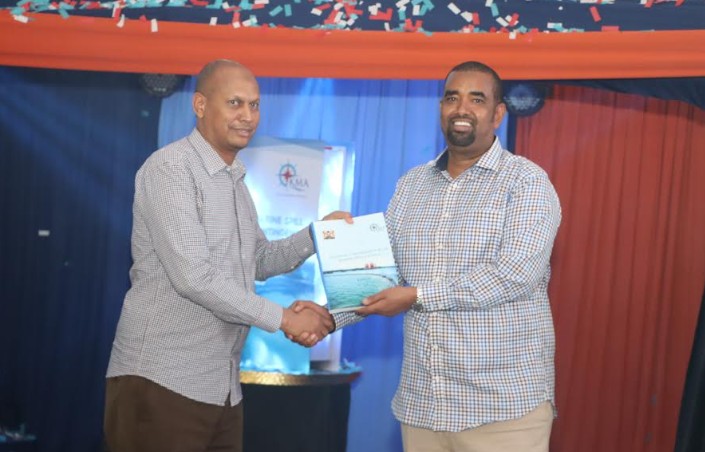
The government has officially launched the National Marine Spills Response Contingency Plan, a comprehensive framework to strengthen the country’s preparedness for marine pollution incidents.
The plan is designed to enhance Kenya’s capacity to respond effectively to oil and hydrocarbon spills in its territorial waters.
Representing the Cabinet Secretary for Mining, Blue Economy & Maritime Affairs Hassan Joho during the launch, the Principal Secretary, State Department for Shipping and Maritime Affairs Aden Millah described the initiative as a “major milestone in safeguarding Kenya’s marine environment and securing the sustainability of the Blue Economy.
The CS noted that Kenya’s growing seaborne trade and major developments, including the expansion of the Port of Mombasa, growth of Lamu and Kisumu ports, and the relocation of the Kipevu Oil Terminal, have increased maritime traffic and heightened the risk of oil spills.
Joho emphasised that the new plan ensures Kenya remains compliant with the International Convention on Oil Pollution Preparedness, Response and Cooperation (1990).
Under the Plan, the Kenya Maritime Authority (KMA) serves as the Competent Oil Spill Authority, mandated to coordinate national response efforts; it outlines roles of various actors and guides the use of techniques and resources during pollution emergencies.
He highlighted the importance of strong partnerships, stating that oil spill management requires collaboration across government agencies and the private sector.
The CS further commended the development of the Marine Spills Preparedness and Response Coordination Charter, which formalises cooperation among key stakeholders.
Joho also acknowledged the recent MASEPOLREX 25 Regional Field Exercise, hosted by KMA, which tested regional readiness to handle large-scale pollution events.
He emphasised that preparedness must remain an ongoing effort supported through training, joint drills, and coordinated planning.
The CS expressed deep appreciation to Kenya’s partners towards the preparation of the plan, including the World Bank, Kenya Ports Authority, Kenya Navy, Oil Spill Mutual Aid Group, and the Kingdom of Norway for their role in advancing Kenya’s marine pollution response capacity.
“Let us continue working together to protect our marine environment and secure the long-term sustainability of our maritime sector,” said Joho.
By Justus Anzaya